
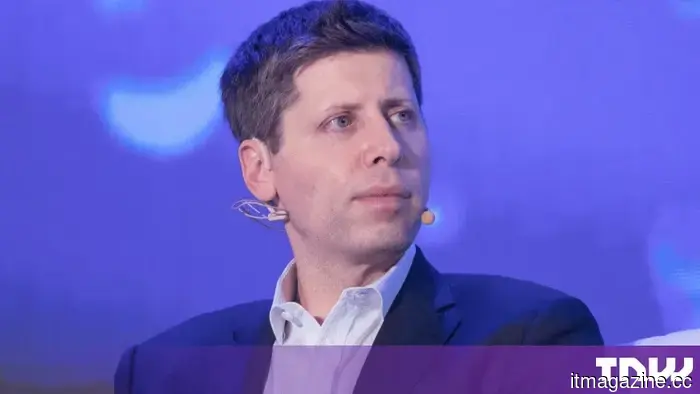
Altman suggests that four years of college might exceed what the world currently requires.
Sam Altman expressed at a summit for tech interns that he believes two years of college was "the exact right amount of time" for him, suggesting that four years might exceed what the current world requires. He presented this idea to an audience facing a diminishing entry-level pipeline due to AI advancements.
Altman argued that a degree takes longer than necessary, sharing that his two years at Stanford were sufficient, and staying longer would have resulted in “vastly diminishing returns.” He was addressing tech interns during a surprise appearance at Internapalooza, a networking event organized by investor Cory Levy for students interning in the industry over the summer.
“I’ve thought that, given how the world has evolved, college shouldn’t necessarily be as long as it is,” Altman remarked, acknowledging the benefits of meeting new people, living independently, and working on projects during that time.
The situation is further complicated by the audience's context. TNW has highlighted that AI is threatening the summer internship, which has historically served as a pathway for students to transition into employment. This issue isn't limited to the U.S.; a study in Switzerland indicated a decline in job postings for entry-level positions as automation has taken over tasks typically assigned to junior hires.
Altman's additional guidance echoed this sentiment unintentionally. “You can create an entire startup by yourself in a room filled with AI tools, but not much else,” he noted. This may sound liberating from a founder's perspective, but it may suggest that certain roles might no longer require filling when heard from an intern’s standpoint.
Not everyone interprets the trend in the same way. The CEO of Adecco has claimed that AI is transforming jobs instead of eliminating them, representing a more optimistic outlook that is not without merit.
The remainder of the session included standard advice for founders. Altman pointed out that individuals often expend effort trying to gain respect, though he acknowledged that enterprise sales is an exception, which he resolved by hiring a 50-year-old.
It's important to recall Altman's own journey before taking action based on these insights. He left Stanford in 2005 to co-found Loopt, which was part of Y Combinator's inaugural batch, eventually leading him to manage the incubator. Meanwhile, his mentor Peter Thiel offers $250,000 over two years to individuals under 22 with the condition that they drop out of college. As Altman himself stated, “you don’t get to run the experiment twice.”
Other articles
.jpg) Three overlooked films you can enjoy for free this weekend (August 14-16).
Avoid subscriptions this weekend. These three free films, covering both comedy and horror, are definitely worth watching.
Three overlooked films you can enjoy for free this weekend (August 14-16).
Avoid subscriptions this weekend. These three free films, covering both comedy and horror, are definitely worth watching.
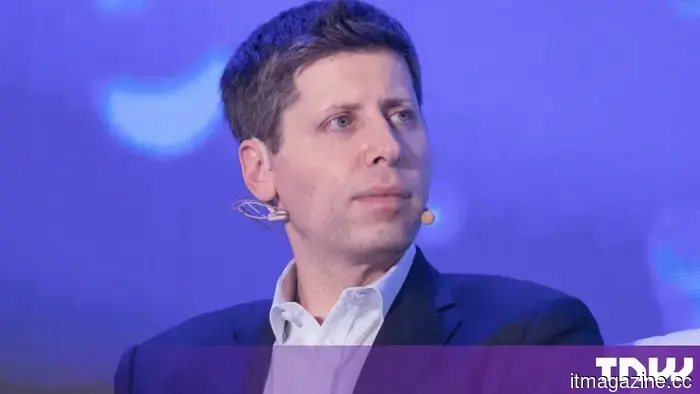 Altman suggests that four years of college might exceed what the current world requires.
Sam Altman mentioned that two years of college were sufficient for him and that four years might be excessive, addressing a group of tech interns whose AI pipeline is narrowing.
Altman suggests that four years of college might exceed what the current world requires.
Sam Altman mentioned that two years of college were sufficient for him and that four years might be excessive, addressing a group of tech interns whose AI pipeline is narrowing.
 Anthropic's quarterly revenue exceeded $11.5 billion, representing an increase of over 14 times.
Anthropic informed investors that its revenue for the second quarter exceeded $11.5 billion, more than 14 times that of the previous year, and recorded a positive adjusted operating income.
Anthropic's quarterly revenue exceeded $11.5 billion, representing an increase of over 14 times.
Anthropic informed investors that its revenue for the second quarter exceeded $11.5 billion, more than 14 times that of the previous year, and recorded a positive adjusted operating income.
.jpg) 3 overlooked films you can stream for free this weekend (August 14-16)
Take a break from subscriptions this weekend. These three complimentary films, featuring both comedy and horror, are definitely worth watching.
3 overlooked films you can stream for free this weekend (August 14-16)
Take a break from subscriptions this weekend. These three complimentary films, featuring both comedy and horror, are definitely worth watching.
 LG's humanoid robot will debut in 2027, powered by Nvidia's Isaac GR00T.
In early 2027, LG is set to reveal a bipedal humanoid powered by Nvidia's Jetson Thor and Isaac GR00T, along with plans for an 80MW AI factory in South Korea.
LG's humanoid robot will debut in 2027, powered by Nvidia's Isaac GR00T.
In early 2027, LG is set to reveal a bipedal humanoid powered by Nvidia's Jetson Thor and Isaac GR00T, along with plans for an 80MW AI factory in South Korea.
 Voyah duplicated Mercedes’ inverted tunnel advertisement and subsequently released the vehicle for $33,800.
Voyah presented its new electric SUV by showcasing it driving on a tunnel ceiling. The starting price for the vehicle is approximately $33,800, boasting 637hp and equipped with Huawei lidar.
Voyah duplicated Mercedes’ inverted tunnel advertisement and subsequently released the vehicle for $33,800.
Voyah presented its new electric SUV by showcasing it driving on a tunnel ceiling. The starting price for the vehicle is approximately $33,800, boasting 637hp and equipped with Huawei lidar.
Altman suggests that four years of college might exceed what the world currently requires.
Sam Altman mentioned that two years of college sufficed for him and that four years might be excessive, speaking to a group of tech interns whose pathway to AI jobs is diminishing.