
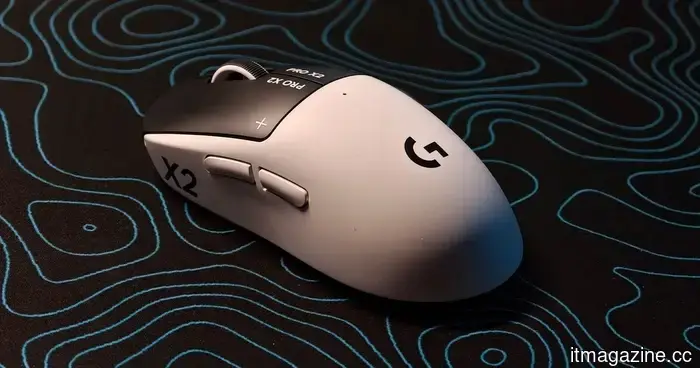
Logitech's PRO X2 SUPERSTRIKE IMPACTS uniquely — and it caused me to reconsider my approach to clicking.
Balancing a job reviewing technology with spending most of my day in front of a screen means that free time is quite rare. Yet, almost every evening, I find myself in line for two or three ranked Valorant matches. My highest rank is Ascendant 1, and although I’m nowhere near going pro, I dedicate countless hours each year to competitive FPS games.
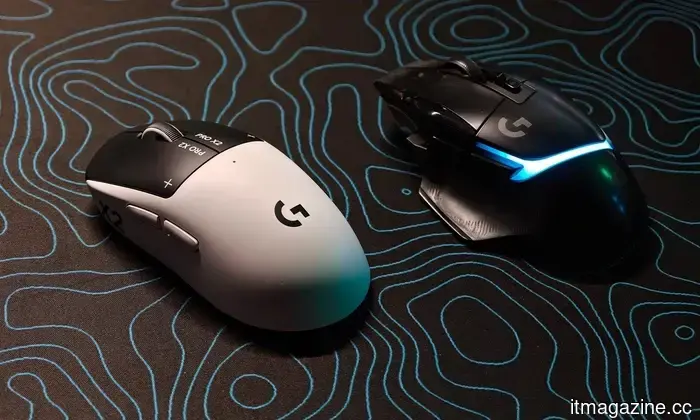
For a long time, my reliable Logitech G502 X Plus LIGHTSPEED sat patiently on my desk. While it wasn’t the lightest mouse available, it felt trustworthy. Occasionally, I experimented with lightweight esports mice, only to return to my old friend a few days later. Most alternatives felt too flimsy, too small, or simply didn’t offer the reassuring weight I had become accustomed to. Then the Logitech PRO X2 SUPERSTRIKE arrived, and for the first time, my G502 has been sidelined.
Lightweight doesn’t have to feel… light
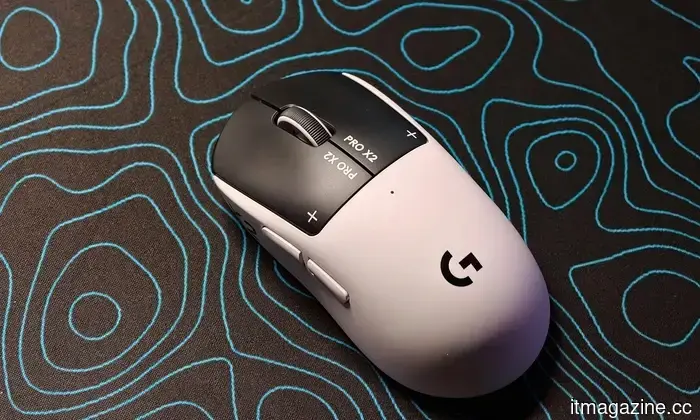
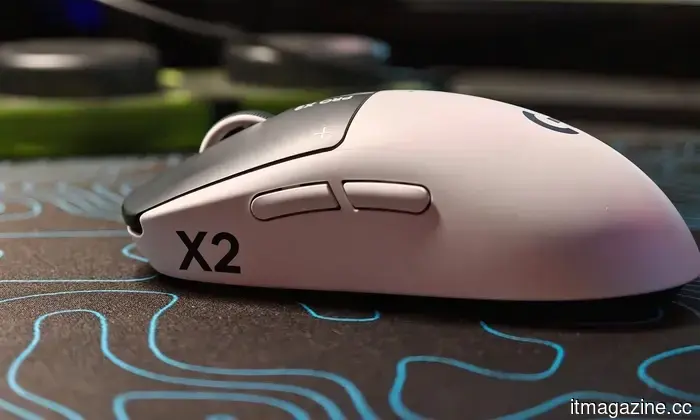
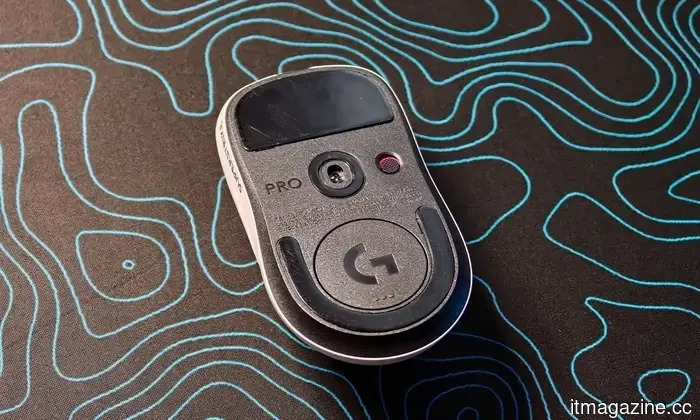
Weighing in at approximately 61 grams, the PRO X2 SUPERSTRIKE is completely different from the G502. On paper, it resembles the kind of ultralight mouse I would typically abandon after a week. Instead, it achieved a balance I didn’t realize I was seeking.
The shape fits perfectly in my hand, making extended Valorant sessions surprisingly comfortable, while the weight seems almost custom-designed for my low-DPI playstyle. Wide arm movements, rapid flicks, and frequent mouse lifts require minimal effort, yet the mouse never feels flimsy or like a toy. Its surprisingly solid chassis gives it a premium feel, even though it’s one of the lightest mice I’ve tried. This solidity is likely why it has remained my go-to choice. It finally provided the speed advantages of an ultralight mouse without making me feel as though I was holding an empty plastic shell.
HITS made me relearn how to click
That said, while I appreciate the weight and shape, they aren’t the main reasons this mouse is noteworthy. That distinction belongs to Logitech’s Haptic Inductive Trigger System, or HITS.
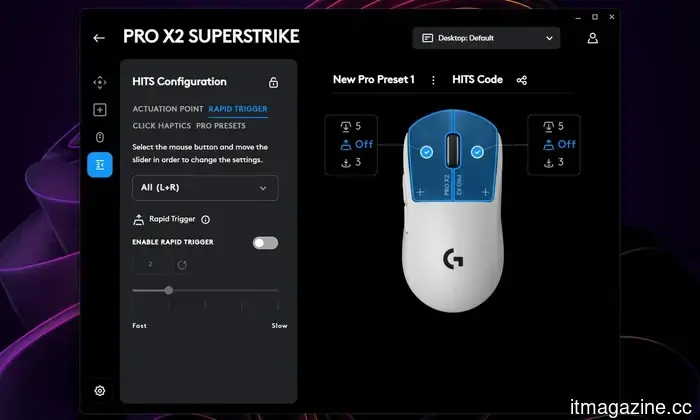
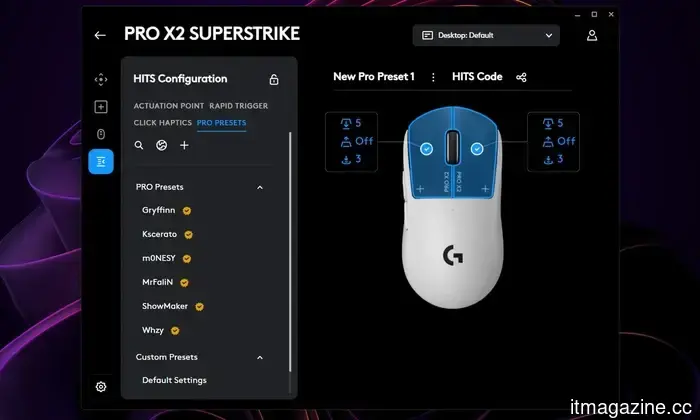
If there’s one comparison that immediately struck me, it was with Hall Effect keyboards like the Wooting. Just as those keyboards allow gamers to adjust actuation points and utilize features like Rapid Trigger, HITS brings a similar approach to mouse buttons. Rather than relying on traditional mechanical or optical switches, the PRO X2 SUPERSTRIKE continuously tracks button movement through inductive sensing and recreates the click experience with haptic feedback. The actuation point, reset point, and even the strength of the tactile feedback can all be customized using software.
The first time I turned off the mouse, I genuinely thought something was wrong. The buttons felt completely unresponsive, offering almost no tactile feedback. However, when it was switched back on, the haptic feedback tricked my brain into perceiving a physical switch beneath my fingers.
It’s odd. It’s clever. And for the initial days, it was surprisingly hard to trust.
Years of muscle memory had trained my fingers to recognize a mechanical switch's sensation. HITS instead provides a softer, more refined tactile response. It does not attempt to perfectly mimic a traditional click, and honestly, I’m glad it doesn’t. It carves out its own identity rather than trying to be something it’s not.
Of course, the advantage is that there’s ample customization available. While Logitech G Hub isn’t the lightest application out there, I appreciate how smoothly it transferred my settings from the G502 to the PRO X2 SUPERSTRIKE. However, as this mouse was new, I didn’t hit upon my perfect settings right away. After nearly every ranked session, I would adjust the actuation point, lower the haptic strength, play a few more matches, and then tweak everything again the next night. It became part of my routine.
Eventually, I found a setup that felt completely natural. That’s when it struck me: we’ve spent years obsessing over DPI, polling rates, and sensor performance, yet the mouse click itself has remained surprisingly basic. HITS finally changes that. Instead of conforming to a fixed switch, I was progressively shaping the mouse to suit my playing style.
No, it didn’t magically make me Radiant
Whenever new gaming gear advances input technology, debates arise online about whether it constitutes “cheating.” This has been observed with Rapid Trigger keyboards, Snap Tap, SOCD discussions, and now HITS. Personally, I think that misses the point.
The PRO X2 SUPERSTRIKE didn’t magically enhance my aim or carry me through Ascendant lobbies. It didn’t help me win Sheriff duels or cure my poor decision-making during dry peeks against an Operator. What it did change was the connection I felt with each click. Knowing that I could customize the actuation point instead of settling for a fixed mechanical switch made the mouse feel uniquely mine. It wasn’t about gaining an unfair edge
Other articles
Logitech's PRO X2 SUPERSTRIKE IMPACTS uniquely — and it caused me to reconsider my approach to clicking.
After over a month of using Logitech's PRO X2 SUPERSTRIKE while playing Valorant, I realized how its HITS technology could revolutionize the clicking experience of gaming mice.