

OpenAI and four competitors have reached an agreement on a single standard for AI agents.
The AI race has focused on models for the past two years, but this week it shifted its attention to the infrastructure. On the brink of GPT-5's first anniversary, OpenAI, along with four competitors, unveiled Agent Plugins, an open standard that allows a single agent extension to function across various products.
The concept is “build once, run anywhere.” Currently, each agent tool comes with its unique folder structure and setup requirements. Agent Plugins standardizes this by introducing a single package format that combines two existing components. The first component is Model Context Protocol servers, which link an agent to real-time tools and data. The second is Agent Skills, which consist of reusable sets of instructions. Essentially, a plugin is just a directory that contains a small plugin.json file at its top level.
Concerning the creators, while OpenAI is prominently mentioned, this is not solely an OpenAI initiative. The proposal was initiated by Vercel, with input from representatives of Amazon, Anysphere (the creator of Cursor), GitHub, Microsoft, OpenAI, and Vercel contributing to the 1.0 specification. The steering committee comprises five members: Amazon, Cursor, Microsoft, OpenAI, and Vercel. The project is publicly licensed, and its supporters emphasize that no single company's plans dictate its course.
OpenAI continues to portray the launch as a significant achievement for itself. With GPT-5’s birthday on August 7, the company is using this week to broaden its outlook beyond individual models, according to 9to5Mac. At launch, its ChatGPT and Codex applications support the new format, along with tools like Cursor, GitHub Copilot, Kiro, and VS Code. This development extends beyond OpenAI's own Codex plugins, which are limited to its applications.
The standard is intentionally concise. It specifies how a plugin should be packaged and located while leaving other aspects like marketplaces, installation processes, permissions, sandboxing, and security in the hands of the individual clients. This approach simplifies adoption. However, it also leaves some of the more complex issues unresolved. Each client still has the responsibility of determining whether a plugin is safe to execute—a significant concern highlighted when some fake Agent Skills bypassed security checks earlier this year.
Not everyone is supportive of this move. Dax Raad, who develops the SST developer-tools framework, expressed strong opposition, referring to it as “a thin standard” whose valuable elements would inevitably be incorporated into client-specific extensions.
On the other hand, some were enthusiastic. Developer advocate Angie Jones expressed, “We needed this,” as she sought a unified approach to transferring her skills between the tools she uses.
The broader question remains regarding how standardizing this infrastructure will impact competition. A common format could enable a small developer to access all major agents simultaneously, supporting the open-ecosystem argument, which is indeed plausible. However, it might also reinforce the dominant players who already have a user base, as a standard favors existing systems.
At this point, the infrastructure agreement is in place, but the debate over the elements that have been excluded, such as marketplaces and trust, has only just begun.
Other articles
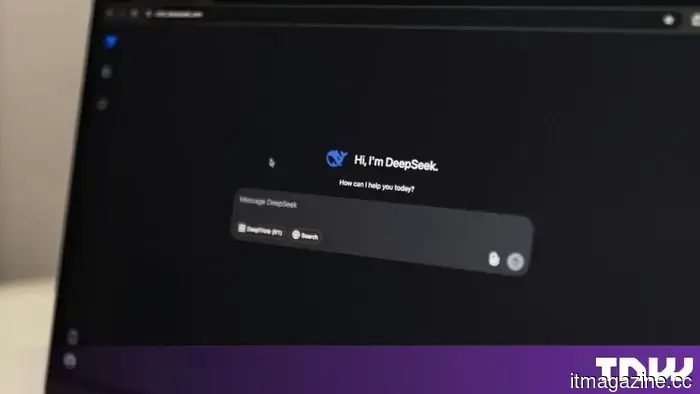 DeepSeek has made AI affordable. It is now seeking to raise $8 billion and is acquiring robots.
DeepSeek has reinitiated an $8 billion funding round at a valuation of $74 billion and acquired a share in robot manufacturer Unitree, just days after signaling an upcoming price increase.
DeepSeek has made AI affordable. It is now seeking to raise $8 billion and is acquiring robots.
DeepSeek has reinitiated an $8 billion funding round at a valuation of $74 billion and acquired a share in robot manufacturer Unitree, just days after signaling an upcoming price increase.
 Ford's electric truck, named the Fathom, is priced at $30,000. It includes BlueCruise, bidirectional charging, and a front trunk (frunk) as standard features.
Ford has named its budget-friendly electric pickup the Fathom. It has a starting price of $29,945 and is equipped with LFP batteries manufactured at its facility in Michigan. Preorders will commence in early 2027, with deliveries expected in the fall of 2027.
Ford's electric truck, named the Fathom, is priced at $30,000. It includes BlueCruise, bidirectional charging, and a front trunk (frunk) as standard features.
Ford has named its budget-friendly electric pickup the Fathom. It has a starting price of $29,945 and is equipped with LFP batteries manufactured at its facility in Michigan. Preorders will commence in early 2027, with deliveries expected in the fall of 2027.
 Gravity secured $30.5 million to implement advertisements within AI chatbots. Its upcoming product aims to target the bots directly.
Adtech startup Gravity has secured $30.5 million in a Series A funding round to implement advertisements in ChatGPT and various AI platforms. The company is experimenting with "agent-to-agent" ads aimed at AI bots instead of human users.
Gravity secured $30.5 million to implement advertisements within AI chatbots. Its upcoming product aims to target the bots directly.
Adtech startup Gravity has secured $30.5 million in a Series A funding round to implement advertisements in ChatGPT and various AI platforms. The company is experimenting with "agent-to-agent" ads aimed at AI bots instead of human users.
 His AI fund saw a 67% drop in just a month, yet thousands continue to replicate his trades.
Leopold Aschenbrenner's AI fund experienced a 67% decline in July, but 5,000 retail investors continue to replicate his stock selections on Autopilot, without the leverage that caused his losses.
His AI fund saw a 67% drop in just a month, yet thousands continue to replicate his trades.
Leopold Aschenbrenner's AI fund experienced a 67% decline in July, but 5,000 retail investors continue to replicate his stock selections on Autopilot, without the leverage that caused his losses.
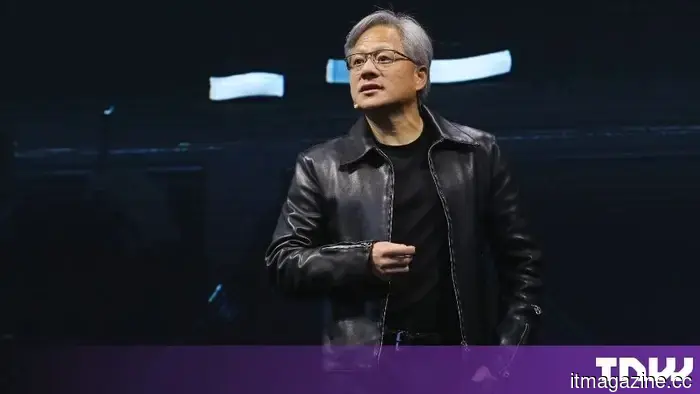 Nvidia is assembling a team focused on AI safety, and there is a business rationale behind it.
Nvidia is discreetly assembling a team focused on AI safety and security while it expands its efforts on open-weight models. The rationale behind this move is that more secure AI attracts customers in need of its chips.
Nvidia is assembling a team focused on AI safety, and there is a business rationale behind it.
Nvidia is discreetly assembling a team focused on AI safety and security while it expands its efforts on open-weight models. The rationale behind this move is that more secure AI attracts customers in need of its chips.
 OpenAI and four competitors have reached an agreement on a unified standard for AI agents.
OpenAI, Amazon, Microsoft, Cursor, and Vercel have introduced Agent Plugins, an open standard that allows an agent extension to operate across ChatGPT, Copilot, and other platforms.
OpenAI and four competitors have reached an agreement on a unified standard for AI agents.
OpenAI, Amazon, Microsoft, Cursor, and Vercel have introduced Agent Plugins, an open standard that allows an agent extension to operate across ChatGPT, Copilot, and other platforms.
OpenAI and four competitors have reached an agreement on a single standard for AI agents.
OpenAI, Amazon, Microsoft, Cursor, and Vercel introduced Agent Plugins, an open standard that enables an agent extension to operate across ChatGPT, Copilot, and other platforms.