
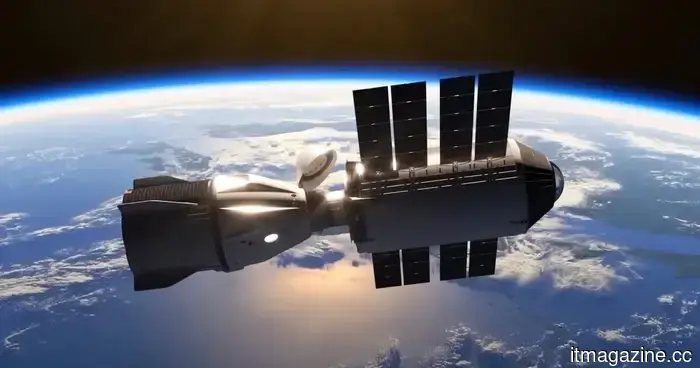
Space is turning into the next data center location for Bezos and Musk, and there are plenty of reasons for concern.
The AI boom is approaching the night sky
AI data centers are already consuming large quantities of electricity and water on Earth, prompting Silicon Valley to explore far more expansive options... quite literally.
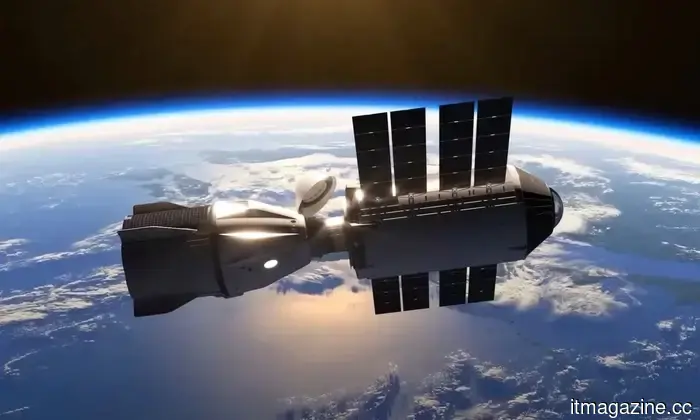
Elon Musk's SpaceX and Jeff Bezos' Blue Origin, among other companies, have suggested creating massive constellations of satellites intended to function as orbital data centers. Nonetheless, environmental organizations and former space officials are cautioning that launching these satellites at such a massive scale may result in serious repercussions for Earth's atmosphere and the visibility of the night sky.
SpaceX has sought permission from the Federal Communications Commission to deploy up to one million solar-powered data center satellites. Meanwhile, Blue Origin's Project Sunrise application requests authorization to operate around 51,600 satellites located at altitudes between approximately 500 and 1,800 kilometers above Earth.
Scientists urge the FCC to slow down
Earthjustice, DarkSky International, Public Employees for Environmental Responsibility, and Environment America have formally requested that the FCC halt approvals while a comprehensive environmental review of the orbital data centers is conducted. Their concerns go beyond merely overcrowding Earth's orbit.
Rocket launches and spacecraft re-entries can introduce pollutants such as black carbon, aluminum oxides, metals, and other materials into the upper atmosphere. Scientists are still trying to understand the potential implications of increasing concentrations of these substances on the ozone layer and climate. The troubling part? This is merely the beginning of numerous potential problems.
Satellites already pose challenges for astronomy
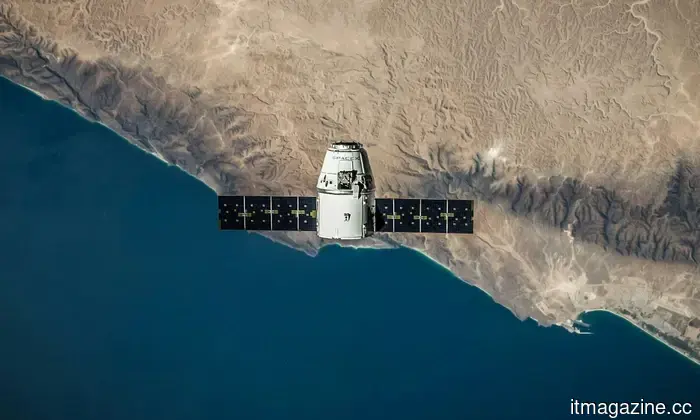
Astronomers have long contended with streaks of reflected sunlight from satellites appearing in telescope images. Starlink, in particular, became a notable instance following its rapid deployment, leading SpaceX to experiment with darker surfaces, sunshades, altered spacecraft orientations, and coordination with astronomers. Despite these efforts, the issue has persisted.
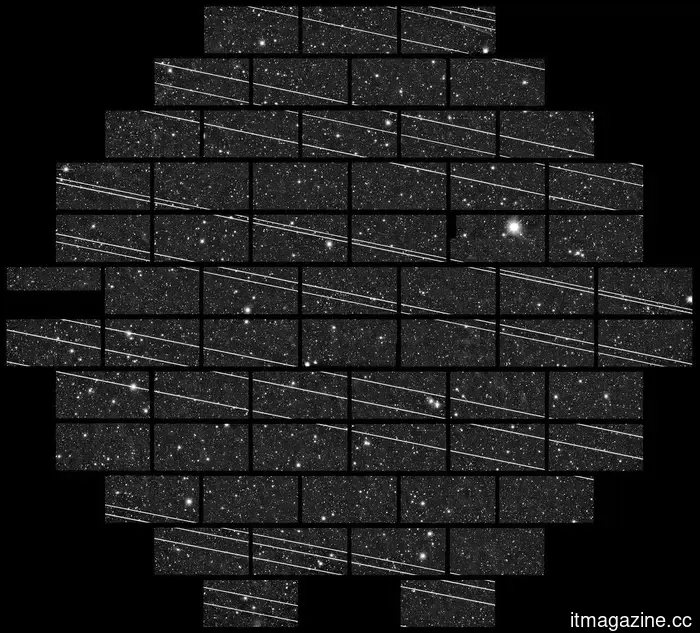
In November 2019, the DECam on the Blanco 4-meter telescope at the Cerro Tololo Inter-American Observatory (CTIO) captured images of approximately 19 Starlink satellites shortly after their launch, with the gaps in satellite tracks reflecting the spacing between DECam's CCD chips.
Amazon's Leo constellation represents a more recent example. A 2026 study based on 1,938 observations discovered that 92% of its operational satellite observations exceeded the brightness limit recommended by the International Astronomical Union for safeguarding astronomical research. Around 25% of those observations were bright enough to surpass the threshold necessary for preserving the visual integrity of the night sky.
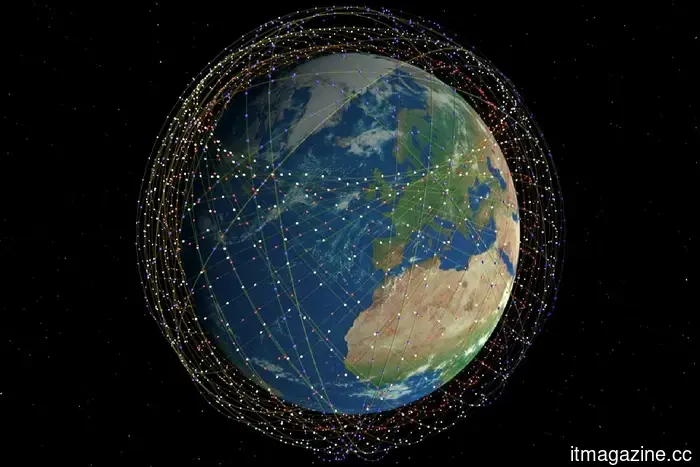
The European Southern Observatory has noted that over 14,000 satellites are currently in orbit. Their latest modeling predicts that proposed satellite constellations could push this number beyond 1.7 million, leading to extensive satellite trails and increased brightness of the night sky. The ESO contends that maintaining the satellite population to approximately 100,000 sufficiently dim satellites would aid in the preservation of contemporary astronomy.
While orbital computing might eventually alleviate some valid concerns about power and land use for AI, populating the sky with hundreds of thousands, or even millions, of machines presents another set of challenges that may be significantly more difficult to rectify.
Vikhyaat Vivek is a tech journalist and reviewer with seven years of experience focusing on consumer hardware.
The first possible exomoon has been discovered, and it makes our Moon appear remarkably tiny
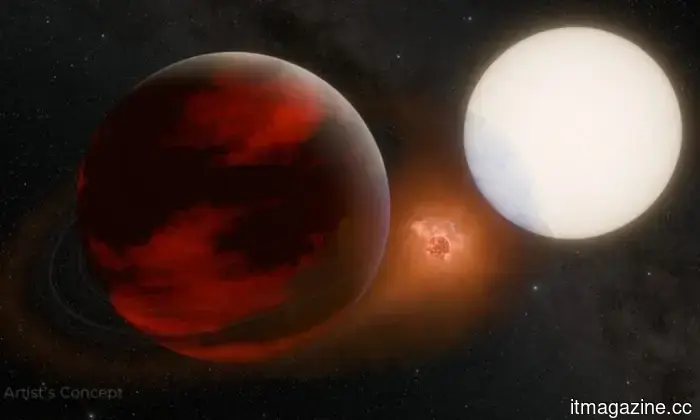
Scientists might have identified the first exomoon, though this one is comparable in size to Jupiter.
We have already uncovered more than 6,000 planets outside our immediate vicinity, yet detecting a moon circling one of those distant worlds has proven much more challenging. Astronomers may be on the verge of making a genuine discovery, although this particular object stretches the definition of "moon" almost to its limits.
Using the European Southern Observatory’s Very Large Telescope in Chile, researchers found strong evidence for a moon-like object in the CD-35 2722 system. Additional observations are needed to confirm this discovery, which could potentially mark the first reliably detected natural satellite outside of our solar system. However, there is one minor complication: this moon is exceedingly large.
China’s solution to SpaceX’s reusable rockets employs a net to catch boosters
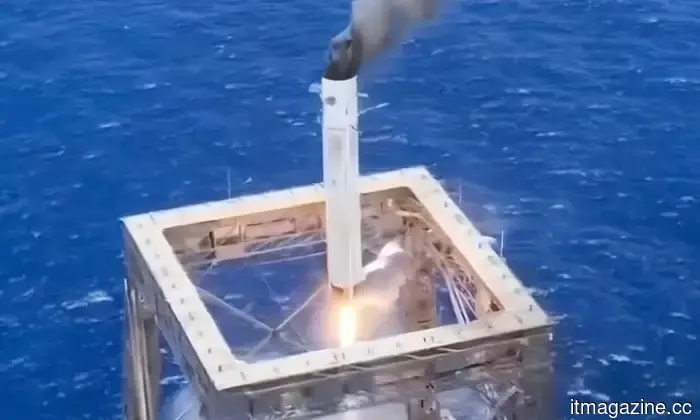
While SpaceX typically retrieves rocket boosters using legs and a carefully controlled vertical approach to landing on either a concrete surface or a drone ship,
China has successfully tested a similar technique, albeit in a different manner, on July 10.
Dimming the sun may sound extreme, but recent research on El Niño presents a surprisingly strong case for it
A natural test instance, specifically Australia’s most severe wildfire season, suggests that this idea merits serious evaluation.
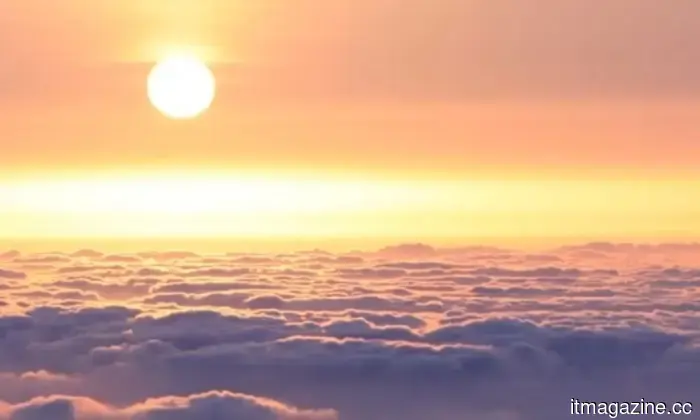
Initially, when I heard "scientists propose dimming the sun," I was skeptical, finding it reminiscent of a science fiction storyline. Yet, a new study released on July 8, 2026, in the journal Science Advances presents a compelling argument.
A Super El Niño is currently developing in the Pacific, anticipated to be the most intense in decades, potentially leading to severe floods, wildfires

Other articles
 According to a gas giant, people actually favor communicating with AI over speaking to a support representative as the company reduces its workforce.
British Gas is reducing its customer service positions by 1,300, as the CEO asserts that there is a shift towards using digital channels and AI technologies.
According to a gas giant, people actually favor communicating with AI over speaking to a support representative as the company reduces its workforce.
British Gas is reducing its customer service positions by 1,300, as the CEO asserts that there is a shift towards using digital channels and AI technologies.
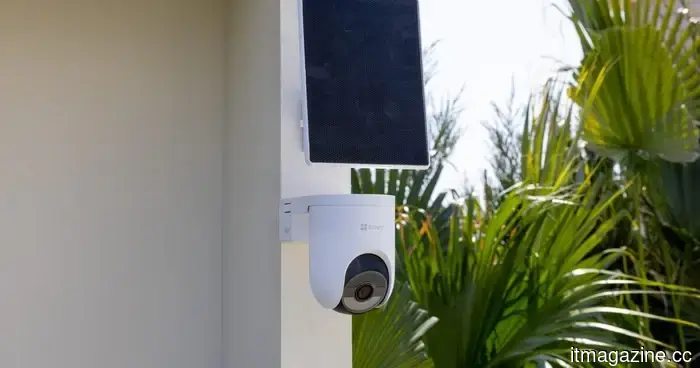 Top Smart Home Enhancements to Consider Before Your Summer Vacation
A more intelligent home entails more than just safety. Whether you're embarking on a summer getaway or savoring the extended daylight outdoors, explore these EZVIZ devices crafted to keep you connected, streamline daily home management, and provide enhanced peace of mind no matter where life leads you.
Top Smart Home Enhancements to Consider Before Your Summer Vacation
A more intelligent home entails more than just safety. Whether you're embarking on a summer getaway or savoring the extended daylight outdoors, explore these EZVIZ devices crafted to keep you connected, streamline daily home management, and provide enhanced peace of mind no matter where life leads you.
 Instagram is finally targeting individuals who wear Ray-Ban Meta sunglasses and behave creepily.
Instagram has begun prohibiting accounts that share videos recorded clandestinely with Ray-Ban Meta glasses.
Instagram is finally targeting individuals who wear Ray-Ban Meta sunglasses and behave creepily.
Instagram has begun prohibiting accounts that share videos recorded clandestinely with Ray-Ban Meta glasses.
Space is turning into the next data center location for Bezos and Musk, and there are plenty of reasons for concern.
SpaceX, Blue Origin, and other companies are aiming to create large constellations of orbital data centers, which has led to concerns about atmospheric pollution, debris, and an increasing problem for astronomy that satellites are already exacerbating.