
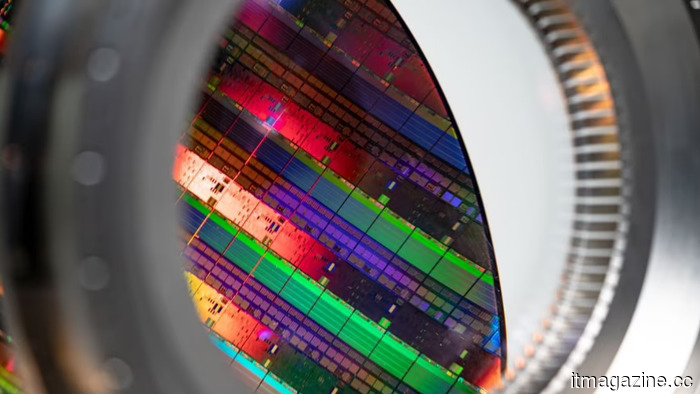
ASML intends to increase the production speed of its EUV machines by 30% due to the demand for AI exceeding its manufacturing capabilities.
TL;DR: ASML is reducing the EUV build cycle from 22 weeks to 15-16 weeks. It is nearly sold out for 2027, with significant orders for 2028. The company has raised its guidance to €43-45 billion and plans a 30% increase in capacity.
ASML aims to decrease the production and testing time for its extreme ultraviolet lithography machines by about one-third, according to CFO Roger Dassen during a press briefing on Wednesday. The production cycle, the timeframe from initiating production in ASML’s clean rooms to shipping, was previously around 22 weeks. “We’re aiming to reduce that to 15 or 16 weeks,” Dassen stated.
The Dutch firm is "close to being fully booked" for EUV machine orders in 2027 and has received a "substantial number" of orders for 2028. Dassen noted that it is "rare" to have orders this far ahead, indicating how aggressively chip manufacturers are expanding their capabilities for AI technologies. ASML has raised its full-year sales forecast to €43 billion to €45 billion ($49.2 billion) and intends to expand capacity by 30% for 2027, with a potential additional 30% increase for 2028 being considered.
The company plans to produce approximately 65 units of its low-NA EUV machines this year. To achieve higher output, ASML is streamlining testing protocols while preserving quality, reorganizing clean room spaces to maximize production rather than R&D, and collaborating with its supply chain to eliminate bottlenecks. Dassen mentioned, “We are identifying ways to lessen the testing protocol while upholding quality. We can produce more tools, and customers are amenable to this.” The demand for AI infrastructure is prompting long-term supply agreements across all levels of the semiconductor supply chain, from memory to the equipment used in chip production.
EUV machines require more than a year for delivery once an order is placed, and ASML is the sole manufacturer of these machines. Every advanced chip produced by TSMC, Samsung, and Intel relies on ASML’s technology. These capacity limitations mean that the speed at which AI data centers can be developed is ultimately dependent on how quickly ASML can deliver lithography tools. The shortage of AI memory is already pushing up prices in consumer electronics, while the production constraints at ASML occur further upstream, affecting the machinery that fabricates the chips used in various devices.
Other articles
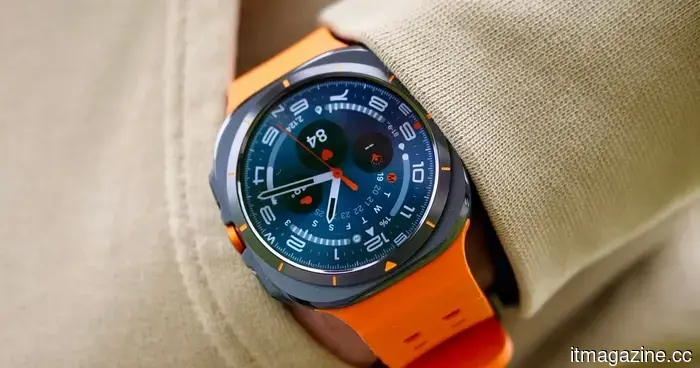 Samsung aims for its forthcoming Galaxy Watch to serve as your AI health assistant.
Samsung is hinting at its upcoming Galaxy Watch, which will serve as an AI-driven health companion, just before the Galaxy Unpacked event on July 22.
Samsung aims for its forthcoming Galaxy Watch to serve as your AI health assistant.
Samsung is hinting at its upcoming Galaxy Watch, which will serve as an AI-driven health companion, just before the Galaxy Unpacked event on July 22.
 Proposal for a social media curfew for older teenagers in the UK
Starting in spring 2027, the UK's social media curfew will deactivate apps overnight for users aged 16 and 17, as well as restrict infinite scrolling by default.
Proposal for a social media curfew for older teenagers in the UK
Starting in spring 2027, the UK's social media curfew will deactivate apps overnight for users aged 16 and 17, as well as restrict infinite scrolling by default.
 Alibaba's stock rises 4% following the approval of Qwen to operate Apple Intelligence in China.
The Cyberspace Administration has authorized Apple AI services in conjunction with Huawei. A startup backed by Khosla has compressed Qwen from 54GB to less than 4GB for on-device operation.
Alibaba's stock rises 4% following the approval of Qwen to operate Apple Intelligence in China.
The Cyberspace Administration has authorized Apple AI services in conjunction with Huawei. A startup backed by Khosla has compressed Qwen from 54GB to less than 4GB for on-device operation.
 Proposed social media curfew in the UK for older teenagers.
The social media curfew in the UK is set to disable apps overnight for those aged 16 and 17, as well as restrict endless scrolling by default, starting in spring 2027.
Proposed social media curfew in the UK for older teenagers.
The social media curfew in the UK is set to disable apps overnight for those aged 16 and 17, as well as restrict endless scrolling by default, starting in spring 2027.
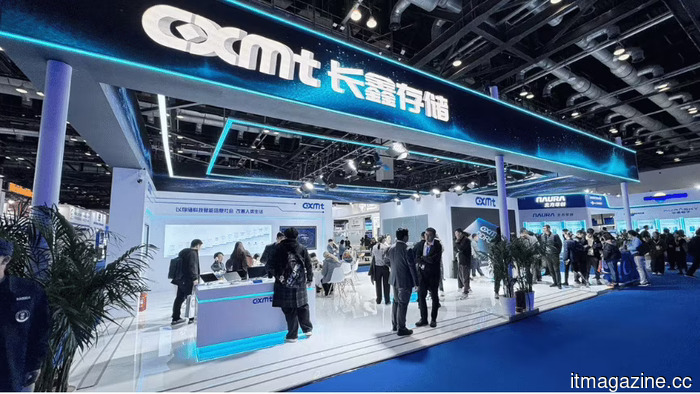 CXMT's IPO is set to become the largest chip listing in China, valued at $85 billion.
The CXMT IPO has been priced at $8.5 billion in Shanghai, marking the largest chip listing in China to date and valuing the memory manufacturer at $85 billion amid the approaching US blacklist.
CXMT's IPO is set to become the largest chip listing in China, valued at $85 billion.
The CXMT IPO has been priced at $8.5 billion in Shanghai, marking the largest chip listing in China to date and valuing the memory manufacturer at $85 billion amid the approaching US blacklist.
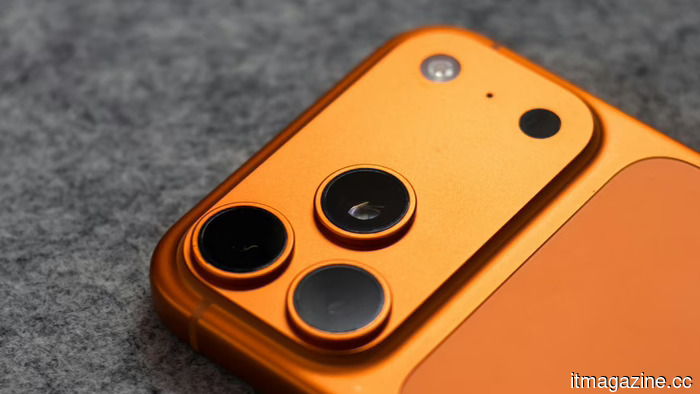 Apple is interested in PrismML's on-device AI technology for the iPhone.
Apple is currently in preliminary discussions with PrismML, a company whose on-device AI compression technology reduces a 27B model to less than 4GB for operation on an iPhone. Apple has not provided any comments on this matter.
Apple is interested in PrismML's on-device AI technology for the iPhone.
Apple is currently in preliminary discussions with PrismML, a company whose on-device AI compression technology reduces a 27B model to less than 4GB for operation on an iPhone. Apple has not provided any comments on this matter.
ASML intends to increase the production speed of its EUV machines by 30% due to the demand for AI exceeding its manufacturing capabilities.
ASML is decreasing the EUV cycle time from 22 weeks to 15-16 weeks. It is almost fully reserved for 2027, with significant orders for 2028 already secured. Guidance has been improved.