
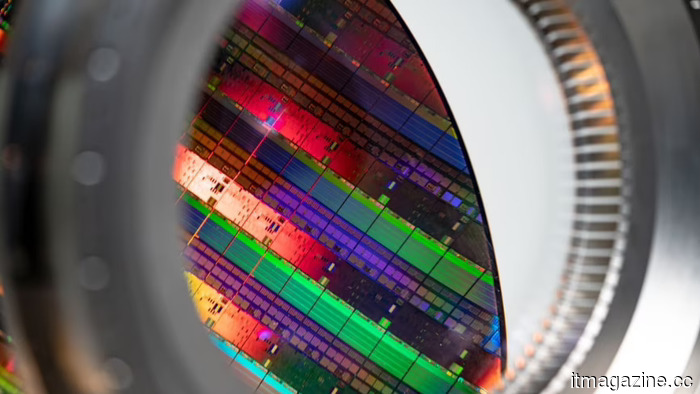
ASML intends to increase the production speed of EUV machines by 30% due to the demand for AI surpassing its current manufacturing capacity.
TL;DR: ASML is reducing the EUV build cycle from 22 weeks to 15-16 weeks. It is nearly sold out for 2027 and has significant orders for 2028. Guidance has been raised to €43-45B, with a planned 30% boost in capacity.
ASML is aiming to shorten the time needed to manufacture and test its extreme ultraviolet lithography machines by about one-third, according to CFO Roger Dassen speaking to reporters on Wednesday. The cycle time, which is the duration from beginning production in ASML’s clean rooms to shipping, was approximately 22 weeks a few quarters ago. “We’re now aiming to reduce that to 15 to 16 weeks,” Dassen mentioned.
The Dutch firm is "close to being fully booked" for EUV machines in 2027, with a "significant number" of orders for 2028. Dassen noted that it is "rare" to have such advance orders, indicating the aggressive capacity expansion by chipmakers for AI purposes. ASML has updated its full-year sales forecast to between €43 billion and €45 billion ($49.2 billion) and intends to boost capacity by 30% for 2027, while also "exploring" an additional 30% increase for 2028.
The company plans to produce around 65 units of its low-NA EUV machines this year. To achieve higher production numbers, ASML is streamlining testing protocols while ensuring quality, reorganizing clean room spaces to prioritize output over R&D, and collaborating with its supply chain to eliminate bottlenecks. “We see opportunities to lessen the testing protocol while still maintaining quality,” Dassen stated. “We can produce more tools, and customers are receptive to that.” Demand for AI infrastructure is leading to long-term supply commitments at every level of the semiconductor industry, from memory to the machines that manufacture chips.
EUV machines take over a year to deliver once an order is placed, and ASML is the only producer of these machines globally. Every advanced chip from TSMC, Samsung, and Intel relies on ASML’s equipment. The capacity limitations mean that the speed at which AI data centers can be established is ultimately dependent on ASML’s ability to deliver lithography tools. The AI memory shortage is already increasing consumer electronics prices, while ASML's production bottleneck exists further upstream, affecting the machines that create the chips used in various products.
Other articles
 Samsung's upcoming flip phone might demand a higher price while providing little in the way of new features.
Samsung's Galaxy Z Flip 8 may come with nearly the same hardware as its predecessor, but with a significant price hike, making last year's discounted foldable much more appealing.
Samsung's upcoming flip phone might demand a higher price while providing little in the way of new features.
Samsung's Galaxy Z Flip 8 may come with nearly the same hardware as its predecessor, but with a significant price hike, making last year's discounted foldable much more appealing.
 Declining Samsung Health AI training will not erase your health history, after all.
Samsung states that opting out of AI training in Samsung Health will solely erase the data gathered for AI development, while leaving current health records unaffected.
Declining Samsung Health AI training will not erase your health history, after all.
Samsung states that opting out of AI training in Samsung Health will solely erase the data gathered for AI development, while leaving current health records unaffected.
 GameNative has made it incredibly simple to load your Android phone with PC game mods.
GameNative’s newest pre-release allows for Nexus Mods downloads and management straight on Android, simplifying PC game modding. However, it advises early users to acknowledge the risks associated with using unfinished software.
GameNative has made it incredibly simple to load your Android phone with PC game mods.
GameNative’s newest pre-release allows for Nexus Mods downloads and management straight on Android, simplifying PC game modding. However, it advises early users to acknowledge the risks associated with using unfinished software.
 Russian hackers continue to infiltrate vital networks via overlooked routers.
State-sponsored Russian hackers are taking advantage of unmaintained routers to infiltrate vital infrastructure networks, leading agencies around the globe to advise organizations to upgrade old equipment and enhance fundamental network security measures.
Russian hackers continue to infiltrate vital networks via overlooked routers.
State-sponsored Russian hackers are taking advantage of unmaintained routers to infiltrate vital infrastructure networks, leading agencies around the globe to advise organizations to upgrade old equipment and enhance fundamental network security measures.
 DeepSeek's IPO is approaching as it aims for a valuation of $71 billion.
A DeepSeek IPO could be possible as early as this year. The Chinese AI lab is seeking a new funding round at a valuation of $71 billion, an increase from $50 billion just six weeks prior.
DeepSeek's IPO is approaching as it aims for a valuation of $71 billion.
A DeepSeek IPO could be possible as early as this year. The Chinese AI lab is seeking a new funding round at a valuation of $71 billion, an increase from $50 billion just six weeks prior.
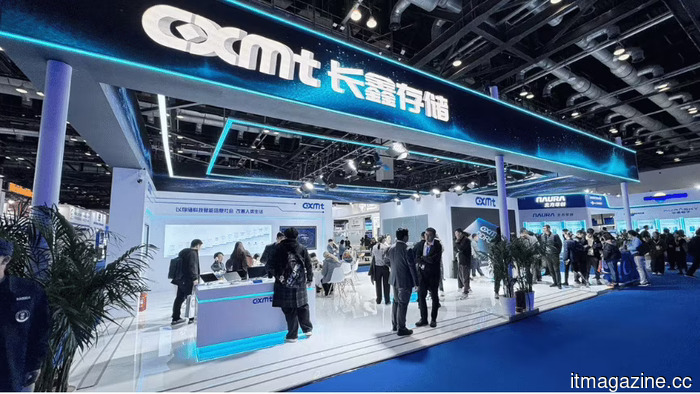 CXMT's IPO is set to become the largest chip listing in China, valued at $85 billion.
The CXMT IPO has been priced at $8.5 billion in Shanghai, marking the largest chip listing in China to date and valuing the memory manufacturer at $85 billion amid the approaching US blacklist.
CXMT's IPO is set to become the largest chip listing in China, valued at $85 billion.
The CXMT IPO has been priced at $8.5 billion in Shanghai, marking the largest chip listing in China to date and valuing the memory manufacturer at $85 billion amid the approaching US blacklist.
ASML intends to increase the production speed of EUV machines by 30% due to the demand for AI surpassing its current manufacturing capacity.
ASML is decreasing the EUV cycle time from 22 weeks to 15-16 weeks. The company is almost fully booked for 2027 and already has significant orders for 2028. Their guidance has been increased.