

OpenAI receives US approval for a widespread rollout of GPT-5.6 following weeks of government evaluation.
OpenAI has received approval to widely release its most advanced model, following the US government’s endorsement of a broader rollout for GPT-5.6, which had been on hold for weeks due to Washington's new oversight policy for frontier AI.
Previously, the model was accessible only through a restricted preview involving about 20 partners, each of which had to be individually authorized by the US government. This arrangement, the first of its kind for an American frontier model, has now been surpassed by the wider release.
The approval came after further testing by the Commerce Department’s Center for AI Standards and Innovation, the agency established to evaluate advanced systems. According to Axios, OpenAI dispatched technical experts to Washington to address the agency's inquiries.
GPT-5.6 consists of a three-tier family rather than a single model: Sol serves as the flagship, Terra offers a more affordable mid-tier option, and Luna is the fastest and least expensive of the trio.
OpenAI has characterized Sol as particularly effective in coding, biology, and cybersecurity, incorporating a “max reasoning effort” mode that allows the model more time to tackle complex problems. These capabilities, especially in the areas of biology and cybersecurity, contributed to the government’s desire for a closer examination before the general release.
The tier system represents a commercial decision in addition to a technical one. Terra targets everyday enterprise workloads where cost is more crucial than performance, while Luna is designed for high-volume tasks requiring speed, allowing OpenAI to set markedly different price points within the same model family.
The prior preview was notably restricted; for weeks, GPT-5.6 was accessible only to a select group of organizations approved by OpenAI in cooperation with the government, marking the first instance of an American lab limiting a frontier model based on a state-sanctioned list.
This review process falls within a framework established by the Trump administration on June 2, which introduced a voluntary pre-release evaluation for the most advanced models. The case of GPT-5.6 went beyond this, transitioning from a voluntary review to a government-regulated access list, a condition OpenAI agreed to only after being requested to postpone the launch.
OpenAI has expressed its discomfort with this precedent, stating it does not believe such government access processes should be a standard practice moving forward, despite its agreement to participate this time.
This unease is understandable, as a government entity that controls a launch can also halt it. The administration has already exercised this authority in the sector by ordering Anthropic to disable two models.
For OpenAI, the commercial implications of this delay were significant. Each week that GPT-5.6 remained in the restricted 20-partner preview allowed competitors to attract the enterprise customers it aimed to reach with the new tiers.
The company anticipates expanding access to GPT-5.6 within days, building on the foundation it established with GPT-5.5 earlier this year. It has indicated that all three tiers will be generally available in the upcoming weeks, although no specific public date has been set.
OpenAI is not the sole lab within the newly introduced regime. The same oversight framework applies to its competitors, suggesting that the manner of this rollout is likely to influence how the next frontier model from any US company is made available to the public.
This situation underscores not just a product timeline but a potential blueprint. For the first time, a prominent US lab has released a frontier model according to the government's timeline instead of its own, necessitating a mutual decision from both sides on whether this will be an isolated incident or indicative of future trends.
Other articles
 Lovable is said to be in discussions to secure $300 million at a valuation of $13.2 billion.
According to Sifted, the Swedish vibe-coding company Lovable is in discussions to secure $300 million at a valuation of $13.2 billion, which would nearly double its valuation from December.
Lovable is said to be in discussions to secure $300 million at a valuation of $13.2 billion.
According to Sifted, the Swedish vibe-coding company Lovable is in discussions to secure $300 million at a valuation of $13.2 billion, which would nearly double its valuation from December.
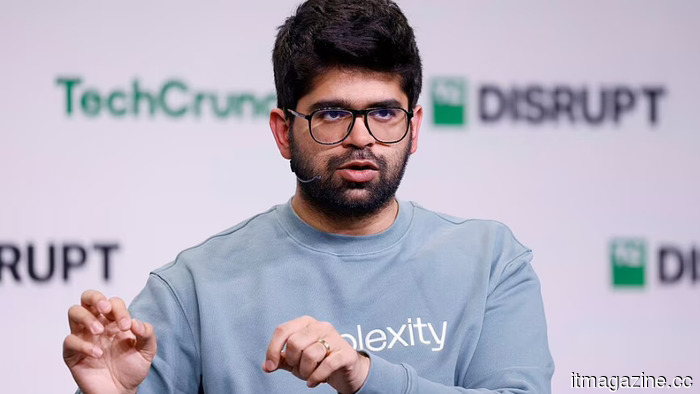 Perplexity registers for Nvidia’s Vera CPU as the chip manufacturer advances beyond AI accelerators.
Perplexity has announced that it will operate its AI agent workloads on Nvidia's new Vera CPU, marking an initial success for Nvidia's efforts in general-purpose computing.
Perplexity registers for Nvidia’s Vera CPU as the chip manufacturer advances beyond AI accelerators.
Perplexity has announced that it will operate its AI agent workloads on Nvidia's new Vera CPU, marking an initial success for Nvidia's efforts in general-purpose computing.
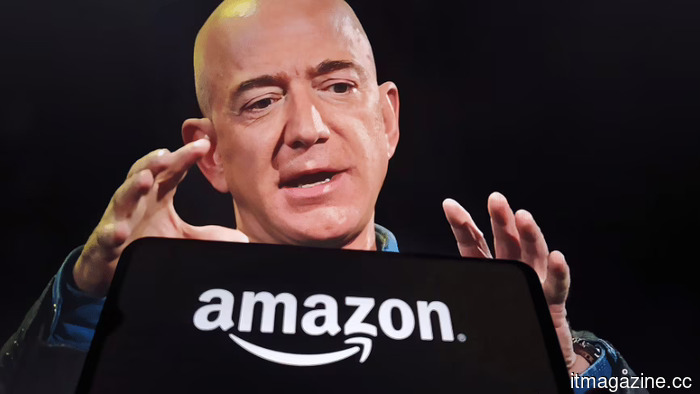 Amazon is re-entering the bond market to raise at least $25 billion to support its AI development.
Amazon is conducting an eight-part bond sale to raise a minimum of $25 billion, marking its largest sale of the year, to fund a $200 billion initiative for AI infrastructure.
Amazon is re-entering the bond market to raise at least $25 billion to support its AI development.
Amazon is conducting an eight-part bond sale to raise a minimum of $25 billion, marking its largest sale of the year, to fund a $200 billion initiative for AI infrastructure.
 OpenAI receives US approval for an extensive rollout of GPT-5.6 following several weeks of government evaluation.
The US Commerce Department has authorized OpenAI to widely launch GPT-5.6, concluding a preview period that restricted the model's use to approximately 20 approved partners.
OpenAI receives US approval for an extensive rollout of GPT-5.6 following several weeks of government evaluation.
The US Commerce Department has authorized OpenAI to widely launch GPT-5.6, concluding a preview period that restricted the model's use to approximately 20 approved partners.
 Lovable is said to be negotiating to secure $300 million at a valuation of $13.2 billion.
According to Sifted, Swedish vibe-coding company Lovable is in discussions to secure $300 million at a valuation of $13.2 billion, which would approximately double its valuation from December.
Lovable is said to be negotiating to secure $300 million at a valuation of $13.2 billion.
According to Sifted, Swedish vibe-coding company Lovable is in discussions to secure $300 million at a valuation of $13.2 billion, which would approximately double its valuation from December.
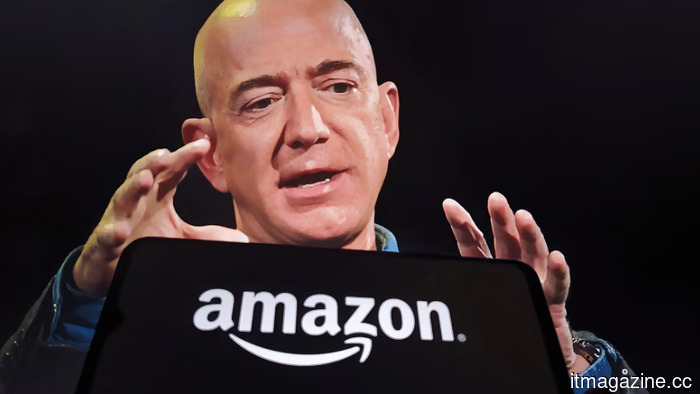 Amazon reenters the bond market seeking at least $25 billion to support its AI expansion.
Amazon is undertaking an eight-part bond sale to raise a minimum of $25 billion, marking its largest sale this year, in order to finance a $200 billion investment in AI infrastructure.
Amazon reenters the bond market seeking at least $25 billion to support its AI expansion.
Amazon is undertaking an eight-part bond sale to raise a minimum of $25 billion, marking its largest sale this year, in order to finance a $200 billion investment in AI infrastructure.
OpenAI receives US approval for a widespread rollout of GPT-5.6 following weeks of government evaluation.
The US Commerce Department has authorized OpenAI to widely release GPT-5.6, concluding a preview period that restricted the model to approximately 20 approved partners.