
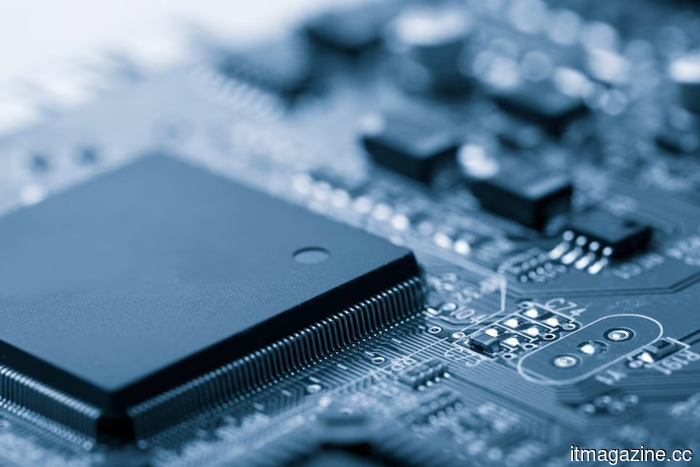
The demand for AI hardware maintains the activity in Asia's factories despite the impacts of the Iran war.
In June, factories across Asia experienced growth once again, largely driven by the global demand for AI hardware, according to survey data released this week. The strong need for chips, servers, and data center equipment kept order books filled, even as the war in Iran raised energy prices and extended shipping times in the region. This trend was most evident in China.
The RatingDog General Manufacturing PMI registered at 51.7 in June, marking the seventh consecutive month of expansion above the 50 threshold that indicates growth versus contraction. High-tech manufacturing was even more robust, achieving a PMI of 53.5, significantly higher than the overall figure. This disparity illustrates how AI-related production is outpacing other sectors of the economy.
Japan presented a similar situation, with its manufacturing PMI increasing to 54.8 from 54.5 the previous month, signifying six straight months of growth, and new orders rising at their fastest rate in over two years. Smaller economies showed positive movements as well, with the Philippines climbing to 50.9 from 50.8, Malaysia returning to expansion at 50.7 from 49.9, and both Taiwan and Vietnam also recording growth.
The unifying theme is hardware. The AI expansion has turned semiconductors, networking equipment, and server components into a significant driver of demand, which Asia is especially well-positioned to supply. A PMI, which is a diffusion index based on a monthly survey of purchasing managers regarding output, orders, employment, and prices, indicates that a reading above 50 shows more firms are expanding than contracting. Therefore, the June results reflect direction rather than the magnitude of any rebound.
When viewed in this light, the consistent trends across the region are as significant as any individual metric. The collective positive indicators from China, Japan, Taiwan, Vietnam, Malaysia, and the Philippines suggest a broad demand capable of withstanding fluctuations in any single market.
This build-up has been particularly beneficial for China, which is seeing export earnings near $500 million per hour, with AI-related products playing a significant role. It also explains how one sector can mitigate the effects of a war: surging demand for technology goods is providing a buffer against geopolitical and trade risks that could otherwise negatively impact performance.
However, this buffer is not without its challenges. Survey analysts noted high price pressures, as supply shortages and shipping delays are extending lead times, influenced by cost increases stemming from the Middle East conflict. Economists have cautioned that the energy shock connected to this conflict could worsen in the coming months. A PMI reading captures momentum rather than sustainability, and momentum can shift abruptly if input costs continue to escalate.
There is also a risk of over-reliance on a single demand cycle. Such heavy dependence on one sector for growth can leave factories vulnerable if AI spending slows down or if export controls become stricter. These regulations are already reshaping supply chains, as U.S. restrictions are steering China’s AI chip efforts away from GPUs toward custom silicon, altering the production demands placed on the region's fabs.
Enforcement is becoming stricter too, with customs officials in the region intercepting shipments suspected of violating restrictions, including a $13 million AI chip seizure in Malaysia destined for re-export. Each new regulation introduces friction, which eventually manifests as longer lead times and higher prices, as the June surveys already indicated. The demand is genuine, but so too are the costs associated with delivering the products that meet it.
For manufacturers, the equation is clear: as long as data centers continue placing orders, production lines will keep operating, and the conflict will remain a cost rather than a disruption. Whether this holds true in the latter half of the year remains uncertain. June showed robust activity, but the same reports that celebrated the AI surge also pointed to impending costs.
Currently, Asia’s manufacturing sector is relying on chips to sustain its operations, and the June numbers suggest that this strategy is effective.
Other articles
 Visa, Mastercard, and 140 companies have introduced Open USD, a stablecoin designed to compete with Circle.
A consortium of 140 members, featuring Visa, Mastercard, Stripe, and Coinbase, has introduced Open USD, a stablecoin with shared governance that targets Circle and Tether.
Visa, Mastercard, and 140 companies have introduced Open USD, a stablecoin designed to compete with Circle.
A consortium of 140 members, featuring Visa, Mastercard, Stripe, and Coinbase, has introduced Open USD, a stablecoin with shared governance that targets Circle and Tether.
 The US has removed export restrictions on Anthropic's Fable 5, allowing the model to be reintroduced.
The US Commerce Department has removed export restrictions on Anthropic’s Claude Fable 5 and Mythos 5, with access set to resume on July 1.
The US has removed export restrictions on Anthropic's Fable 5, allowing the model to be reintroduced.
The US Commerce Department has removed export restrictions on Anthropic’s Claude Fable 5 and Mythos 5, with access set to resume on July 1.
 LG C6H OLED Evo AI Review: Is This the First Significant Upgrade to the C-Series in Years?
The LG C-Series has consistently been the go-to OLED choice for consumers looking for exceptional picture quality, solid gaming capabilities, and reliable overall value. The LG C6H OLED Evo AI doesn't overhaul the established formula, but it brings in enough notable improvements in brightness, processing, and user-friendliness to emerge as the first truly significant upgrade to the C-Series in years.
LG C6H OLED Evo AI Review: Is This the First Significant Upgrade to the C-Series in Years?
The LG C-Series has consistently been the go-to OLED choice for consumers looking for exceptional picture quality, solid gaming capabilities, and reliable overall value. The LG C6H OLED Evo AI doesn't overhaul the established formula, but it brings in enough notable improvements in brightness, processing, and user-friendliness to emerge as the first truly significant upgrade to the C-Series in years.
 Microsoft intends to reduce its workforce by less than 2.5% in a new wave of layoffs.
Microsoft is set to reduce its workforce by less than 2.5% as early as next week, affecting sales, consulting, and Xbox, according to Business Insider.
Microsoft intends to reduce its workforce by less than 2.5% in a new wave of layoffs.
Microsoft is set to reduce its workforce by less than 2.5% as early as next week, affecting sales, consulting, and Xbox, according to Business Insider.
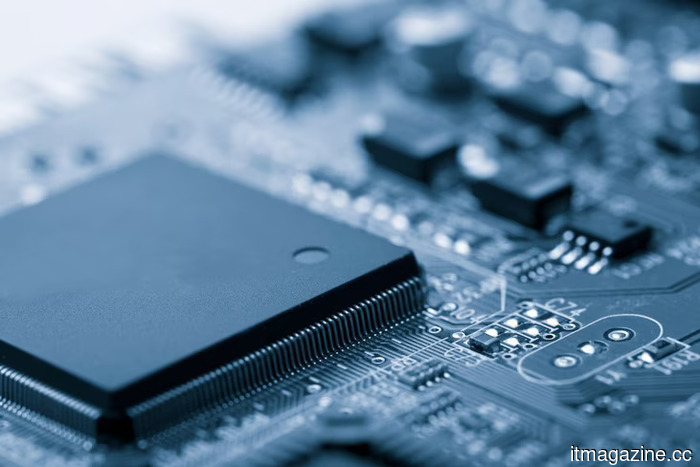 The demand for AI hardware continues to keep Asia's factories busy as the war in Iran takes its toll.
The June PMI data reveals that the AI surge is benefiting factories from China to Japan, counterbalancing the impact of a conflict in the Middle East that is increasing costs.
The demand for AI hardware continues to keep Asia's factories busy as the war in Iran takes its toll.
The June PMI data reveals that the AI surge is benefiting factories from China to Japan, counterbalancing the impact of a conflict in the Middle East that is increasing costs.
 Bending Spoons sets IPO price above the expected range to secure $1.68 billion before its debut on Nasdaq.
Bending Spoons, the owner of Vimeo, along with its investors, secured $1.68 billion by pricing shares at $29 above the initial range, marking one of the largest listings in Europe this year.
Bending Spoons sets IPO price above the expected range to secure $1.68 billion before its debut on Nasdaq.
Bending Spoons, the owner of Vimeo, along with its investors, secured $1.68 billion by pricing shares at $29 above the initial range, marking one of the largest listings in Europe this year.
The demand for AI hardware maintains the activity in Asia's factories despite the impacts of the Iran war.
June PMI data indicates that the AI surge is benefiting factories from China to Japan, counterbalancing the negative impact of a conflict in the Middle East that is increasing costs.