
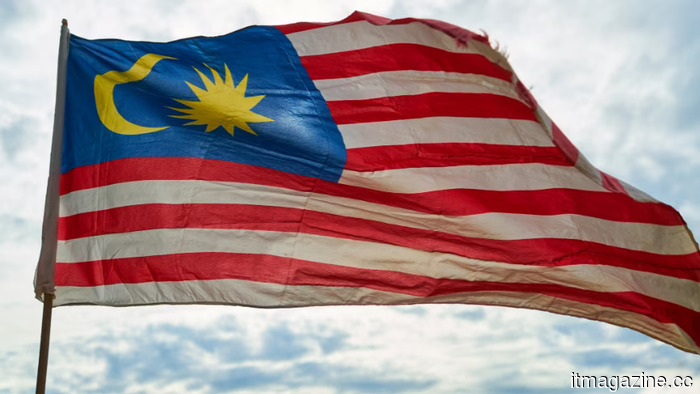
Malaysia seizes a $13 million shipment of AI chips that was intended for re-export.
The shipment that went through Kuala Lumpur was declared as standard computer components. However, within the 72 server units, Malaysian customs officials discovered something that was not included in the documentation: advanced artificial intelligence chips valued at 52.9 million ringgit (approximately $13 million), located in the airport’s free trade zone and awaiting departure. On Friday, Malaysia’s customs department announced that they had seized the shipment and characterized it as a foiled smuggling attempt at the country’s primary airport.
The examination occurred on June 5 at KLIA, where officials inspected a consignment that had arrived by air and been recorded for the free trade zone—a type of bonded area designed to facilitate the passage of goods through a country without formally entering it. According to the department, the servers were meant for re-export to another Asian nation.
This detail is pivotal in the case. Preliminary investigations indicated that the syndicate behind the shipment utilized Malaysia merely as a transit point, selecting it to bypass the restrictions that would have applied on a direct route to their final destination.
The cargo, with a total value of RM52.92 million including duties and taxes, had originated from an Asian country and was labeled as computer components to evade scrutiny, which it ultimately failed to do.
The seizure highlights a critical issue in the AI hardware trade that has emerged over the past two years. In response to pressures from Washington, which has been attempting to restrict the flow of advanced semiconductors to China, Malaysia implemented export controls in 2025 on high-performance chips originating from the US.
These chips are essential for training sizable AI models, and the export controls have turned ordinary logistics hubs into significant areas for enforcement. Southeast Asia finds itself in a challenging position within this effort; its ports and airports are exactly the types of intermediaries that smuggling networks prefer due to the volume of legitimate electronics trade already processed through them.
US prosecutors have claimed that schemes were established to route Nvidia chips via Malaysia and Singapore, leading to Malaysia facing numerous accusations throughout 2025 of being a transit point, whether willingly or not. In this respect, the KLIA seizure demonstrates that Malaysia's enforcement efforts are effective.
What was notably absent from the announcement was just as significant as what was presented. The customs department did not disclose the identity of the chip manufacturer, did not name the syndicate involved, and only referred to the destination as "another Asian country."
In smuggling cases involving bonded zones, such omissions are typical during the initial investigation phase, as authorities are still working to trace the shipment back to its handlers and forward to its purchaser.
The economic rationale behind this trade is quite clear. Restricted chips command high premiums in markets they are prohibited from entering, and such profit margins will always find a logistical route to pursue them.
This hardware lies at the heart of a global expansion effort that sees the manufacturing economies in the region striving to capitalize on it, from South Korea’s chip sector incentives to the multibillion-dollar fabrication investments reshaping the supply chain. The same demand propelling these investments is what makes a shipment of servers filled with chips enticing for smuggling.
Understanding the free trade zone involved in this case is crucial, as it clarifies why airports like KLIA frequently appear in these situations. Goods in a bonded zone are technically not yet imported, allowing legitimate traders to consolidate and redirect shipments without incurring local duties.
Smugglers take advantage of this convenience, treating the zone as a means to sanitize a shipment's origin before it proceeds to a restricted destination. Seizing the cargo within the zone, rather than after it has left, distinguishes between a successful interception and a missed opportunity.
For the time being, 72 servers remain in Malaysian custody instead of operating in a data center elsewhere. The customs department has stated that its investigation is ongoing.
Other articles
 France's statistics agency was targeted by a cyberattack affecting its staff directory.
INSEE reports that a cyberattack revealed the names and work contact information of approximately 12,800 employees. However, no passwords or bank information were compromised, and public census data remains secure.
France's statistics agency was targeted by a cyberattack affecting its staff directory.
INSEE reports that a cyberattack revealed the names and work contact information of approximately 12,800 employees. However, no passwords or bank information were compromised, and public census data remains secure.
 Swatch is seeking $170 million from Samsung due to allegations of copied watch faces.
Swatch is demanding $170 million from Samsung for 26 smartwatch faces that a London court has previously determined infringed upon its trademarks. Samsung describes the amount as inflated.
Swatch is seeking $170 million from Samsung due to allegations of copied watch faces.
Swatch is demanding $170 million from Samsung for 26 smartwatch faces that a London court has previously determined infringed upon its trademarks. Samsung describes the amount as inflated.
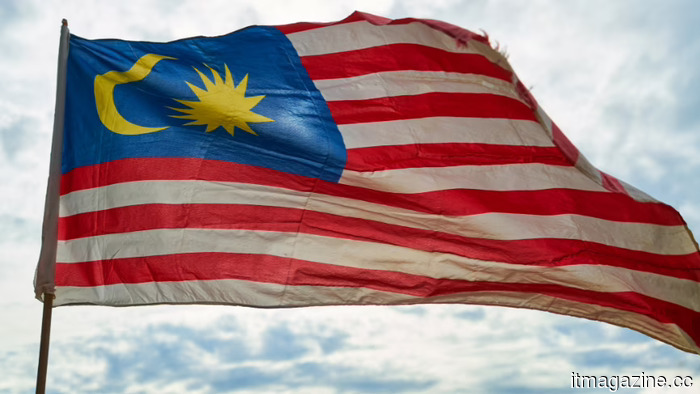 Malaysia seizes a $13 million shipment of AI chips intended for re-export.
Malaysian customs seized 72 servers containing AI chips valued at $13 million at KLIA. These items were declared as computer parts and were intended for re-export to another Asian nation.
Malaysia seizes a $13 million shipment of AI chips intended for re-export.
Malaysian customs seized 72 servers containing AI chips valued at $13 million at KLIA. These items were declared as computer parts and were intended for re-export to another Asian nation.
 Zalando's shares drop following the initiation of an accounting review by the German regulator.
Zalando saw a decline of up to 20% after Germany's BaFin initiated a review of its financial statements following a disclosure from About You. Zalando describes this as a formal issue that is not material.
Zalando's shares drop following the initiation of an accounting review by the German regulator.
Zalando saw a decline of up to 20% after Germany's BaFin initiated a review of its financial statements following a disclosure from About You. Zalando describes this as a formal issue that is not material.
Malaysia seizes a $13 million shipment of AI chips that was intended for re-export.
Malaysian customs confiscated 72 servers filled with AI chips valued at $13 million at KLIA, which were declared as computer components and intended for re-export to another Asian nation.