
Australia's ban on social media for teens appears effective in theory, but it's not as successful in reality.
A law’s effectiveness is determined by its enforcement, and Australia’s prohibition on social media access for those under 16 seems to have loopholes. On June 26, six months after this groundbreaking measure was implemented, Prime Minister Anthony Albanese expressed a desire to strengthen the ban, following a new study indicating it had minimal impact on keeping teens off the targeted platforms.
The study, published in the British Medical Journal, highlighted that 85% of Australians aged 12 to 15 continued to use social media three months post-ban. Two-thirds of the young users bypassed the restrictions by simply stating they were over 16 or by posting selfies that the platform's system accepted as belonging to an older user. The loophole remains, and many teenagers have managed to circumvent it.
The government's approach is to enhance enforcement rather than modify the legislation. Canberra aims to rigorously test the law, which prohibits platforms like Meta’s Instagram and Google’s YouTube from allowing account creation by users under 16. A key focus, according to Albanese, is to ensure the eSafety Commission—the nation's internet regulator—has adequate power to fulfill its responsibilities.
This regulator has already reported that Meta, TikTok, and YouTube are not adhering to the ban. The eSafety Commission, along with Communications Minister Anika Wells, is preparing legal action against several platforms. Companies found to repeatedly violate the ban could face a maximum fine of A$49.5 million (around $34 million), a sum significant enough to command corporate attention but not so large as to jeopardize those businesses.
The findings in the study bolster the government's argument. The BMJ article suggests that the law has influenced where teenagers claim to be rather than their actual location. An age restriction that relies on users accurately providing their date of birth or on an algorithm correctly estimating age from a selfie is inherently flawed, and two-thirds of underage users seem to have exploited this vulnerability.
Australia’s pioneering position in this matter draws interest from beyond its own borders. Countries in Europe and elsewhere are considering similar age restrictions. Norway is following Australia with its under-16 ban, the UK is contemplating comparable measures, and several nations are observing Canberra to determine if a strict ban can be effectively enforced.
Initial evidence is somewhat mixed, serving both sides: it shows that a law can be enacted and that platforms can be pressured to comply, but also emphasizes that enacting the law is the simpler part of the equation. Italy’s prime minister has further warned that these types of bans can easily be evaded.
The underlying issue highlighted by the BMJ paper is that an age limit enforced mainly through self-declaration relies heavily on trust. Australia led the way globally with this legislation and is now publicly learning what enforcement of such a law truly entails.
Other governments observing this experiment will have taken note of both the ambition involved and the disparity between legislation and its actual impact.
Moving forward involves legal action against specific platforms, a review of the eSafety Commission’s authority, and likely a second study to assess if stricter enforcement affects the 85% statistic at all. The ban has been in place for six months, and the question of its effectiveness remains unresolved.
Other articles
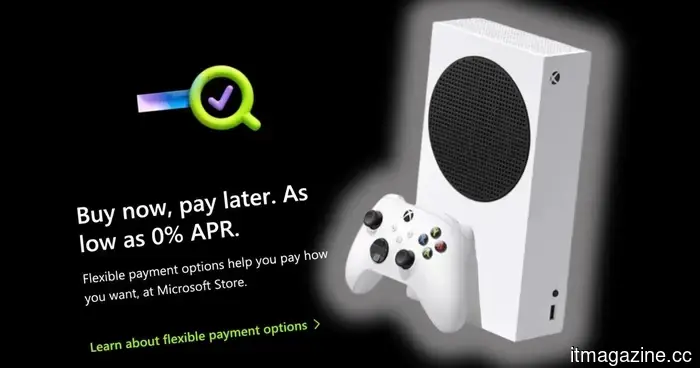 With Xbox prices increasing, Microsoft introduces a Buy Now, Pay Later option for consoles.
The Buy Now Pay Later option on the Microsoft Store is available in partnership with PayPal, allowing you to divide your purchase into 24 payments.
With Xbox prices increasing, Microsoft introduces a Buy Now, Pay Later option for consoles.
The Buy Now Pay Later option on the Microsoft Store is available in partnership with PayPal, allowing you to divide your purchase into 24 payments.
 Australia's ban on social media for teenagers is effective in theory, but not as much in real life.
A study reveals that 85% of Australian youths aged 12 to 15 continue to use social media six months after the ban for those under 16 was implemented. The government in Canberra is now seeking stricter enforcement measures.
Australia's ban on social media for teenagers is effective in theory, but not as much in real life.
A study reveals that 85% of Australian youths aged 12 to 15 continue to use social media six months after the ban for those under 16 was implemented. The government in Canberra is now seeking stricter enforcement measures.
 Samsung's latest budget smartphone, the Galaxy A27 5G, is priced at $50 higher, but it reduces two important features.
Although the Galaxy A27 5G has seen a $50 increase in price, it falls short in a few aspects compared to the A26. However, it does feature a quicker processor and a more stylish design with AI enhancements.
Samsung's latest budget smartphone, the Galaxy A27 5G, is priced at $50 higher, but it reduces two important features.
Although the Galaxy A27 5G has seen a $50 increase in price, it falls short in a few aspects compared to the A26. However, it does feature a quicker processor and a more stylish design with AI enhancements.
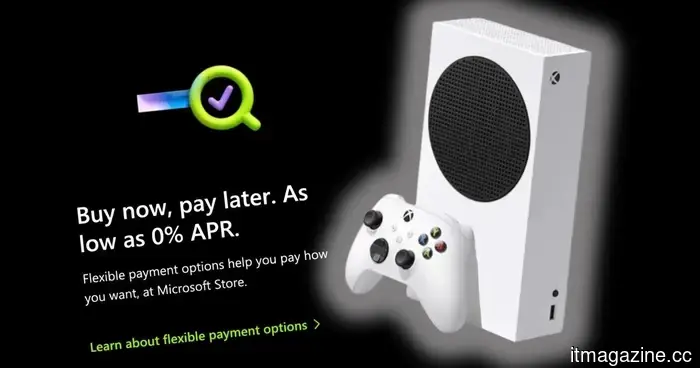 As Xbox prices increase, Microsoft introduces a Buy Now, Pay Later program for its consoles.
The Buy Now Pay Later option provided on the Microsoft Store is in partnership with PayPal, allowing you to divide your purchase into 24 payments.
As Xbox prices increase, Microsoft introduces a Buy Now, Pay Later program for its consoles.
The Buy Now Pay Later option provided on the Microsoft Store is in partnership with PayPal, allowing you to divide your purchase into 24 payments.
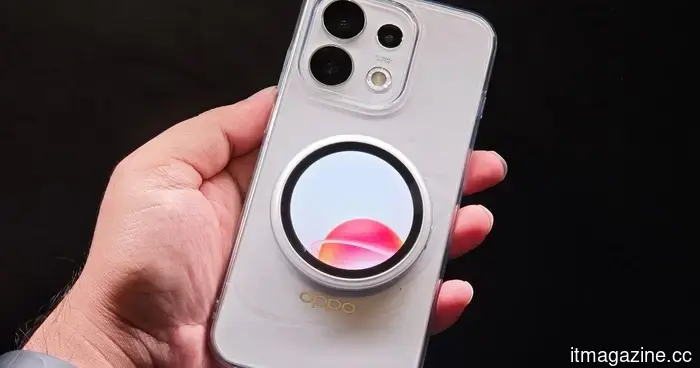 This Oppo phone features an eye-catching 3D back, but its magnetic Bubble is the standout feature.
The Oppo Reno 16 Pro is set to launch worldwide, featuring a 200MP camera, a 144Hz OLED screen, a 6,000mAh battery, and a limited-time discount for its European release.
This Oppo phone features an eye-catching 3D back, but its magnetic Bubble is the standout feature.
The Oppo Reno 16 Pro is set to launch worldwide, featuring a 200MP camera, a 144Hz OLED screen, a 6,000mAh battery, and a limited-time discount for its European release.
Australia's ban on social media for teens appears effective in theory, but it's not as successful in reality.
A study reveals that 85% of Australians aged 12 to 15 continue to use social media six months after the implementation of the under-16 ban. The government in Canberra is now seeking stricter enforcement measures.