

Tombot secures $7 million to launch its robotic dog, Jennie.
Tombot, a company based near Los Angeles that produces a robotic dog for individuals unable to care for a real pet, has secured $7 million in a Series A3 financing round aimed at transitioning its main product from development to production. On June 24, the company announced that the investment came from Caduceus Capital Partners, Wavemaker 360, the Lutheran Foundation for Long Term Living, and the Florida Community Health Network, a blend of healthcare and aging-services investors instead of the usual consumer-tech names.
This funding is intended to support Tombot until its scheduled launch in the fall. The company indicates that this financing will enable it to increase manufacturing capacity, broaden its operations, and expedite commercialization ahead of its customer launch in Fall 2026, marking the initial shipments to paying customers. Tombot also reported more than 23,000 pre-orders and waitlist sign-ups for the product, citing this as proof of demand prior to any units being shipped.
The product in question is a robotic Labrador puppy named Jennie, designed to simulate the behavior of an eight-to-ten-week-old dog. The company claims that Jennie is fully autonomous and designed to imitate the movements and reactions of a real puppy, aiming to provide companionship and the purported health benefits of a live pet without the need for feeding, walking, or veterinary expenses.
Tombot targets over 300 million individuals globally living with dementia or mild cognitive impairment, along with those dealing with anxiety, loneliness, autism, and PTSD. The company integrates Jennie into discussions about an aging population, caregiver shortages, and the resulting social isolation, addressing the same issues that many emerging dementia-care technologies are seeking to solve.
Tombot describes its robotic companions as a means to offer comfort and emotional connection to older adults who would benefit from a pet but are unable to care for one. “This financing represents a significant milestone as we move from product development to commercial scale,” said founder and CEO Tom Stevens, who has indicated that the concept was inspired by his mother’s experiences. He portrayed the investors as supporters who understand “both the considerable market opportunity and the positive social impact of companion robotics,” stating that the funding will allow the company to meet demand, execute its launch, and expand its product line.
The investors echoed the social-impact messaging. Dr. Mark Gusek, president and CEO of the Lutheran Foundation, remarked that the potential of the technology “became immediately clear” upon viewing the robot and described Jennie as a product that could “transform the daily lives” of individuals with cognitive challenges who cannot safely keep a live pet. Ryan McKindles, managing partner at Caduceus Capital Partners, cited “the convergence of an aging population, caregiver shortages, and increasing loneliness” as the rationale for their investment. Caduceus had led Tombot’s Series A last year and returned for this latest round.
Tombot has been preparing for this moment for some time. Jennie was first launched in early 2024, and the company reports that it has generated interest from consumers, healthcare providers, senior living operators, and caregiving organizations. The funding places the company at the intersection of robotics, healthcare, and consumer technology—a position many companies have sought but few have successfully turned into a marketable product.
The funding amount is also consistent with current trends in robotics, matching the size of a seed round raised by another consumer robotics startup earlier this year to automate a specific physical task. The success of Jennie now hinges on execution rather than just the concept. Tombot has secured pre-orders, backing, and a launch date, but it acknowledges that it lacks a proven track record of delivering the product to customers. The upcoming autumn will reveal if the waitlist translates into a viable business, a challenge every pre-launch hardware company ultimately faces.
Другие статьи
 Oracle lays off approximately 500 employees in Romania as it continues its AI restructuring efforts.
Oracle is eliminating approximately 500 positions in Romania, following a similar local layoff from the previous year, as part of its ongoing worldwide restructuring driven by AI.
Oracle lays off approximately 500 employees in Romania as it continues its AI restructuring efforts.
Oracle is eliminating approximately 500 positions in Romania, following a similar local layoff from the previous year, as part of its ongoing worldwide restructuring driven by AI.
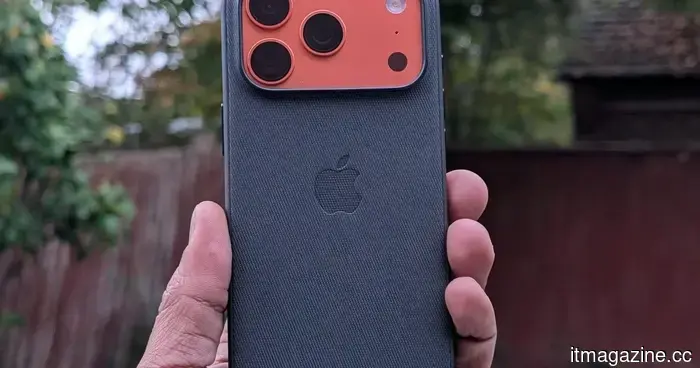 I skipped most of the Prime Day deals on iPhone accessories, but these five are worth the investment.
Five iPhone accessories available at Prime Day 2026 prices, each chosen for its ability to address a genuine issue rather than merely appealing to specifications.
I skipped most of the Prime Day deals on iPhone accessories, but these five are worth the investment.
Five iPhone accessories available at Prime Day 2026 prices, each chosen for its ability to address a genuine issue rather than merely appealing to specifications.
 H.B. Fuller is close to finalizing a $628 million agreement to acquire the UK-based wound-care company AMS, despite opposition from its own investors.
H.B. Fuller has accepted a cash offer of 285p per share for AMS, which values its equity at approximately $628 million, while activist group Ancora is urging the board to reject the offer.
H.B. Fuller is close to finalizing a $628 million agreement to acquire the UK-based wound-care company AMS, despite opposition from its own investors.
H.B. Fuller has accepted a cash offer of 285p per share for AMS, which values its equity at approximately $628 million, while activist group Ancora is urging the board to reject the offer.
 OpenAI has enhanced GPT-5.5 Instant, making conversations more enjoyable, and users are likely to notice the difference.
OpenAI has upgraded GPT-5.5 Instant, enhancing ChatGPT's default model to be more conversational, improved at providing advice, and more user-friendly for daily interactions.
OpenAI has enhanced GPT-5.5 Instant, making conversations more enjoyable, and users are likely to notice the difference.
OpenAI has upgraded GPT-5.5 Instant, enhancing ChatGPT's default model to be more conversational, improved at providing advice, and more user-friendly for daily interactions.
 Two additional researchers from Gemini are departing Google to join Anthropic.
Jonas Adler and Alexander Pritzel, two significant contributors to Gemini, are departing from Google to join Anthropic, marking the latest in a series of notable exits in the AI field.
Two additional researchers from Gemini are departing Google to join Anthropic.
Jonas Adler and Alexander Pritzel, two significant contributors to Gemini, are departing from Google to join Anthropic, marking the latest in a series of notable exits in the AI field.
 Nothing provides a sneak peek of the Phone 4b before its launch on July 7.
The design of the upcoming Phone 4b has not been disclosed, but it is said to combine the unibody structure of the 4a Pro with the Glyph Bar from the regular 4a.
Nothing provides a sneak peek of the Phone 4b before its launch on July 7.
The design of the upcoming Phone 4b has not been disclosed, but it is said to combine the unibody structure of the 4a Pro with the Glyph Bar from the regular 4a.
Tombot secures $7 million to launch its robotic dog, Jennie.
Tombot has successfully secured $7 million in a Series A3 funding round to enhance the production of Jennie, its robotic companion dog, in preparation for a launch scheduled for Fall 2026.