
VivaTech celebrates its 10th anniversary and is fully investing in AI that delivers real results.
Ten years after its inception as France's response to major global tech events, VivaTech has established itself as Europe's platform for showcasing the future, with the 2026 edition marking its most assured iteration to date. Each June, a section of southwest Paris transforms into a bustling hub of European technology.
VivaTech is the largest tech and startup festival on the continent, spanning four days at Paris Expo Porte de Versailles, where founders, investors, engineers, students, and officials converge. Its purpose is elegantly straightforward: to bring together those who are shaping the future and those with the means to fund, hire, regulate, or purchase it. After a decade, this concept has become a key highlight on the international tech calendar.
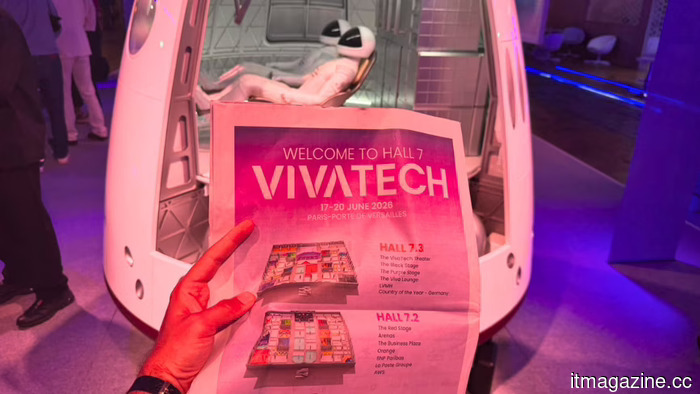
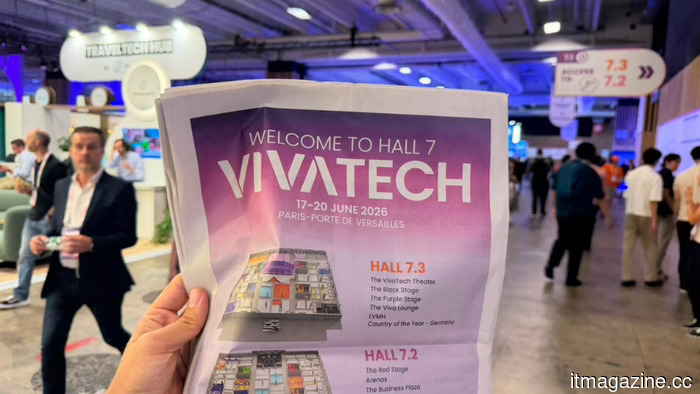
The latest updates from the EU tech landscape, insights from our founder Boris, and some questionable AI art are available for free every week in your inbox. Sign up now! This year’s edition, which took place from June 17 to 20, was the festival’s 10th anniversary, celebrated with an attendance of around 200,000 visitors, an increase from approximately 180,000 in 2025. To accommodate more participants, the organizers opened a new three-story Hall 7, adding about 40% more space and nearly doubling the seating from the previous year.
This growth tells its own narrative; over a decade, VivaTech reported a 300% increase in audience size, a tripling of startup participation, and roughly a twelvefold rise in investor attendance. What began in 2016 as France's answer to major global tech fairs is now comfortably the largest in Europe.
The theme for this year's festival set the tone: “Artificial intelligence: impact, not illusion.” This confident framing was an invitation to transcend the hype and focus on AI that yields tangible, measurable results, and the four-day program largely delivered on this promise. The leading presentation, fittingly, focused on grand ideas.
On the opening afternoon, Jeff Bezos shared the main stage for about 50 minutes with Blue Origin's CEO Dave Limp, in a session moderated by former NASA astronaut Mike Massimino. Instead of discussing retail or AI directly, the Amazon founder advocated for relocating heavy, polluting industries off Earth, creating what he termed a “garden planet” that could revert to its pre-industrial state.
As Bezos and Limp communicated to various outlets, their argument was that moving industry to space is the only scenario where economic growth and environmental sustainability can truly coexist. In this vision, the Moon is portrayed not as an extravagant destination, but as a source of essential materials for building space infrastructure, with its water ice convertible to liquid oxygen for deep-space missions at a fraction of the cost of launching fuel from Earth. Limp noted an intriguing detail that circulated throughout the week, sharing that Bezos had stated Blue Origin could one day surpass Amazon in size. This expansive, optimistic vision resonated deeply with the audience.
Bezos expressed a sentiment that captured the festival's atmosphere better than any keynote visual: there has never been a better time to be an entrepreneur. Coming from the founder of one of the most valuable companies ever, addressing an audience eager to create the next big success, this message was received as encouragement rather than mere promotion.
The following day featured a focus on geopolitics as Indian Prime Minister Narendra Modi joined French President Emmanuel Macron on stage on June 18, with India participating as the event’s official AI Country Partner. According to India, this was its most significant presence at the festival yet, with over 80 deep-tech companies and startups showcasing innovations across various sectors, including digital infrastructure, health tech, clean energy, mobility, and advanced computing.
Modi leveraged this platform to advocate for a human-centric approach to AI governance based on the MANAV framework, which reflects democratic values and emphasizes issues pertinent to the Global South. The united message from Paris and New Delhi, as described by the French outlet Info.fr, emphasized Europe and India creating their own confident narrative in AI, distinct from the dominant American and Chinese paradigms. This aligns with TNW’s ongoing observation of Europe striving to address its AI sovereignty challenges. It underscored how far VivaTech has evolved from a national trade show to a global stage where two democracies articulate shared technological visions.
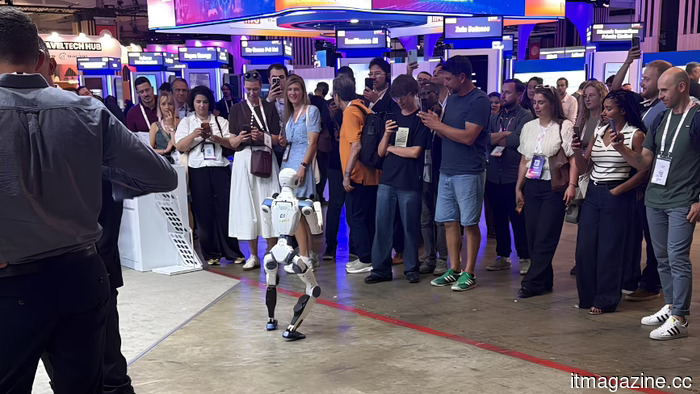
The exhibition floor was the arena where “impact, not illusion” had to manifest, with many of the most discussed displays focusing heavily on tangible innovations. Humanoid robotics featured more prominently than in any past edition. The Chinese company Unitree collaborated with the French neuro-AI startup HABS to showcase a humanoid, including live demonstrations of directing a robot using non-invasive brain signals. French startup Enchanted Tools presented Mirokai, a wheeled humanoid already tested in medical settings, while PAL Robotics showcased its TIAGo Pro and a newer humanoid named Kangaroo, alongside Agibot from China displaying its Lingxi X2.
Yet not everything was robotic. The French company Lifepods attracted attention
Other articles
 Copia secures $26 million to safeguard the software that operates factories.
Copia secured $26 million, increasing its total funding to $55 million, to introduce version control and backups for the PLC code operating factories and essential infrastructure.
Copia secures $26 million to safeguard the software that operates factories.
Copia secured $26 million, increasing its total funding to $55 million, to introduce version control and backups for the PLC code operating factories and essential infrastructure.
 Databricks acquires Panther Labs as part of its cybersecurity initiative.
Databricks is acquiring Panther Labs, marking its third move in the cybersecurity sector, to create a 'security lakehouse' and compete against Splunk and CrowdStrike using AI agents.
Databricks acquires Panther Labs as part of its cybersecurity initiative.
Databricks is acquiring Panther Labs, marking its third move in the cybersecurity sector, to create a 'security lakehouse' and compete against Splunk and CrowdStrike using AI agents.
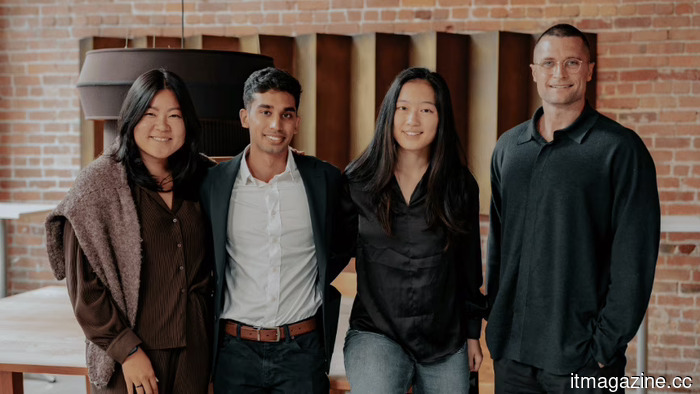 Andera secures $37 million to enhance audit automation through AI technology.
Andera secured a $37 million Series A funding round led by Lightspeed to automate internal audits using AI, addressing the Excel-intensive process that has seen little change since 2002.
Andera secures $37 million to enhance audit automation through AI technology.
Andera secured a $37 million Series A funding round led by Lightspeed to automate internal audits using AI, addressing the Excel-intensive process that has seen little change since 2002.
 Databricks acquires Panther Labs to enhance its cybersecurity efforts.
Databricks is acquiring Panther Labs, marking its third transaction in the cybersecurity sector, to establish a 'security lakehouse' and compete with Splunk and CrowdStrike using AI agents.
Databricks acquires Panther Labs to enhance its cybersecurity efforts.
Databricks is acquiring Panther Labs, marking its third transaction in the cybersecurity sector, to establish a 'security lakehouse' and compete with Splunk and CrowdStrike using AI agents.
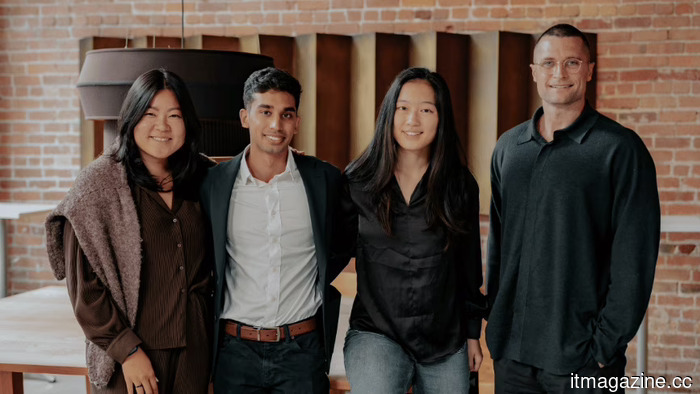 Andera secures $37 million to automate auditing using AI.
Andera secured a $37 million Series A funding round led by Lightspeed to enhance internal audits through AI, addressing the Excel-dependent workload that has seen little change since 2002.
Andera secures $37 million to automate auditing using AI.
Andera secured a $37 million Series A funding round led by Lightspeed to enhance internal audits through AI, addressing the Excel-dependent workload that has seen little change since 2002.
 Copia secures $26 million to safeguard the software that operates factories.
Copia secured $26 million, bringing its total funding to $55 million, to implement version control and backups for the PLC code that operates factories and essential infrastructure.
Copia secures $26 million to safeguard the software that operates factories.
Copia secured $26 million, bringing its total funding to $55 million, to implement version control and backups for the PLC code that operates factories and essential infrastructure.
VivaTech celebrates its 10th anniversary and is fully investing in AI that delivers real results.
VivaTech 2026 attracted 200,000 attendees to Paris for its 10th anniversary: Bezos discussed lunar ventures, while Modi and Macron proposed an alternative approach to AI, and the exhibition showcased robots.