
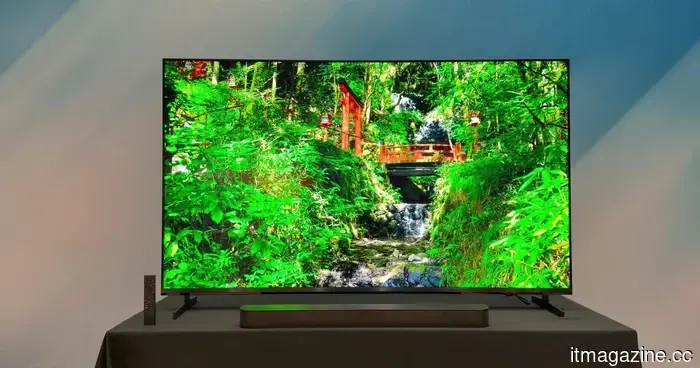
A handbook for Sony’s TV and home theater offerings in 2026.
Sony believes it may have found the key to home theater technology this year. The company is launching more than just new TVs; it is also reimagining how televisions produce color with a new feature called True RGB, while expanding its home theater offerings with products like the BRAVIA Theater Trio. After previewing the new lineup in New York, it’s clear why Sony considers True RGB to be a significant highlight of its 2026 offerings.
The focus of Sony’s presentation was on this new technology, but the overarching message was also intriguing. The company noted that many high-end TVs are still designed with optimal viewing conditions in mind rather than the actual environments where most people watch TV. Sony presented data indicating that only about 13% of viewers watch content in settings akin to a movie theater or a professional grading suite, while the other 87% watch in bright living rooms, open layouts, and areas where lighting fluctuates during the day.
The reason behind Sony's critique of current TVs
Sony’s claim is clear: many premium televisions are tailored for ideal viewing situations rather than real-world use. This can explain why a TV looks fantastic at night but less so during daylight when sunlight, reflections, and surrounding light start to interfere with the image. Sony designed True RGB to specifically tackle this issue by enhancing the way displays reproduce and maintain color in typical viewing environments.
How True RGB differentiates itself
Sony’s description of True RGB begins with the typical methods of color creation in many premium TVs. Common Mini LED and QLED models use a blue or white light source that is filtered and processed to generate the colors displayed on screen. In contrast, True RGB employs independently controlled red, green, and blue diodes directly within the backlighting system. This setup allows the desired color to be produced at the source before reaching the LCD layer.
According to Sony, this method of generating color results in cleaner and more accurate color reproduction. The company showcased the technology through a series of side-by-side comparisons, highlighting three key advantages that emerged during the presentation.
Three key points Sony aimed to demonstrate
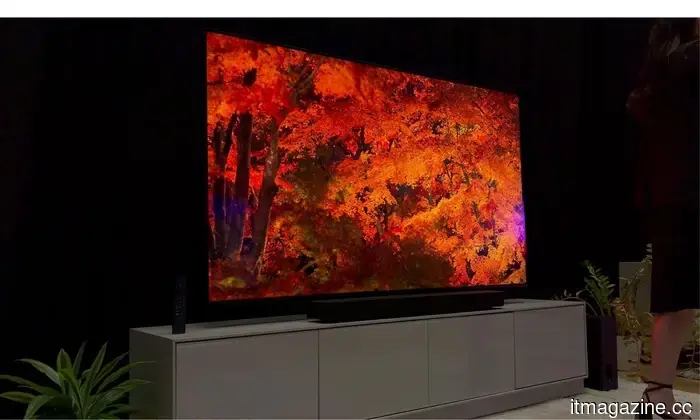
The first advantage is color volume. Sony claims that the new True RGB system provides approximately double the color volume of the original BRAVIA 9 Mini LED and up to four times that of the BRAVIA 8 OLED. This capability helps bright scenes retain vibrancy, preventing them from appearing washed out as brightness levels increase, which results in richer images without distorting colors.
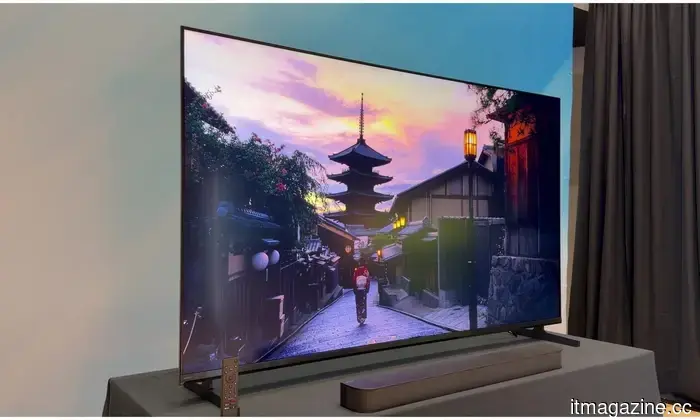
The second focus was on viewing angles. Sony states that because color is generated through both the backlight and LCD layers, image quality remains more stable when viewed from various seating positions. This is particularly crucial for larger living spaces where viewers may not always sit directly in front of the screen.
The third advantage discussed in the demonstrations was smooth gradation. By integrating its image processing technology with independent RGB control, Sony claims it can minimize visible color banding and facilitate smoother transitions in scenes that depend on subtle color variations, like skies and sunsets.
Sony's take on the OLED versus Mini LED discussion
Few subjects spark more conversation among TV enthusiasts than the comparison of OLED and Mini LED technologies. OLED is renowned for its deep black levels, high contrast, and superior viewing angles, while Mini LED excels in brightness, especially in well-lit environments. Sony believes that True RGB can combine the best aspects of both technologies.
The company asserts that True RGB offers viewing angles and contrast comparable to OLED while still benefiting from the brightness of Mini LED. Much of the presentation centered on this concept, presenting the technology as a means to reconcile a choice consumers have typically had to make between different strengths.
The BRAVIA 9 II leads the lineup
At the forefront of Sony's 2026 television range is the BRAVIA 9 II, the company’s premier True RGB model. This TV will be offered in sizes from 65 to 115 inches and is crafted to closely replicate the performance and creative intent of Sony’s professional mastering monitors utilized by filmmakers and studios. According to Sony, the BRAVIA 9 II showcases the most advanced implementation of True RGB technology in its offerings.
The BRAVIA 7 II makes True RGB accessible
Sony is also launching the BRAVIA 7 II, which makes True RGB technology available to a wider audience. Ranging from 50 inches to 98 inches, this model is intended as a more affordable entry point into Sony’s latest display innovations while still providing many of the advantages highlighted in the company's demonstrations.
OLED remains part of the equation
Though True RGB is the standout technology this year, Sony continues to offer OLED options with the BRAVIA 8 II and standard BRAVIA 8 models. The company showcased these alongside its new True RGB offerings, providing customers with various choices based on their display technology preferences and budget considerations.
The BRAVIA Theater Trio addresses audio issues
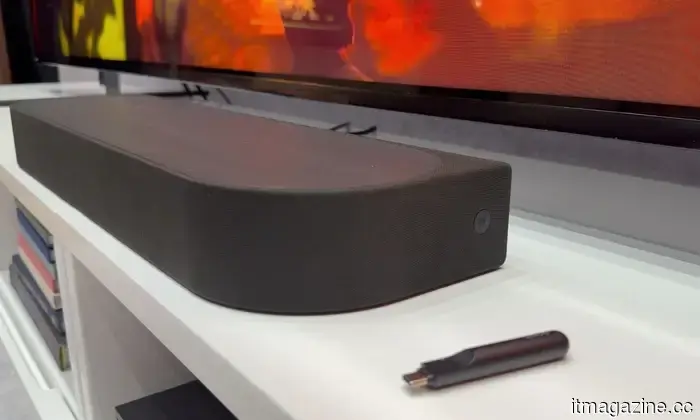
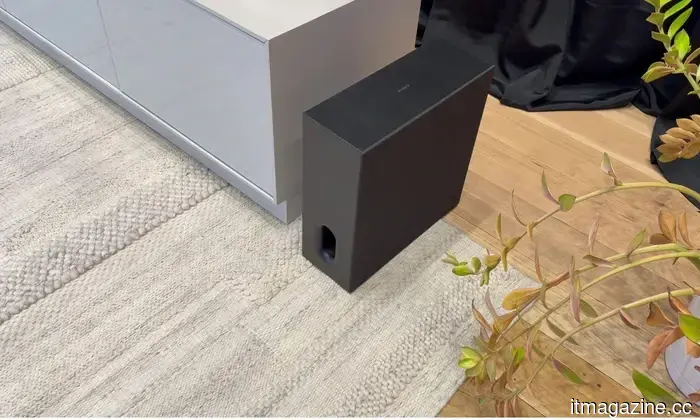
Sony also used the event to launch the BRAVIA Theater Trio, a new home theater audio solution designed to tackle
Other articles
 Rivian R2 initial drive: A mid-sized electric vehicle disruptor exceeding expectations for its price point.
Rivian’s R2 combines intelligent cost-effective engineering with impressive performance, off-road abilities, and a high-end feel, positioning it as an attractive new competitor in the bustling mid-range electric SUV segment.
Rivian R2 initial drive: A mid-sized electric vehicle disruptor exceeding expectations for its price point.
Rivian’s R2 combines intelligent cost-effective engineering with impressive performance, off-road abilities, and a high-end feel, positioning it as an attractive new competitor in the bustling mid-range electric SUV segment.
 Reasons for Increased Adoption of Bitrix24 by Companies for CRM, Project Management, and Team Collaboration in 2026
As companies aim to minimize software clutter and enhance operational effectiveness, platforms such as Bitrix24 are integrating CRM, project management, collaboration, communication, and AI-driven tools into a single workspace tailored for expanding teams.
Reasons for Increased Adoption of Bitrix24 by Companies for CRM, Project Management, and Team Collaboration in 2026
As companies aim to minimize software clutter and enhance operational effectiveness, platforms such as Bitrix24 are integrating CRM, project management, collaboration, communication, and AI-driven tools into a single workspace tailored for expanding teams.
 Sony's latest 135-inch display exemplifies the pinnacle of opulence for boardrooms.
Sony's Crystal LED UNIFY introduces a 135-inch all-in-one LED wall designed for professional environments, featuring simplified installation, a brightness of 800 nits, and set to be available in early 2027.
Sony's latest 135-inch display exemplifies the pinnacle of opulence for boardrooms.
Sony's Crystal LED UNIFY introduces a 135-inch all-in-one LED wall designed for professional environments, featuring simplified installation, a brightness of 800 nits, and set to be available in early 2027.
 First drive of the Rivian R2: A mid-sized electric vehicle that exceeds expectations for its price range.
Rivian’s R2 combines intelligent cost-efficient engineering with impressive performance, off-road capabilities, and a premium quality, positioning it as a strong new competitor in the bustling mid-range electric SUV sector.
First drive of the Rivian R2: A mid-sized electric vehicle that exceeds expectations for its price range.
Rivian’s R2 combines intelligent cost-efficient engineering with impressive performance, off-road capabilities, and a premium quality, positioning it as a strong new competitor in the bustling mid-range electric SUV sector.
 Deliveries of the Rivian R2 SUV have started, but not for the variant that most customers are likely interested in.
Rivian's compact electric SUV is now available for purchase, but those anticipating the more budget-friendly R2 trims will need to wait a bit longer.
Deliveries of the Rivian R2 SUV have started, but not for the variant that most customers are likely interested in.
Rivian's compact electric SUV is now available for purchase, but those anticipating the more budget-friendly R2 trims will need to wait a bit longer.
 Deliveries of the Rivian R2 SUV have commenced, although not for the variant that most customers are likely seeking.
Rivian's compact electric SUV is now available, but those looking for the more budget-friendly R2 trims will need to be patient a bit longer.
Deliveries of the Rivian R2 SUV have commenced, although not for the variant that most customers are likely seeking.
Rivian's compact electric SUV is now available, but those looking for the more budget-friendly R2 trims will need to be patient a bit longer.
A handbook for Sony’s TV and home theater offerings in 2026.
Sony's 2026 home theater range features the new BRAVIA 9 II, BRAVIA 7 II, BRAVIA 8 II, and Theater Trio. Here's an overview of what True RGB offers and which items are noteworthy in the company's newest collection.