
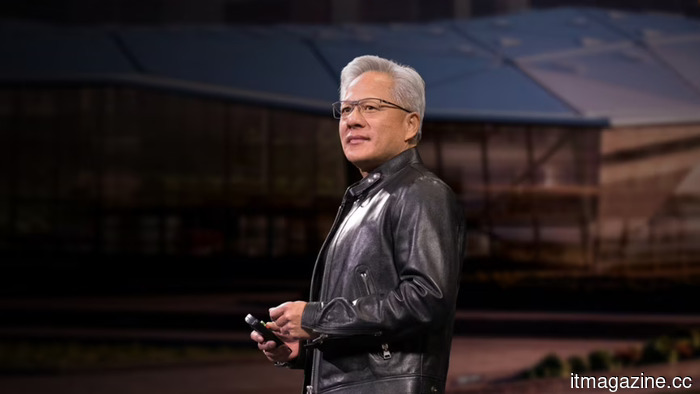
Nvidia's Jensen Huang identifies robotics as the forthcoming growth driver for Korea.
Nvidia’s CEO visited Korea for four days to promote robotics and physical AI, aiming to expand the company's focus beyond the memory chips that currently connect it to the country. Jensen Huang made his case as soon as he arrived at Gimpo airport, stating to reporters that “robotics is going to be the next major sector here in Korea,” and highlighting the nation’s strong manufacturing base as key to leading in AI-driven automation.
This visit was as much about performance as it was about business. Huang's agenda included meetings with executives, appearances on a television talk show, and participation in baseball events, all part of a charm offensive in a country that provides the high-bandwidth memory essential for Nvidia’s accelerator units.
At the core of his agenda was a desire for deeper collaboration in several sectors, including high-bandwidth memory, AI data centers, autonomous driving, robotics, and physical AI. He specifically chose robotics to feature prominently, arguing that South Korea's strengths in manufacturing and technology position it well to adopt the kind of AI-driven automation that Nvidia is marketing as physical AI—applying its models to machines that interact with the real world rather than merely to software in data centers.
For Nvidia, which has grown significantly through training and inference, robotics represents its next focus area for chip deployment. This emphasis on robotics also underscores Nvidia's perspective on its next growth phase. With the market for training accelerators becoming saturated, the company has been increasingly vocal about physical AI as the next frontier, envisioning machines in factories, warehouses, and vehicles that require computational power akin to that of a data center but are physical entities. Korea’s concentration of manufacturers and its eagerness for automation make it an ideal market for this vision to either flourish or falter.
Huang's meetings were strategically planned, including discussions with executives from the gaming company Krafton, such as chairman Chang Byung-gyu and senior AI leaders, focusing on collaboration in physical AI, humanoid robotics, and AI-powered gaming. This agenda indicated Nvidia’s interest in forging partnerships in Korea that extend beyond traditional chip manufacturers.
The broader context highlights a mutual dependency that Nvidia is seeking to widen. The major memory companies in Korea are vital to Nvidia’s supply chain, while Nvidia's demand has significantly influenced their performance during the AI era. By emphasizing robotics and physical AI, Huang is outlining a partnership that would benefit both parties across various sectors, rather than relying solely on the immense business of memory sales linked to his accelerators.
However, whether this focus on robotics will lead to solid agreements remains uncertain. A CEO promoting a sector as the next big opportunity at an airport gives a clear indication of intent but does not equate to a binding contract. Nevertheless, Huang's agenda, which heavily involves partners outside the memory sector, suggests that Nvidia is genuinely committed to aligning its interests with Korea's industrial strengths. The pitch has been made, but orders will materialize later if they come at all.

Nvidia's Jensen Huang identifies robotics as the forthcoming growth driver for Korea.
During a four-day trip to Seoul, Nvidia’s Jensen Huang identified robotics as the next significant growth area for South Korea, highlighting the country's manufacturing foundation.