
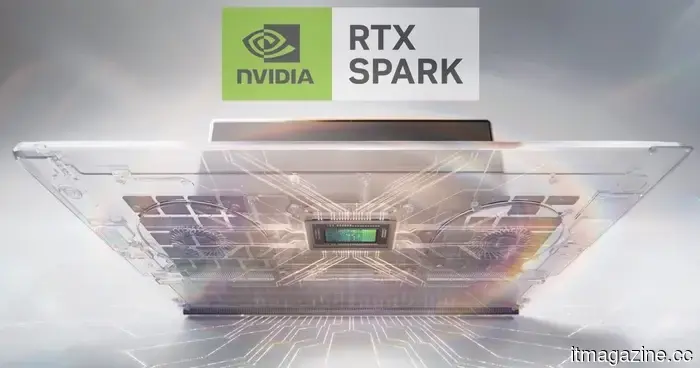
Nvidia has announced that additional RTX Spark processors are on the way, with the N2X and N3 series set to be released.
Huang's confirmation of a multi-generation roadmap prior to the release of the first device serves as the clearest indication that this is a long-term commitment spanning a decade.
The PC and laptop market has predominantly relied on Intel and AMD silicon for so long that most people hardly question if these are the only available choices.
During Computex 2026, Nvidia clarified this matter by introducing the RTX Spark superchip, and Jensen Huang's remarks about future developments indicate that this is not merely a one-off endeavor.
Are additional iterations of the RTX Spark in development?
In a Q&A associated with Tom’s Guide at Computex 2026, Jensen Huang, founder and CEO of Nvidia, confirmed that N1X (the internal codename for RTX Spark) is just the first in a series planned for the long term.
“N2X and N3X are already in the plans,” Huang shared. He also specified that “N1X got its name because there exists a smaller version called N1,” hinting at an unreleased N1 variant within the company’s product pipeline.
“We will be growing our family,” the CEO stated, indicating that more iterations or successors to the RTX Spark architecture are forthcoming. Huang likened systems powered by RTX Spark to personal items people can use for 5-10 years, similar to his home theater setup.
What about an RTX Spark gaming handheld?
Ensuring that the RTX Spark platform operates seamlessly across the Windows ecosystem is Nvidia's current top priority. Nevertheless, when asked about a Spark-based gaming handheld, Huang’s response was cautiously positive.
“If someone wants to pursue it, we’ll collaborate with them,” he replied. However, anti-cheat compatibility remains one of the most significant hurdles to making gaming on RTX Spark feasible at scale.
In my view, Nvidia’s entry into the consumer PC silicon market has always been a matter of when, not if. What makes RTX Spark significant is not just the initial chip announcement but the comprehensive product roadmap and the enduring commitment behind it.
For over five years, Shikhar has skillfully elucidated advancements in consumer tech and communicated them effectively…
Don’t expect Meta’s Muse Spark AI to appear in your mobile applications anytime soon.
Meta’s anticipated AI model may not be arriving as soon as the company initially envisioned. A report from The Wall Street Journal states that Meta has faced multiple delays in releasing its flagship AI model, dubbed “Muse Spark,” raising new doubts about the company’s aspirations and preparedness in the AI space.
These delays seem to be due to performance concerns, reliability issues, and internal disagreements about the model's competitiveness against fast-evolving competitors like OpenAI, Google, and Anthropic.
Google is so eager for your app code that it's willing to pay for it.
Google has been discreetly reaching out to Android developers with an offer to purchase access to their code. According to 404 Media, the company has been sending emails to a select group of Google Play developers, inviting them to participate in what it describes as a "confidential content offer pilot."
The communication positions this as a revenue opportunity, indicating that developers can "get compensated for sharing the code powering your apps, along with any archived projects." Google assures that developers will retain their intellectual property rights and emphasizes that the license will be non-exclusive.
An AI fitness coach detects muscle mechanics during exercises and helps prevent novice injuries.
While most fitness applications offer motivation disguised as coaching, BioCoach provides anatomy-specific corrections, with significant potential for becoming a smartphone application soon.
During the pandemic, the US Consumer Product Safety Commission reported a 48% increase in at-home exercise injuries, often attributed not to poor equipment but to incorrect form, as many lacked a coach to provide guidance.
Researchers from Drexel University and Michigan State University have created a prototype that addresses this issue in real time using your phone's camera, showing promising potential for it to evolve into a legitimate fitness app in the future (via Tech Xplore).





Other articles
 Nvidia has announced that additional RTX Spark processors are on the way, with the N2X and N3 series set to be released.
Jensen Huang has informed us that RTX Spark is not just a one-time initiative. The N2X and N3X chips are already in the works.
Nvidia has announced that additional RTX Spark processors are on the way, with the N2X and N3 series set to be released.
Jensen Huang has informed us that RTX Spark is not just a one-time initiative. The N2X and N3X chips are already in the works.
 Upwind, the next-generation Wiz, now covers every aspect of the AI stack.
Upwind contends that AI security cannot be treated as a separate category. Its latest product integrates AI threat detection into all levels of cloud security, encompassing code pipelines, MCP servers, and runtime behavior.
Upwind, the next-generation Wiz, now covers every aspect of the AI stack.
Upwind contends that AI security cannot be treated as a separate category. Its latest product integrates AI threat detection into all levels of cloud security, encompassing code pipelines, MCP servers, and runtime behavior.
 Upwind, the next-generation Wiz, now encompasses every aspect of the AI stack.
Upwind contends that AI security cannot be added as an independent category. Its latest product integrates AI threat detection into all layers of cloud security, encompassing code pipelines, MCP servers, and runtime behavior.
Upwind, the next-generation Wiz, now encompasses every aspect of the AI stack.
Upwind contends that AI security cannot be added as an independent category. Its latest product integrates AI threat detection into all layers of cloud security, encompassing code pipelines, MCP servers, and runtime behavior.
 Upwind, the next-generation Wiz, now covers every aspect of the AI stack.
Upwind contends that AI security cannot be added as a separate element. Its latest product integrates AI threat detection throughout all levels of cloud security, encompassing code pipelines, MCP servers, and runtime behavior.
Upwind, the next-generation Wiz, now covers every aspect of the AI stack.
Upwind contends that AI security cannot be added as a separate element. Its latest product integrates AI threat detection throughout all levels of cloud security, encompassing code pipelines, MCP servers, and runtime behavior.
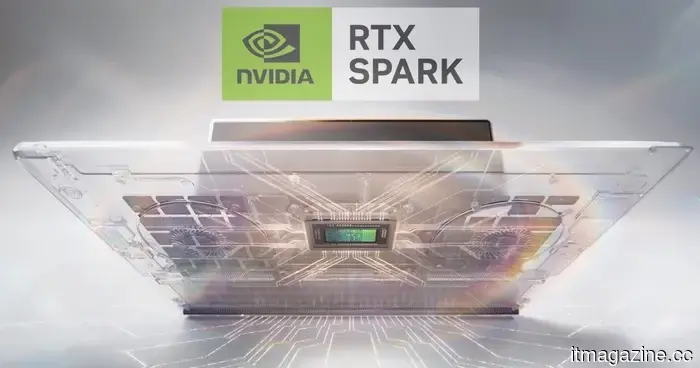 Nvidia has confirmed that additional RTX Spark processors are on the way, with the N2X and N3 series set to be released.
Jensen Huang has just informed us that RTX Spark is not merely a one-generation endeavor. The N2X and N3X chips are already in the pipeline.
Nvidia has confirmed that additional RTX Spark processors are on the way, with the N2X and N3 series set to be released.
Jensen Huang has just informed us that RTX Spark is not merely a one-generation endeavor. The N2X and N3X chips are already in the pipeline.
Nvidia has announced that additional RTX Spark processors are on the way, with the N2X and N3 series set to be released.
Jensen Huang has just informed us that RTX Spark is not merely a one-generation endeavor. The N2X and N3X chips are already in the works.