
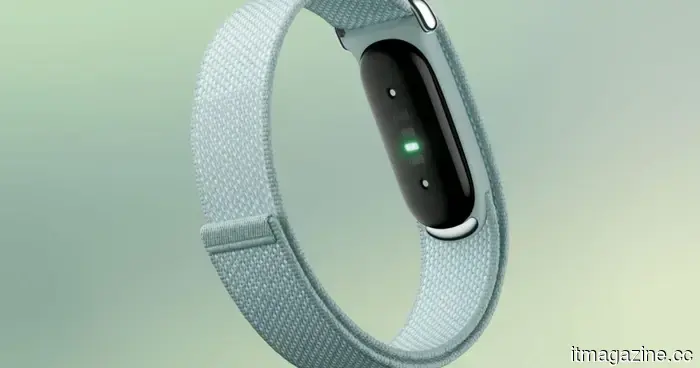
Google intends for you to 3D-print your own Fitbit Air bands.
For many fitness trackers, the only form of customization available typically involves purchasing a different strap. However, Google is pursuing a much more expansive vision for the Fitbit Air.
The company has released comprehensive design guidelines, CAD files, and certification details that invite creators, developers, brands, and enthusiasts to develop their own accessories for this extremely lightweight health tracker. Thus, Google is not merely interested in the existence of third-party Fitbit Air bands; it wants individuals to create them. This approach marks a significant shift from the tightly regulated accessory ecosystems that are prevalent in the wearable technology market. If Google achieves its goal, Fitbit Air users could eventually access a diverse range of options, from designer bands and custom housings to specialized accessories that Google itself would not manufacture.
The design of the Fitbit Air has been tailored for customization.
According to Google, the hardware architecture of the Fitbit Air was deliberately designed around a small sensor module. The tracker itself serves as a lightweight health-monitoring "pebble," while the band acts as the daily visual focus for users. This separation creates customization possibilities that traditional smartwatches do not provide.
Google
Interested in a minimalist silicone strap for exercising, a leather band for professional settings, or something more unique for special events? Google is essentially setting the stage for creators to develop all these options. To facilitate this, the company is providing 2D CAD drawings to developers and accessory manufacturers. These files include measurements, attachment tolerances, and force specifications needed to create compatible accessories.
The message is clear: if you have access to design tools and a 3D printer, you could theoretically craft your own Fitbit Air accessories instead of waiting for official options to become available.
Creating a band is more challenging than it appears.
Google's documentation also highlights that designing wearables involves much more than just aesthetics. Because the Fitbit Air uses optical sensors for tracking heart rate and blood oxygen levels, the sensor area at the bottom of the device must remain entirely clear. The tracker requires consistent skin contact to ensure accurate measurements. Thus, accessory designers cannot merely create an attractive enclosure and consider the job done. If a band fails to keep the sensor securely pressed against the wrist, the health-tracking functionality could be compromised.
Google
Furthermore, Google offers guidelines on contact pressure, recommending that designs maintain enough pressure against the skin to ensure accurate readings during movement. The company emphasizes that the enclosure must adhere to strict tolerances for the tracker’s snap-in retention mechanism to ensure the sensor remains secure during activity while being easy to remove when swapping bands.
Material choices are also a focus for Google. Since the Fitbit Air is intended for continuous wear, the company recommends using skin-friendly textiles, leathers, and metals, while avoiding known irritants like certain nickel alloys and natural latex proteins. Adhesives and coatings should be fully cured to minimize the risk of skin reactions.
Google is cultivating an accessory ecosystem rather than just selling a tracker.
Perhaps the most intriguing aspect of Google's announcement is what it suggests about the future of the Fitbit Air. The company is not merely releasing design files and stepping back; Google is also encouraging brands to seek official certification through its Made for Google program. Certified accessories can carry official compatibility branding, instilling customers with greater confidence that a product aligns with Google’s standards for fit, durability, and performance.
Additionally, manufacturers have an extra incentive: closer collaboration with Google. Approved partners might get early access to future hardware plans, ensuring accessories are ready when new devices are released. Google also sets clear guidelines for branding. Accessory creators can market their products as “compatible with Google Fitbit Air” or “for use with Google Fitbit Air,” but they cannot include Google’s branding directly in product names or create designs that closely mimic official accessories.
Google
These guidelines are aimed at keeping third-party products distinct while ensuring compatibility is clear to consumers. Whether this strategy fosters a vibrant community of creators remains to be seen. However, in a wearable market where accessory options are often limited to a few official choices, Google's decision to share its design blueprints feels refreshingly open.
If nothing else, the Fitbit Air might become one of the few consumer devices that actively encourages users to personalize the product — even down to designing and printing the band themselves.
Other articles
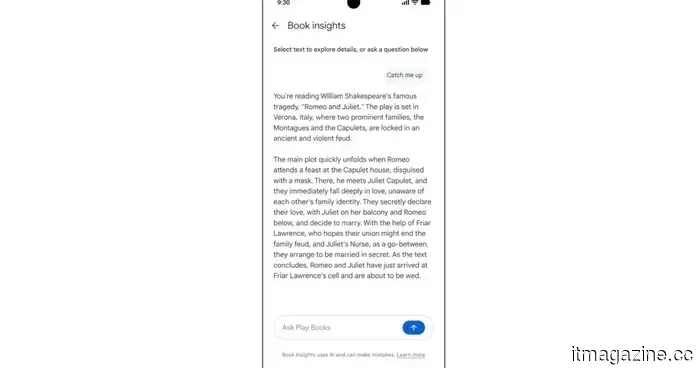 Google Play Books is introducing an AI reading assistant that keeps track of your last reading position.
The next time you misplace a book, Google Play Books could offer an unexpectedly helpful solution for you.
Google Play Books is introducing an AI reading assistant that keeps track of your last reading position.
The next time you misplace a book, Google Play Books could offer an unexpectedly helpful solution for you.
 Marvel's Wolverine showcases suitably gruesome gameplay as it targets a release date of September 15.
Insomniac's Wolverine game appears to be intense, rapid-paced, and violent, showcasing Logan's ability to heal by embracing aggression and slicing through Reavers as it approaches its launch on September 15.
Marvel's Wolverine showcases suitably gruesome gameplay as it targets a release date of September 15.
Insomniac's Wolverine game appears to be intense, rapid-paced, and violent, showcasing Logan's ability to heal by embracing aggression and slicing through Reavers as it approaches its launch on September 15.
 Control Resonant arrives in September featuring a new hero to advance the sibling storyline.
Control Resonant will be released on September 24 for PS5, featuring Dylan Faden as the playable protagonist. This sequel from Remedy takes a bolder narrative direction, moving away from a straightforward continuation of Jesse’s viewpoint.
Control Resonant arrives in September featuring a new hero to advance the sibling storyline.
Control Resonant will be released on September 24 for PS5, featuring Dylan Faden as the playable protagonist. This sequel from Remedy takes a bolder narrative direction, moving away from a straightforward continuation of Jesse’s viewpoint.
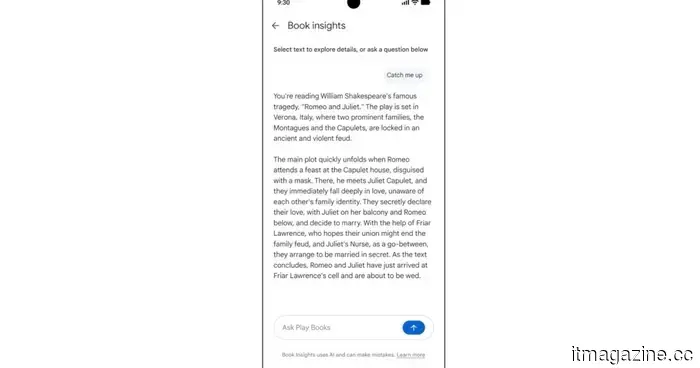 Google Play Books is introducing an AI reading assistant that retains your last reading position.
The next time you misplace a book, Google Play Books might offer you an unexpectedly useful solution.
Google Play Books is introducing an AI reading assistant that retains your last reading position.
The next time you misplace a book, Google Play Books might offer you an unexpectedly useful solution.
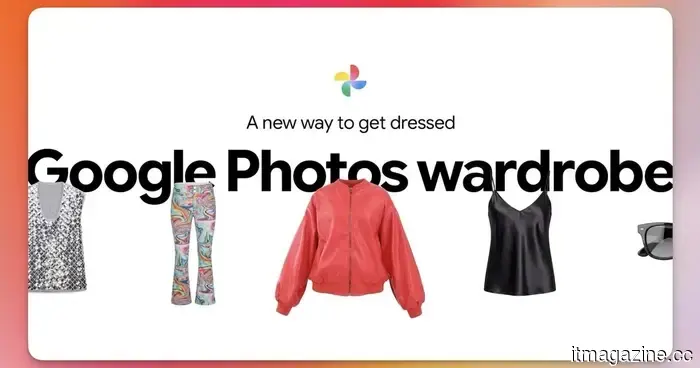 Google Photos will transform your images into a virtual wardrobe that you can coordinate and combine.
Google Photos is introducing a new AI-driven feature that may transform how you select outfits by utilizing photos you already possess.
Google Photos will transform your images into a virtual wardrobe that you can coordinate and combine.
Google Photos is introducing a new AI-driven feature that may transform how you select outfits by utilizing photos you already possess.
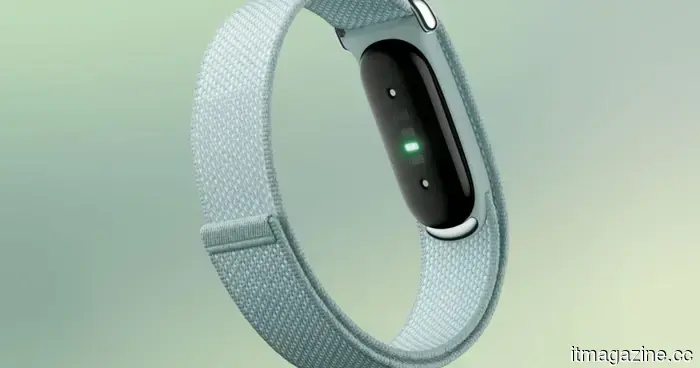 Google is encouraging you to 3D-print your own Fitbit Air bands.
Google is unexpectedly expanding the Fitbit Air ecosystem by providing creators with the resources to design and even 3D-print their own personalized bands.
Google is encouraging you to 3D-print your own Fitbit Air bands.
Google is unexpectedly expanding the Fitbit Air ecosystem by providing creators with the resources to design and even 3D-print their own personalized bands.
Google intends for you to 3D-print your own Fitbit Air bands.
Google is unexpectedly expanding the Fitbit Air ecosystem by providing creators with the tools to design and even 3D-print their own personalized bands.