
The founder of DeepSeek announces that the objective is to achieve AGI as the $10 billion funding round progresses.
Liang Wenfeng has informed potential investors that the Hangzhou lab will focus on cutting-edge research rather than revenue during its first-ever external funding round. DeepSeek's founder mentioned that the lab's primary goal is to work toward artificial general intelligence, and it plans to continue releasing open-source models instead of prioritizing short-term commercialization.
Bloomberg reported this information on Friday while covering an ongoing fundraising effort aimed at raising 70 billion yuan (approximately $10 billion). This amount reflects the valuation that DeepSeek is reportedly aiming for, not the exact amount of funding sought. The startup is looking to secure at least $300 million in external funding for this round. According to The Information, DeepSeek's long-term goal could extend to a valuation of $7 billion or more as it transitions toward recurrent revenue.
This funding round marks the first instance where Liang has accepted external investments. Until now, DeepSeek has been completely financed by High-Flyer Quant, the quantitative trading firm Liang established, which continues to support the lab. Liang had previously described the lack of outside investors as a conscious choice to avoid pressure regarding the product roadmap.
The change represented by this funding round is partly due to scale: training at the capacity DeepSeek is now engaging in has surpassed what even a profitable hedge fund can fund independently. Additionally, the emphasis on AGI indicates the position the company seeks to embody. In April, DeepSeek launched its V4-Pro and V4-Flash models, which consist of a 1.6-trillion-parameter Mixture-of-Experts system and a smaller 284-billion-parameter variant, both released under open-source and permissive licenses.
The V4 series is designed to operate on Huawei Ascend and Cambricon chips, as well as Nvidia, signaling a strategic intention toward a domestic Chinese market increasingly separated from high-end US hardware. According to Bloomberg's interpretation, the pitch to investors heavily emphasizes the research-focused nature that led to the creation of the R1 model in January 2025. The release of R1 resulted in a loss of approximately $600 billion from Nvidia's market capitalization in a single trading day, as the perception arose that frontier reasoning models could be developed at a fraction of the costs incurred by US laboratories.
Whether that pricing assertion stood up to scrutiny is a topic of its own debate, but the strategic message communicated was clear: a Chinese lab could remain competitive on the frontier while operating transparently. The undisclosed terms are crucial, as the identities of the investors have not been confirmed, the valuation has not been officially announced, and the closing date remains unset.
Historically, DeepSeek has avoided engaging with the media and did not provide on-the-record comments for Bloomberg's piece. A funding round of this scale, at this valuation, with the stated goal, would attract attention from Chinese regulators who have been assessing appropriate oversight for foundation-model developers over the past two years.
What Liang has now publicly committed to is a clear trajectory: open-source, frontiers-oriented, and AGI as the primary focus rather than enterprise-focused revenue. This funding round, when finalized, will be the first instance of external capital agreeing to these conditions.
Другие статьи
 Выручка Lenovo за четвертый квартал превысила прогнозы благодаря сильным продажам ПК, акции выросли на 15%
Lenovo сообщила о выручке в размере 21,6 миллиарда долларов в четвертом квартале, превысив оценки на 2,2 миллиарда долларов, благодаря 26% росту ПК и 84% росту выручки от ИИ. Акции выросли на 15% в Гонконге.
Выручка Lenovo за четвертый квартал превысила прогнозы благодаря сильным продажам ПК, акции выросли на 15%
Lenovo сообщила о выручке в размере 21,6 миллиарда долларов в четвертом квартале, превысив оценки на 2,2 миллиарда долларов, благодаря 26% росту ПК и 84% росту выручки от ИИ. Акции выросли на 15% в Гонконге.
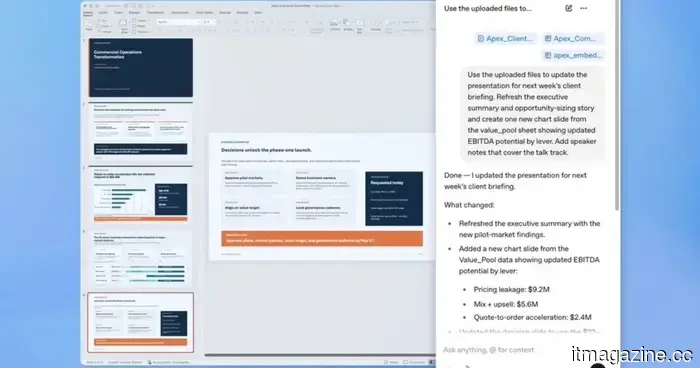 ChatGPT приходит в PowerPoint и хочет, чтобы вы говорили через слайды.
Вы можете попросить его найти пробелы в логике вашей колоды, предсказать вопросы аудитории и извлечь актуальные данные из инструментов, которые уже использует ваша команда.
ChatGPT приходит в PowerPoint и хочет, чтобы вы говорили через слайды.
Вы можете попросить его найти пробелы в логике вашей колоды, предсказать вопросы аудитории и извлечь актуальные данные из инструментов, которые уже использует ваша команда.
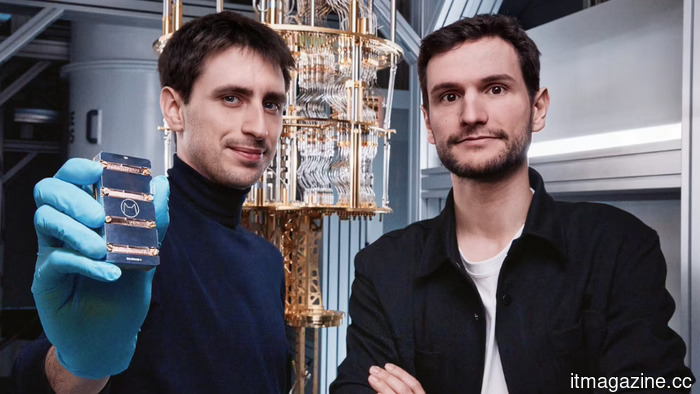 NVentures от NVIDIA добавляет Alice & Bob в свой квантовый портфель
NVentures, венчурное подразделение Nvidia, присоединилось к раунду расширения серии B Alice & Bob на сумму 100 миллионов евро. Парижская квантовая компания нацелена на создание полезной машины к 2030 году.
Основатель DeepSeek объявляет о том, что AGI является целью, поскольку раунд финансирования на $10 млрд продвигается вперед
Основатель DeepSeek Лянь Вэньфэнг сообщил инвесторам, что лаборатория в Ханчжоу нацелена на AGI, в своем первом внешнем раунде финансирования с предполагаемой оценкой в 10 миллиардов долларов.
NVentures от NVIDIA добавляет Alice & Bob в свой квантовый портфель
NVentures, венчурное подразделение Nvidia, присоединилось к раунду расширения серии B Alice & Bob на сумму 100 миллионов евро. Парижская квантовая компания нацелена на создание полезной машины к 2030 году.
Основатель DeepSeek объявляет о том, что AGI является целью, поскольку раунд финансирования на $10 млрд продвигается вперед
Основатель DeepSeek Лянь Вэньфэнг сообщил инвесторам, что лаборатория в Ханчжоу нацелена на AGI, в своем первом внешнем раунде финансирования с предполагаемой оценкой в 10 миллиардов долларов.
 Ваши самые прослушиваемые исполнители на Spotify могут предоставить вам ранний доступ к билетам на их туры.
Новая функция Reserved от Spotify удерживает два билета на концерт для самых преданных поклонников Premium артиста до того, как билеты поступят в продажу для широкой публики.
Ваши самые прослушиваемые исполнители на Spotify могут предоставить вам ранний доступ к билетам на их туры.
Новая функция Reserved от Spotify удерживает два билета на концерт для самых преданных поклонников Premium артиста до того, как билеты поступят в продажу для широкой публики.
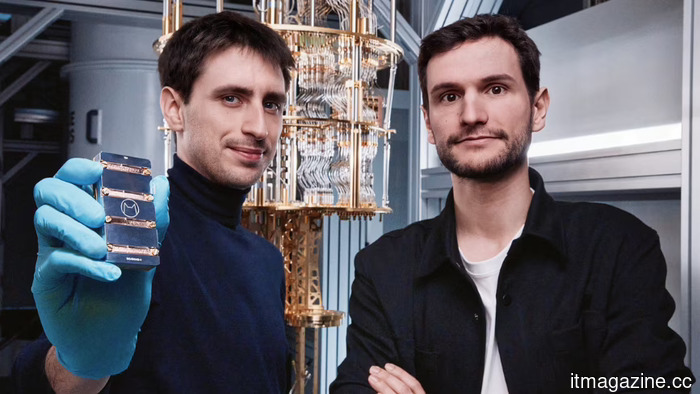 NVentures от NVIDIA добавляет Alice & Bob в свой квантовый портфель
NVentures, венчурное подразделение Nvidia, присоединилось к раунду расширения серии B Alice & Bob на сумму 100 миллионов евро. Парижская квантовая компания нацелена на создание полезной машины к 2030 году.
NVentures от NVIDIA добавляет Alice & Bob в свой квантовый портфель
NVentures, венчурное подразделение Nvidia, присоединилось к раунду расширения серии B Alice & Bob на сумму 100 миллионов евро. Парижская квантовая компания нацелена на создание полезной машины к 2030 году.
The founder of DeepSeek announces that the objective is to achieve AGI as the $10 billion funding round progresses.
DeepSeek's founder, Liang Wenfeng, has informed investors that the lab in Hangzhou is focusing on AGI, during its inaugural external funding round at an estimated valuation of $10 billion.