
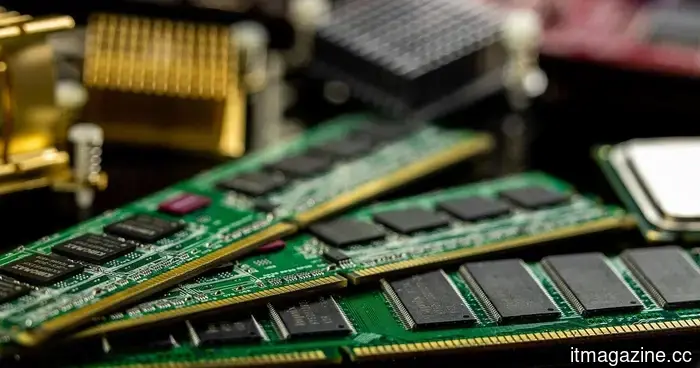
Memory prices are set to decline, and China is responsible for this change.
AI has dominated the memory market, and China may soon reclaim its share.
If you've noticed the steep prices of RAM lately, you're not alone. The cost of memory has skyrocketed due to AI consuming a significant portion of the global memory supply chain.
Manufacturers like Samsung, SK Hynix, and Micron have redirected most of their production to high-bandwidth memory (HBM), which is essential for the AI chips currently in high demand. This shift has drastically reduced the availability of standard PC memory, causing prices to rise sharply.
However, it appears that memory prices are expected to decrease next year, largely due to companies incorporating Chinese memory into their products. As reported by Wccftech, Kye-hyun Kyung, a former Samsung chip and display division leader, anticipates relief may arrive in the latter half of next year.
During a recent engineering forum in Korea, he stated that Chinese companies are vigorously expanding their memory production capabilities, and if these investments succeed, the increase in supply could lead to lower prices.
Will memory costs actually decline?
Chinese producer ChangXin Memory Technologies (CXMT) is already making significant progress. The firm provides DDR5 speeds up to 8000 MT/s and is rapidly increasing its output. Other Chinese companies, like Jiahe Jinwei, are also enhancing production of memory for data centers.
We are starting to see businesses transition to memory chips produced in China. Corsair, a well-known name in PC components, is among the first to make this change.
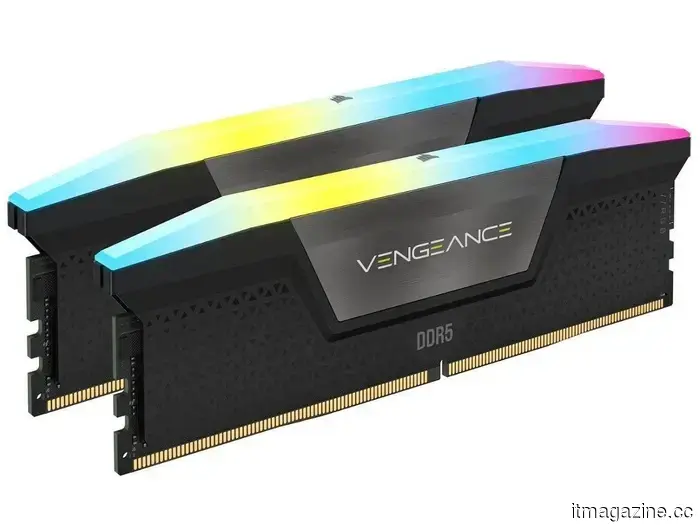
Leaked images indicate that Corsair's Vengeance DDR5 modules utilize DRAM from CXMT. These modules feature standard specifications, operating at 6000 MT/s with CL36 timings, comparable to similar kits from Samsung and SK Hynix.
If there's any nation with the manufacturing capability to boost production to satisfy the rising memory demand, it is China. Should the country capitalize on this trend and saturate the market with its memory chips, prices may finally decrease within the upcoming year.
What does this mean for you?
If you're considering building a PC but hesitating due to high prices, there’s hope on the horizon. Chinese memory is already reaching well-known global brands, and an increase in supply typically leads to better pricing. However, don't expect immediate changes; you might have to wait until the latter half of 2027 for prices to start falling.
---
Raycast 2.0 has one new feature that's driving me crazy.
Raycast 2.0 is a fantastic update, but one change has utterly disrupted my workflow.
I've been using Raycast for years, and it's easily among my favorite Mac applications. It performs a multitude of tasks without being intrusive, which is precisely what you want from a productivity tool. So, as expected, I updated to Raycast 2.0 within minutes of its release.
For the most part, I appreciate all the new features and interface tweaks introduced in the update. Yet, there’s one adjustment that has been consistently bothersome since the update, and I feel the need to express my frustration about it.
---
OLED MacBook Pros are nearly here, and the display upgrade could be worth the wait.
The OLED MacBook Pro is now closer to reality, promising a remarkable enhancement to your display experience.
Recently, I wrote about my excitement regarding the forthcoming MacBook Pro. One reason for my enthusiasm is the anticipated display improvements, including a shift to an OLED panel and possibly a touchscreen feature.
The OLED speculation seems almost confirmed. According to TheElec, OLED panels for the MacBook Pro are already in mass production. Samsung Display has achieved a significant manufacturing milestone, attaining a yield of over 90% for its 8.6th-generation OLED panels.
---
You can now send Codex tasks from your phone even when your Mac is locked.
OpenAI's Codex app for Mac has just undergone a significant upgrade that feels almost futuristic. You can now assign tasks to Codex from your phone, and it will utilize apps on your Mac, even if the screen is off and the computer is locked.
Previously, a major issue with AI tools like Claude Cowork or OpenAI Codex was their requirement for your Mac to be unlocked and operational to function. This presented a considerable security concern that discouraged many users from utilizing these features. With its latest Codex update, OpenAI seems to have addressed this problem.




Other articles
 GeForce Now has just added Forza Horizon 6 and the strange new relative of Disco Elysium.
GeForce Now’s newest update includes Forza Horizon 6, Zero Parades: For Dead Spies, Luna Abyss, and additional titles, featuring several games that are supported by Game Pass.
GeForce Now has just added Forza Horizon 6 and the strange new relative of Disco Elysium.
GeForce Now’s newest update includes Forza Horizon 6, Zero Parades: For Dead Spies, Luna Abyss, and additional titles, featuring several games that are supported by Game Pass.
 AI chatbots are deceiving you, and it was surprisingly simple to get them to do so.
A BBC inquiry revealed that AI chatbots can be easily coerced into disseminating false information. Although Google has revised its policies, experts caution that risks still remain.
AI chatbots are deceiving you, and it was surprisingly simple to get them to do so.
A BBC inquiry revealed that AI chatbots can be easily coerced into disseminating false information. Although Google has revised its policies, experts caution that risks still remain.
 Meta created a competitor to Reddit using Facebook Groups.
Meta's new Forum app transforms Facebook Groups into an independent platform for inquiries, suggestions, and AI-driven search, offering the company a Reddit-style experiment based on communities it already possesses.
Meta created a competitor to Reddit using Facebook Groups.
Meta's new Forum app transforms Facebook Groups into an independent platform for inquiries, suggestions, and AI-driven search, offering the company a Reddit-style experiment based on communities it already possesses.
Memory prices are set to decline, and China is responsible for this change.
Due to the demand from AI, memory prices have skyrocketed; however, a former Samsung executive believes that production from China could lower them again by late next year.