
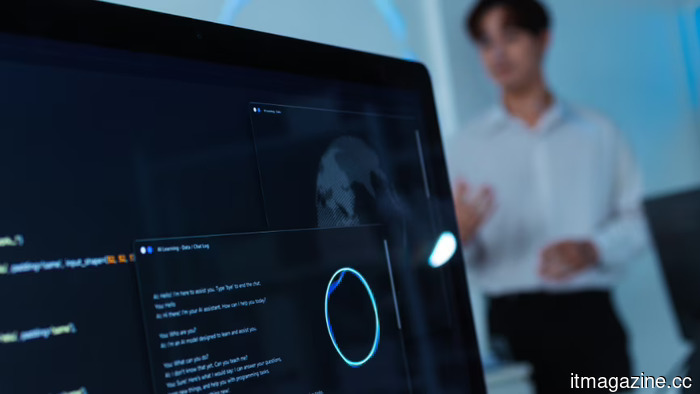
Recursive Superintelligence has secured $650 million at a valuation of $4.65 billion to develop self-enhancing AI.
Recursive Superintelligence, a startup launched by former leaders from Meta AI, Google DeepMind, OpenAI, and Salesforce AI, has come out of stealth mode with $650 million in funding and a valuation of $4.65 billion. The firm, headed by Richard Socher and co-founded by ex-Meta FAIR director Yuandong Tian, is focused on recursive self-improvement: the development of AI systems that can enhance themselves autonomously in a rapidly accelerating cycle. The funding round saw backing from GV, Greycroft, Nvidia, and AMD. The startup currently employs fewer than 30 people and has yet to launch any products.
The concept of an AI system that can self-improve, then utilize its enhancements to further augment itself, creating a loop that could eventually surpass all human researchers, has been a topic of interest in computer science folklore since the 1960s. This idea remained largely theoretical for a long time, but now a substantial $650 million has been raised to realize it.
Recursive Superintelligence was formally revealed on May 13, with a valuation of $4.65 billion and bold aspirations that would have seemed like science fiction just two years prior. The company aims to develop AI systems capable of autonomously discovering knowledge, continuously optimizing themselves, and evolving in an open-ended manner, akin to biological evolution but without the extensive timeframes involved.
The investment round was spearheaded by GV, Alphabet's venture capital branch, and Greycroft, with contributions from chipmakers Nvidia and AMD, which provide the essential hardware for most advanced AI training. Their participation indicates that these companies view recursive self-improvement not just as a theoretical exercise but as a likely upcoming demand for computing power.
The founding team lends substantial credibility to the initiative. Richard Socher, who formerly served as chief scientist at Salesforce and founded the AI search engine You.com, leads a group of seven co-founders: Yuandong Tian, former director at Meta's Fundamental AI Research lab; Tim Rocktaschel, AI professor at University College London and ex-principal scientist at Google DeepMind; Alexey Dosovitskiy, co-author of the transformative Vision Transformer (ViT) paper; Josh Tobin, previously of OpenAI; and three others: Caiming Xiong, Tim Shi, and Jeff Clune. Peter Norvig, co-author of the key AI textbook "Artificial Intelligence: A Modern Approach," acts as an adviser.
Tian Yuandong’s role is particularly notable. A graduate of Shanghai Jiao Tong University with a PhD in robotics from Carnegie Mellon, he invested over a decade at Meta FAIR tackling key challenges in AI. His involvement at Recursive Superintelligence signals a shift, suggesting that the talent responsible for creating current AI systems believes in the possibility of a future where AI can enhance itself.
The notion of recursive self-improvement is quite straightforward. Rather than relying on human researchers to design each new AI generation, an AI could automate parts of its own development process, producing improvements that make it capable of generating further enhancements. A company achieving this dynamic first could theoretically exponentially extend its advantage over rivals, as its development would accelerate rather than follow a linear path.
Recursive Superintelligence has laid out a phased development plan. Initially, they aim to train a system with the capabilities equivalent to “50,000 doctors” to conduct AI scientific research independently. The next goal includes launching a “Level 1” autonomous training system by mid-2026. The funds raised will partially be allocated to secure the large-scale computing infrastructure needed for these operations.
The company is currently based in San Francisco and London, with a team of over 25 researchers and engineers. The funding round was reportedly in high demand.
Recursive Superintelligence is not operating in a vacuum. Major AI labs are already leveraging their own models to speed up research. For instance, Anthropic claims its code is mostly generated by its AI, Claude, while OpenAI reported that GPT-5.5 developed a method improving token generation speeds significantly. Google DeepMind has introduced AlphaEvolve, a coding agent purposed for scientific and algorithmic discovery. Google's co-founder Sergey Brin has purportedly noted coding advancements as a means toward “AI takeoff” internally.
What sets Recursive Superintelligence apart is that no other major lab has structured an entire company focused solely on recursive self-improvement as its primary business concept. While OpenAI, Anthropic, and Google DeepMind utilize AI to assist their research processes, their business models revolve around offering models and API access. Recursive Superintelligence bets that the self-improvement mechanism itself will be their key product.
The success of this venture hinges on a still-unresolved question: will recursive self-improvement lead to the rapid acceleration that its supporters envision, or will it reach diminishing returns as each improvement cycle results in smaller gains? Anthropic co-founder Jack Clark has estimated a roughly 60% chance that such a system capable of independently training a more powerful
Другие статьи
 Recursive Superintelligence secures $650 million at a valuation of $4.65 billion to develop self-enhancing AI.
Former researchers from Meta and DeepMind have secured $650 million at a valuation of $4.65 billion for Recursive Superintelligence, a startup that believes AI can automate its own research processes.
Recursive Superintelligence secures $650 million at a valuation of $4.65 billion to develop self-enhancing AI.
Former researchers from Meta and DeepMind have secured $650 million at a valuation of $4.65 billion for Recursive Superintelligence, a startup that believes AI can automate its own research processes.
 Samsung's AI smart glasses are expected to launch in July, and they may be called Galaxy Glasses.
Samsung might unveil the Galaxy Glasses at the Unpacked event in July, integrating Android XR and Gemini with cameras, microphones, and speakers to create a voice-first AI wearable connected to the Galaxy ecosystem.
Samsung's AI smart glasses are expected to launch in July, and they may be called Galaxy Glasses.
Samsung might unveil the Galaxy Glasses at the Unpacked event in July, integrating Android XR and Gemini with cameras, microphones, and speakers to create a voice-first AI wearable connected to the Galaxy ecosystem.
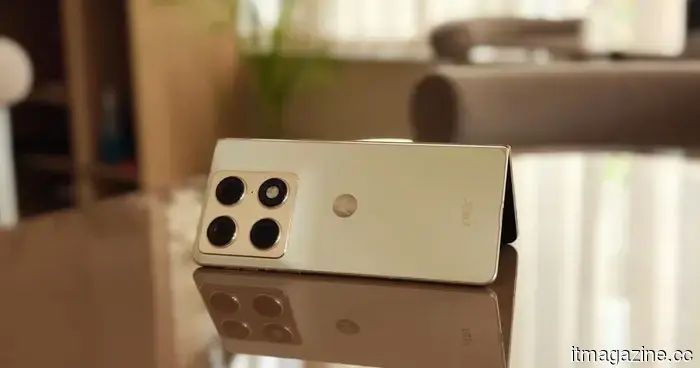 I took the Motorola Razr Fold out for street photography and was truly impressed by its performance.
After using the Motorola Razr Fold in a nearby art district, I was impressed by how effectively the cameras managed murals, bright sunlight, shadows, and intricate street scenes.
I took the Motorola Razr Fold out for street photography and was truly impressed by its performance.
After using the Motorola Razr Fold in a nearby art district, I was impressed by how effectively the cameras managed murals, bright sunlight, shadows, and intricate street scenes.
 Meta's smart glasses are selling in the millions, yet those being filmed without their knowledge have no recourse.
Meta has sold 7 million pairs of Ray-Ban smart glasses and holds 82% of the market share. There are reports of women being filmed without consent, lawsuits are increasing, and companies like Apple, Google, and Snap are looking to enter the market.
Meta's smart glasses are selling in the millions, yet those being filmed without their knowledge have no recourse.
Meta has sold 7 million pairs of Ray-Ban smart glasses and holds 82% of the market share. There are reports of women being filmed without consent, lawsuits are increasing, and companies like Apple, Google, and Snap are looking to enter the market.
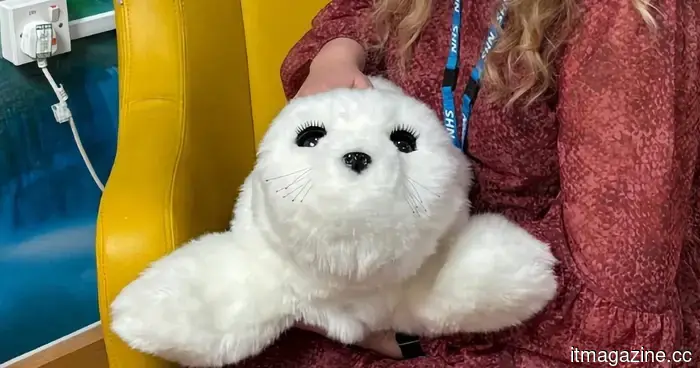 Furry robotic seals are being utilized for mental health support at a hospital in the UK.
An NHS trust in Kent and Medway is testing out PARO, a therapeutic robot baby seal, to assist patients with learning disabilities in feeling more at ease during their appointments.
Furry robotic seals are being utilized for mental health support at a hospital in the UK.
An NHS trust in Kent and Medway is testing out PARO, a therapeutic robot baby seal, to assist patients with learning disabilities in feeling more at ease during their appointments.
 Meta's smart glasses are flying off the shelves, but those who are being recorded without their knowledge have no recourse.
Meta has sold 7 million pairs of Ray-Ban smart glasses and controls 82% of the market. There are reports of women being filmed without their knowledge, lawsuits are increasing, and companies like Apple, Google, and Snap are looking to enter the market.
Meta's smart glasses are flying off the shelves, but those who are being recorded without their knowledge have no recourse.
Meta has sold 7 million pairs of Ray-Ban smart glasses and controls 82% of the market. There are reports of women being filmed without their knowledge, lawsuits are increasing, and companies like Apple, Google, and Snap are looking to enter the market.
Recursive Superintelligence has secured $650 million at a valuation of $4.65 billion to develop self-enhancing AI.
Former researchers from Meta and DeepMind secured $650 million at a valuation of $4.65 billion for Recursive Superintelligence, a startup focused on the belief that AI can automate its own research processes.