

Apple requires you to confirm your identity before you can access the Education discount on products.
Apple's decision to shift the US Education Store away from the honor system appears to focus on establishing a globally consistent verification framework that could eventually enable a more extensive expansion of the Education Store.
For a long time, obtaining an Apple Education discount in the US was as easy as stating you were a student or teacher, without needing formal verification. That practice has now come to an end.
Starting May 8, 2026, Apple will require formal identity verification for all purchases made through the Education Store in the US, discontinuing the longstanding informal honor system (as reported by MacRumors).
What does the new verification process entail?
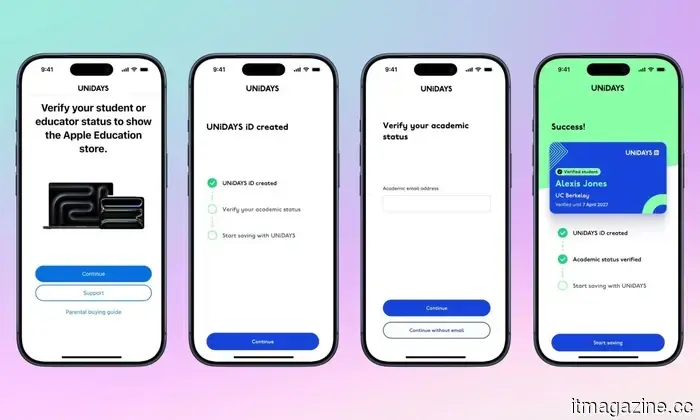
Apple has teamed up with UNiDAYS to manage the eligibility verification for the Education Store. To receive the Education Store discount, students and teachers need to create a UNiDAYS ID and verify their educational status by either logging into their school’s academic portal or uploading an image of their student or staff ID.
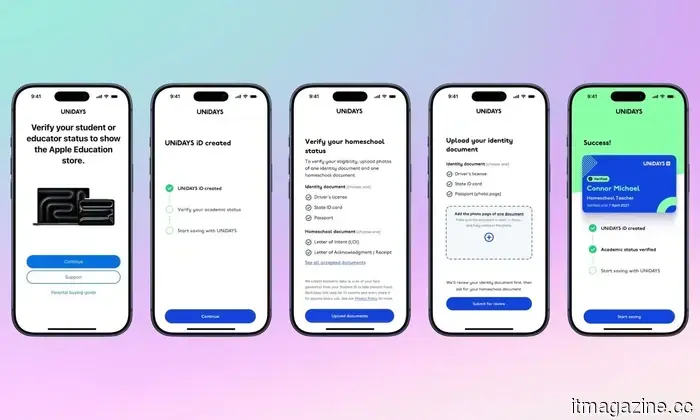
Homeschool teachers must submit a government-issued ID, such as a driver’s license or passport, along with a homeschool document like a Letter of Intent or Letter of Acknowledgement.
Once the necessary information is submitted, UNiDAYS will verify it quickly. If a manual review is required, applicants can expect a response within a day of submitting their documentation. It's important to note that this process applies whether purchases are made online or in an Apple Store.
Who qualifies for the Education Store discount?
This update in the process also affects other regions, including Canada, Chile, Australia, Hong Kong, and Turkey.
Although the verification process is now more complex, the qualified groups remain unchanged: current and newly accepted college students, their parents, faculty, staff, and homeschool teachers of all educational levels.
Purchase limits are still the same. Eligible customers may buy one MacBook, one iMac, one Mac mini, up to two iPads, and two accessories each year. Also, the Apple Watch is now offered at a reduced price through the Education Store, including models like the Series 11, SE 3, and Ultra 3.
For over five years, Shikhar has consistently clarified advancements in consumer technology and shared them…
Apple may consider re-engaging Intel for chip production, but not in the expected or feared manner.
Reports suggest that Apple and Intel are discussing a manufacturing partnership that could change how future Apple chips are produced. However, this does not indicate that Apple is returning to Intel processors or abandoning Apple Silicon.
According to a recent Wall Street Journal report, Apple and Intel have struck a preliminary agreement whereby Intel would manufacture certain chips designed by Apple. Bloomberg’s Mark Gurman later specified on X that a finalized production agreement is yet to be established and talks are still at a preliminary phase. He also mentioned that Apple holds some reservations regarding Intel’s manufacturing technology and its long-term competitiveness.
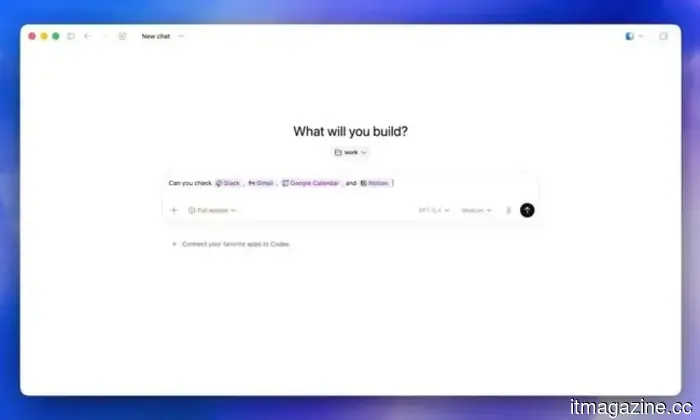
OpenAI is expanding Codex's functionality within a new Chrome extension, allowing it to handle real tasks across logged-in websites.
OpenAI is enhancing Codex's capabilities beyond just coding. The new Chrome extension permits the agent to engage in an authenticated web session, assisting with tasks on platforms like Gmail, Salesforce, LinkedIn, dashboards, and internal applications.
This development shifts Codex from a developer-only tool to an application that fits into day-to-day work. With access to Chrome, it can assist with research, updates in CRM systems, dashboard monitoring, and browser-based troubleshooting, which are often where tasks become stalled.
The success of the MacBook Neo may soon lead to a price increase due to its overwhelming popularity.
The MacBook Neo's high demand has not only led to supply challenges for Apple but also revealed the vulnerability of the $599 price point, based on a limited supply of surplus chips that will eventually be exhausted.
The $599 MacBook Neo has been selling rapidly, prompting Apple to increase its production goals. At the time of writing, the expected shipping time on the official website is two to three weeks.
Semiconductor analyst Tim Culpan from Culpium reports that Apple has requested its manufacturing partners, Quanta and Foxconn, to raise production capacity to 10 million units, nearly double the original estimate. However, this increase in production may lead to potential pricing issues for consumers in the near future.




Other articles
 Apple requires you to confirm your identity prior to receiving the Education discount on products.
Students confirm their status through the school portal or by uploading an ID; homeschool educators must provide a government ID along with a homeschool document. Most verifications are done immediately, while manual reviews are finalized within 24 hours.
Apple requires you to confirm your identity prior to receiving the Education discount on products.
Students confirm their status through the school portal or by uploading an ID; homeschool educators must provide a government ID along with a homeschool document. Most verifications are done immediately, while manual reviews are finalized within 24 hours.
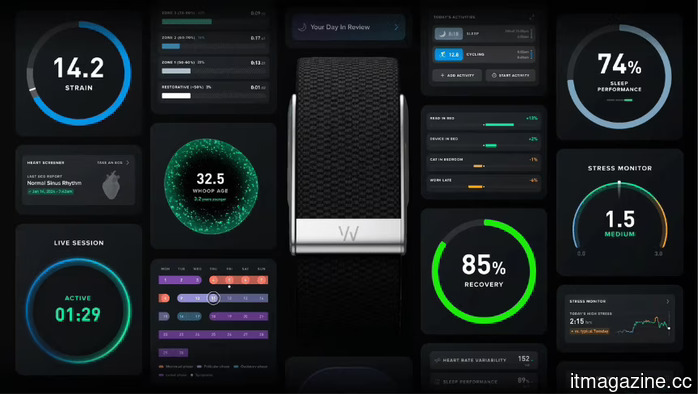 Whoop introduces consultations with licensed clinicians, while Google unveils the $99 Fitbit Air featuring the Gemini AI health coach.
Google introduced the $99 screenless Fitbit Air and the $9.99/month Gemini health coach. The following day, Whoop countered with on-demand video consultations featuring licensed clinicians.
Intruder introduces AI-powered pentesting agents as a GCHQ-supported startup automates security assessments worth $50,000 that were previously done manually.
Intruder, supported by GCHQ, introduced AI-powered penetration testing agents that can mimic manual pentesting within minutes. CEO Chris Wallis showcased the technology at KnowBe4's KB4-CON 2026.
Whoop introduces consultations with licensed clinicians, while Google unveils the $99 Fitbit Air featuring the Gemini AI health coach.
Google introduced the $99 screenless Fitbit Air and the $9.99/month Gemini health coach. The following day, Whoop countered with on-demand video consultations featuring licensed clinicians.
Intruder introduces AI-powered pentesting agents as a GCHQ-supported startup automates security assessments worth $50,000 that were previously done manually.
Intruder, supported by GCHQ, introduced AI-powered penetration testing agents that can mimic manual pentesting within minutes. CEO Chris Wallis showcased the technology at KnowBe4's KB4-CON 2026.
 Anthropic Mythos AI discovers thousands of zero-day vulnerabilities while the Federal Reserve and Treasury gather bank CEOs to discuss cyber risks.
The preview of Anthropic's Claude Mythos revealed thousands of zero-day vulnerabilities in major software. The chair of the Federal Reserve and the Treasury secretary contacted bank executives to talk about the potential threat.
Intruder introduces AI-powered penetration testing agents as a GCHQ-supported startup automates manual security assessments worth $50,000.
Intruder, supported by GCHQ, has released AI-powered pentesting agents that can mimic manual penetration testing within minutes. CEO Chris Wallis showcases the technology at KnowBe4's KB4-CON 2026.
Anthropic Mythos AI discovers thousands of zero-day vulnerabilities while the Federal Reserve and Treasury gather bank CEOs to discuss cyber risks.
The preview of Anthropic's Claude Mythos revealed thousands of zero-day vulnerabilities in major software. The chair of the Federal Reserve and the Treasury secretary contacted bank executives to talk about the potential threat.
Intruder introduces AI-powered penetration testing agents as a GCHQ-supported startup automates manual security assessments worth $50,000.
Intruder, supported by GCHQ, has released AI-powered pentesting agents that can mimic manual penetration testing within minutes. CEO Chris Wallis showcases the technology at KnowBe4's KB4-CON 2026.
 Akamai's stock jumps 27% due to a $1.8 billion deal with Anthropic as the CDN company shifts its focus to AI infrastructure.
Akamai announced a $1.8 billion, seven-year cloud agreement with Anthropic, marking its largest contract to date. As a result, the stock jumped 27%, affirming the CDN pioneer's shift towards AI infrastructure.
Akamai's stock jumps 27% due to a $1.8 billion deal with Anthropic as the CDN company shifts its focus to AI infrastructure.
Akamai announced a $1.8 billion, seven-year cloud agreement with Anthropic, marking its largest contract to date. As a result, the stock jumped 27%, affirming the CDN pioneer's shift towards AI infrastructure.
Apple requires you to confirm your identity before you can access the Education discount on products.
Students can verify their status through the school portal or by uploading their ID; homeschool teachers are required to provide a government ID along with a homeschooling document. Most verifications are done instantly, while manual reviews are finished within 24 hours.