

Children are evading online age verification by drawing fake beards on their faces.
Children are finding amusing ways to bypass age verification checks
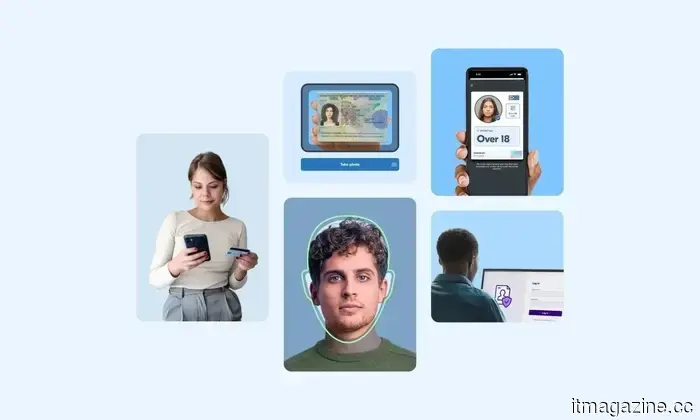
A fake beard has emerged as one of the most humorous loopholes in online age verification. A new report from Internet Matters indicates that some kids are drawing facial hair on themselves to deceive facial age-detection tools into believing they are older. One parent mentioned that their 12-year-old used an eyebrow pencil to create a moustache and was then verified as being 15.
Can a fake beard truly evade online age checks?
While it may sound humorous, this tactic highlights a more significant ongoing issue. As platforms implement stricter age verification due to regulations like the U.K. Online Safety Act, younger users are quickly discovering ways to circumvent these measures. According to Internet Matters, 53% of children reported being asked to verify their age online recently, but 46% claimed that these age checks are easy to bypass. Furthermore, one-third of the children acknowledged having done so.
Meta
The alternatives are not typically high-tech. Kids continue to provide false birthdates, use someone else's account, access a parent's or sibling's device, or utilize another person's identification. Some even opt for VPNs, upload images or videos featuring older individuals, or direct their phone’s camera at a screen displaying an adult face. In one reported case, users showcased Sam Porter Bridges from Death Stranding 2, portrayed by Norman Reedus, using his image in the game’s high-resolution photo mode to overcome face-based age verification.
Why are platforms having difficulty keeping children out?
Increasingly, age verification measures are becoming standard across major platforms, particularly involving chat features, mature content, and teen safety settings. For instance, Roblox has tightened its rules around age-restricted chat access, while Discord's rollout of age verification illustrated the complications that can arise when users are abruptly required to prove their age. Meta is utilizing AI to determine if teenagers are truthful about their age, and Steam’s crackdown on adult content signifies that age checks are influencing gaming platforms as well. While there is pressure on platforms to prevent younger users from accessing inappropriate content, every new obstacle presents additional opportunities for kids to find workarounds.
Yoti
Stricter verification processes also present their own challenges. Facial scans, ID submissions, and AI age assessment can lead to privacy issues, create friction, and incorrectly flag users. Internet Matters discovered that both parents and children are concerned about how personal data and biometric details might be utilized, a worry that is growing in relevance as the U.K. Online Safety Act, the EU’s Digital Services Act, and Australia’s law governing under-16s on social media push platforms to adopt tougher verification regulations.
While age checks are becoming increasingly difficult to bypass, the fake beard method reveals that the technology itself still has a long way to go.
Samsung patent reveals a laptop featuring a smart touch-sensitive palmrest for shortcuts
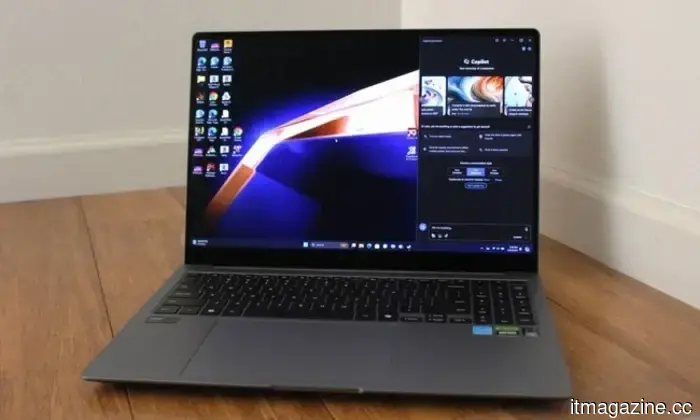
Samsung has a history of filing unconventional patents, including its multi-fold laptop and rollable smartphone concepts introduced in 2022. A newly surfaced patent from the company presents a laptop design that aims to minimize the reliance on modifier keys such as Ctrl, Shift, and Alt. The patented laptop employs built-in sensors in the palmrest to detect users' arm positions and adjust key functions accordingly.
Could your palmrest take the place of Ctrl and Shift?
The Desktop Paradox: I finally grasped why gamers hesitate before transitioning to OLED
It’s neither the price nor the hype; it’s that one apprehension you can’t shake.
The year is 2026, and the OLED revolution has officially arrived at our desks — not just in flashy advertisements or YouTube thumbnails, but in your shopping cart. You’ve likely hovered over that “Buy Now” button at least once, contemplated the price, envisioned your setup glowing vividly, and then quietly closed the tab.
The thing is, everyone agrees that OLED is the superior display technology. It’s the holy grail. It’s what makes TVs look breathtaking and smartphones feel luxurious. With deep blacks, superb contrast, and instantaneous response times, it’s the talk of the gaming community. Yet, despite its accolades, it’s surprisingly absent from many desks.
iOS 27 might treat AI models like default applications, which could finally encourage me to use Apple Intelligence
While Android confines you to Gemini and Windows defaults to Copilot, Apple's iOS 27 is reportedly granting users controls for the very first time.
Most daily AI users, including myself, have established their preferences. I rely on a paid Claude subscription for editorial tasks (like brainstorming headlines and refining tone) while using Gemini for image generation and in-depth research.
Perhaps you prefer Perplexity for searching or ChatGPT for programming tasks, and that works perfectly fine, as it enhances productivity and accelerates information retrieval. The challenge is that the operating system on your phone or laptop hasn’t acknowledged your preferences and, until now, didn’t take them into account before imposing its own chosen AI.





Other articles
 Dreame aims to equip you with a smartphone, a smart ring, and a sports car powered by rockets.
Dreame Technology introduced two smartphones, three AI smart rings, and a rocket-powered sports car at its DREAME NEXT event in San Francisco last week, signaling the home appliance brand's venture into new product categories it hasn't previously engaged with.
Dreame aims to equip you with a smartphone, a smart ring, and a sports car powered by rockets.
Dreame Technology introduced two smartphones, three AI smart rings, and a rocket-powered sports car at its DREAME NEXT event in San Francisco last week, signaling the home appliance brand's venture into new product categories it hasn't previously engaged with.
 OpsMill secures $14 million in Series A funding to enhance the reliability of IT infrastructure data.
OpsMill has secured $14 million in a Series A funding round to expand its Infrahub infrastructure data platform, which is utilized by TikTok and an increasing number of enterprise clients.
OpsMill secures $14 million in Series A funding to enhance the reliability of IT infrastructure data.
OpsMill has secured $14 million in a Series A funding round to expand its Infrahub infrastructure data platform, which is utilized by TikTok and an increasing number of enterprise clients.
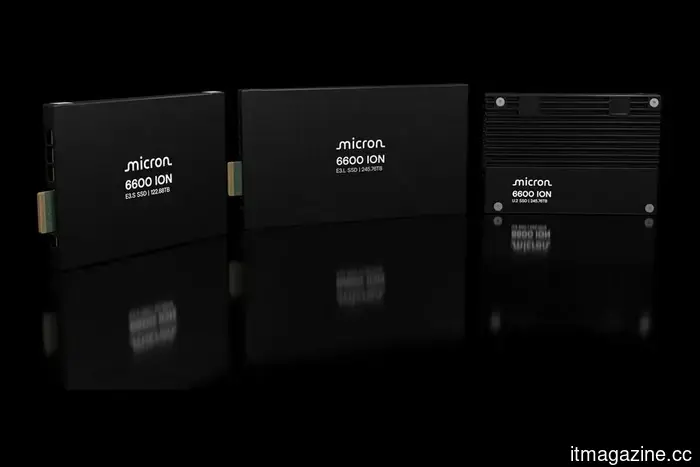 Micron has released a 245-terabyte SSD for data centers.
American Micron has begun shipping the 6600 ION solid-state drive with a capacity of 245 terabytes. The company calls it the most spacious serial SSD for data centers on the market. The device was designed for artificial intelligence tasks, cloud platforms, and enterprise storage.
Micron has released a 245-terabyte SSD for data centers.
American Micron has begun shipping the 6600 ION solid-state drive with a capacity of 245 terabytes. The company calls it the most spacious serial SSD for data centers on the market. The device was designed for artificial intelligence tasks, cloud platforms, and enterprise storage.
 OpsMill secures $14 million in Series A funding to enhance the reliability of IT infrastructure data.
OpsMill has successfully completed a $14 million Series A funding round to expand its Infrahub infrastructure data platform, which is utilized by TikTok and an increasing number of enterprise clients.
OpsMill secures $14 million in Series A funding to enhance the reliability of IT infrastructure data.
OpsMill has successfully completed a $14 million Series A funding round to expand its Infrahub infrastructure data platform, which is utilized by TikTok and an increasing number of enterprise clients.
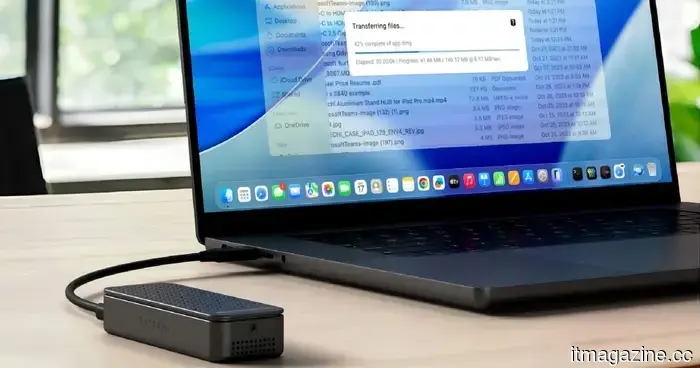 This slim SSD enclosure features active cooling to maintain 80Gbps speeds for as long as necessary.
Satechi's DotDisk 80Gbps SSD enclosure features an integrated microfan and thermal pad designed to avoid thermal throttling during prolonged transfers, maintaining consistent speeds where many smaller enclosures tend to decrease performance.
This slim SSD enclosure features active cooling to maintain 80Gbps speeds for as long as necessary.
Satechi's DotDisk 80Gbps SSD enclosure features an integrated microfan and thermal pad designed to avoid thermal throttling during prolonged transfers, maintaining consistent speeds where many smaller enclosures tend to decrease performance.
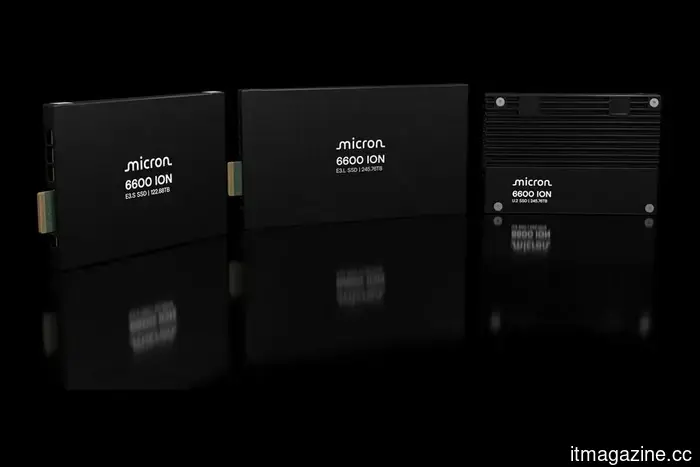 Micron has released a 245-terabyte SSD for data centers.
American Micron has begun shipping the 6600 ION solid-state drive with a capacity of 245 terabytes. The company calls it the most spacious serial SSD for data centers on the market. The device was designed for artificial intelligence tasks, cloud platforms, and enterprise storage.
Micron has released a 245-terabyte SSD for data centers.
American Micron has begun shipping the 6600 ION solid-state drive with a capacity of 245 terabytes. The company calls it the most spacious serial SSD for data centers on the market. The device was designed for artificial intelligence tasks, cloud platforms, and enterprise storage.
Children are evading online age verification by drawing fake beards on their faces.
An increasing number of platforms are implementing age verification for users on apps, games, and social media, yet children are already discovering silly ways to circumvent these checks, including fake birth dates, shared logins, and even using makeup or video game avatars.