
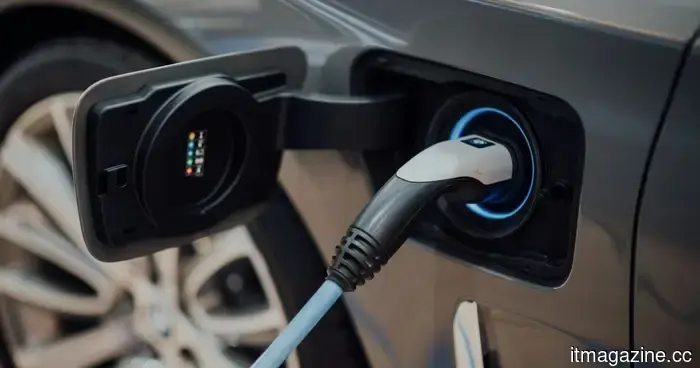
The future of vehicle diagnostics: Facilitating the transition to electric vehicles.
The global automotive sector is undergoing one of the most significant transformations in its history. The shift towards electrification is quickening, emissions standards are becoming stricter in key markets, and vehicles are evolving rapidly into software-driven platforms.
However, beyond the focus on electric vehicles (EVs), another significant change is occurring in the automotive landscape: the advancement of vehicle diagnostics.
Instead of merely transitioning from internal combustion engines (ICE) to electric propulsion, the industry is entering an era of dual technologies where advanced ICE vehicles and burgeoning EV architectures coexist. This situation is reshaping the expectations for technicians, garages, and the diagnostic tools they utilize.
In this context, diagnostics is evolving from a mere troubleshooting role to a fundamental infrastructure component of contemporary automotive maintenance, enabling technicians to analyze the vast amounts of data generated by today's vehicles.
ICE Vehicles: Growing Digital Complexity
Despite the rapid rise in electrification, ICE vehicles will continue to represent a significant portion of the global fleet for the foreseeable future. As per the International Energy Agency, the total global vehicle count now surpasses 1.4 billion, with ICE and hybrid vehicles projected to comprise over half of the fleet until well into the 2030s (IEA, 2024).
Simultaneously, combustion vehicles have evolved significantly beyond their initially mechanical designs.
In the early 1990s, a typical vehicle had fewer than 10 electronic control units (ECUs). Nowadays, modern passenger cars often feature between 70 and 150 ECUs, with high-end models exceeding 200 control modules managing various functions, including powertrains, safety features, infotainment, and connectivity (McKinsey & Company, 2023).
These systems communicate via increasingly advanced in-vehicle networks like CAN, LIN, FlexRay, and Automotive Ethernet, forming intricate electronic architectures that must work seamlessly to ensure safe vehicle operation.
Several factors are contributing to this rise in electronic complexity:
- Stricter global emissions regulations, including Euro 6 and the anticipated Euro 7 standards
- Widespread implementation of Advanced Driver Assistance Systems (ADAS)
- Improved engine and transmission management strategies
- Connected infotainment systems, telematics, and over-the-air software updates
ADAS technologies, in particular, have changed service processes. Radar sensors, cameras, and ultrasonic systems necessitate precise calibration to function effectively. Even routine repairs—such as windshield replacements or bumper repairs—may require advanced calibration procedures supported by professional diagnostic tools.
Additionally, vehicles are generating unprecedented volumes of operational data. Connected cars can produce as much as 25 gigabytes of data per hour from sensors and control systems. For technicians, this means that traditional troubleshooting methods are insufficient. Basic code readers cannot decode encrypted gateways, inter-module interactions, or advanced communication protocols.
Professional diagnostic platforms now need to support:
- Comprehensive multi-system scanning across numerous ECUs
- Real-time sensor and parameter analysis
- Module coding and software updates
- Secure access to manufacturer-protected systems
In summary, modern ICE vehicles have transformed into digital ecosystems on wheels, necessitating diagnostic tools capable of navigating increasingly intricate electronic architectures.
EVs Bring a New Diagnostic Framework
While ICE vehicles gain electronic sophistication, EVs introduce a completely new diagnostic paradigm that focuses on high-voltage energy systems and battery management. The adoption of EVs has surged, with the International Energy Agency reporting global EV sales surpassed 14 million units in 2023, bringing the total worldwide EV fleet to over 40 million units (IEA, 2024).
Unlike combustion vehicles, EV diagnostics centers on monitoring electrical and electrochemical systems, not combustion processes or emissions control.
Key subsystems in EVs that require diagnostic oversight include:
- High-voltage lithium-ion battery packs
- Battery Management Systems (BMS)
- Electric motor controllers and inverters
- Onboard chargers and DC-DC converters
- Battery thermal management systems
Most EV platforms utilize 400-volt architectures, while next-generation systems are increasingly adopting 800-volt platforms for quicker charging and enhanced efficiency (Deloitte, 2023). Battery packs are highly complex, containing thousands of lithium-ion cells organized in modules, each monitored continually by the BMS to guarantee safe operation and performance balance.
Thus, EV diagnostics primarily focus on indicators such as:
- State of Charge (SOC) – real-time energy availability
- State of Health (SOH) – long-term battery deterioration
- Cell voltage balancing
- Thermal management performance
Moreover, EV powertrains are predominantly governed by software. Many service issues arise not from hardware failures but from conflicts in software calibration, firmware glitches, or communication faults between control modules.
This evolution indicates a broader shift in the automotive industry. As highlighted by McKinsey & Company, “The vehicle is swiftly becoming a software-defined platform, where functionality increasingly hinges on software rather than hardware.”
For workshops and technicians, this implies diagnostics must increasingly incorporate electrical system monitoring, battery analytics, and software management.
A Dual-Technology Aftermarket
The simultaneous
Other articles
 The future of vehicle diagnostics: Driving the transition to electric vehicles.
The global automotive sector is experiencing one of the most significant transformations in its history. The shift towards electrification is speeding up, emissions regulations are becoming stricter in key markets, and vehicles are quickly transitioning into software-defined platforms. However, alongside the focus on electric vehicles (EVs), another change is subtly altering the automotive ecosystem: the advancement of vehicle diagnostics. Rather [...]
The future of vehicle diagnostics: Driving the transition to electric vehicles.
The global automotive sector is experiencing one of the most significant transformations in its history. The shift towards electrification is speeding up, emissions regulations are becoming stricter in key markets, and vehicles are quickly transitioning into software-defined platforms. However, alongside the focus on electric vehicles (EVs), another change is subtly altering the automotive ecosystem: the advancement of vehicle diagnostics. Rather [...]
 Google plans to invest as much as $40 billion in Anthropic, as Claude surpasses Gemini in the enterprise market where it is most critical.
Google is pledging $10 billion in cash and $30 billion in conditional funding to Anthropic, based on a valuation of $350 billion, in addition to providing 5 gigawatts of computing power over the next five years, as Claude achieves a $30 billion annual recurring revenue and surpasses Gemini in the enterprise sector.
Google plans to invest as much as $40 billion in Anthropic, as Claude surpasses Gemini in the enterprise market where it is most critical.
Google is pledging $10 billion in cash and $30 billion in conditional funding to Anthropic, based on a valuation of $350 billion, in addition to providing 5 gigawatts of computing power over the next five years, as Claude achieves a $30 billion annual recurring revenue and surpasses Gemini in the enterprise sector.
 The EU's initiative for child safety has hit a roadblock as the ePrivacy derogation has lapsed, an age verification application was compromised, and the CSA Regulation is stalled in trilogue discussions.
The ePrivacy derogation ended on April 3, the EU age verification application was compromised within minutes, and the CSA Regulation is still at a standstill. Europe's child safety measures require the data that its privacy regulations prohibit.
The EU's initiative for child safety has hit a roadblock as the ePrivacy derogation has lapsed, an age verification application was compromised, and the CSA Regulation is stalled in trilogue discussions.
The ePrivacy derogation ended on April 3, the EU age verification application was compromised within minutes, and the CSA Regulation is still at a standstill. Europe's child safety measures require the data that its privacy regulations prohibit.
 Despite rumors of reductions, Apple may still deliver a performance showcase with the iPhone 18.
Apple's iPhone 18 could put an end to cost-cutting doubts with its 2nm A20 chip, 12GB of RAM in the standard versions, variable-aperture cameras in the Pro models, and Apple's proprietary C2 modem.
Despite rumors of reductions, Apple may still deliver a performance showcase with the iPhone 18.
Apple's iPhone 18 could put an end to cost-cutting doubts with its 2nm A20 chip, 12GB of RAM in the standard versions, variable-aperture cameras in the Pro models, and Apple's proprietary C2 modem.
 The EU's efforts to enhance child safety have hit a roadblock as the ePrivacy derogation comes to an end, an age verification application has been compromised, and the CSA Regulation remains stalled in trilogue discussions.
The ePrivacy derogation ended on April 3, the EU age verification application was compromised in just minutes, and the CSA Regulation is still at a standstill. Europe's child protection measures rely on data that its privacy regulations prohibit.
The EU's efforts to enhance child safety have hit a roadblock as the ePrivacy derogation comes to an end, an age verification application has been compromised, and the CSA Regulation remains stalled in trilogue discussions.
The ePrivacy derogation ended on April 3, the EU age verification application was compromised in just minutes, and the CSA Regulation is still at a standstill. Europe's child protection measures rely on data that its privacy regulations prohibit.
 The Fire TV Stick HD has quietly launched along with an adapter, but it's not fully prepared for prime usage.
Amazon's latest Gigabit Ethernet Adapter appears to be an enhancement for the Fire TV Stick HD, but there's an important hardware detail to consider.
The Fire TV Stick HD has quietly launched along with an adapter, but it's not fully prepared for prime usage.
Amazon's latest Gigabit Ethernet Adapter appears to be an enhancement for the Fire TV Stick HD, but there's an important hardware detail to consider.
The future of vehicle diagnostics: Facilitating the transition to electric vehicles.
The global automotive sector is embarking on one of the most transformative phases in its history. The shift towards electrification is gaining speed, emissions regulations are becoming stricter in key markets, and vehicles are swiftly turning into software-driven platforms. However, alongside the focus on electric vehicles (EVs), an important change is subtly altering the automotive landscape: the advancement of vehicle diagnostics. While [...]