

Meta has entered into a multibillion-dollar agreement for Amazon's Graviton5 chips as the demand for AI computing exceeds its $135 billion capital expenditure budget.
Summary: Meta has entered into a multi-year, multibillion-dollar agreement to use millions of Amazon’s Graviton5 ARM CPU cores in AWS data centers for AI workloads. These processors are general-purpose and manage CPU-intensive tasks related to real-time reasoning and multi-step agents, rather than accelerating AI. This contract is part of an extensive procurement initiative surpassing $200 billion, which includes investments in Nvidia ($50B), AMD ($60B), CoreWeave ($35B), Nebius ($27B), and Broadcom, indicating Meta's belief that its AI computing needs cannot be met by any single supply chain.
On Thursday, Meta announced this significant deal with Amazon Web Services for tens of millions of Graviton5 cores, which are ARM-based CPUs featuring 192 Neoverse V3 cores per chip, manufactured on a 3-nanometre process. These cores will operate in AWS data centers throughout the United States, with Meta opting to rent rather than purchase this computational capacity. The importance of this agreement lies not in the chip's functionality but in the fact that Amazon is a competitor in advertising, commerce, and growing AI sectors. Meta is investing billions in AWS infrastructure due to an overwhelming demand for AI computing that no single company can fulfill independently, even with its projected capital expenditure of $115 billion to $135 billion this year.
The workload distinction between training and inference has shaped the AI chip market since the rise of deep learning. Training requires GPUs or specialized chips, while inference — executing a trained model — needs a different computational mix. Meta’s agentic AI workloads necessitate greater CPU capacity compared to typical inference tasks, demanding substantial general-purpose processing power for functions like real-time reasoning and orchestration of multi-step tasks. According to Santosh Janardhan, Meta's infrastructure head, the adoption of Graviton enhances their ability to handle CPU-intensive workloads at scale. AWS's vice president, Nafea Bshara, noted that Meta opted for Graviton5 due to its price performance despite having numerous options available.
The agreement commences with tens of millions of Graviton5 cores, with a potential for expansion, lasting at least three years, primarily deployed in US data centers. Previously, Meta had employed Graviton on a minor scale, but this deal establishes a crucial infrastructure reliance. Graviton5 chips promise a 25% performance improvement over prior models while having a 33% reduction in inter-core latency despite a doubled core count. This chip is available via EC2 M9g instances, with C9g and R9g variants expected in 2026. As a result, Meta is set to become one of Amazon's largest customers for custom silicon, relying on competitor data centers for workloads rather than building the equivalent capacities in-house, which would take longer than their AI timeline allows.
The Graviton agreement represents one aspect of a procurement effort unprecedented in the tech sector. In February 2026, Meta pledged around $50 billion to Nvidia for millions of GPUs, CPUs, and networking equipment. During the same month, the company entered a roughly $60 billion deal with AMD for custom GPUs. Additionally, Meta’s commitment of $35 billion to CoreWeave for dedicated cloud capacity runs until December 2032, and a $27 billion agreement with Nebius bolsters its AI infrastructure. An extended collaboration with Broadcom covering several generations of custom processors through 2029 is also in place. The sum of these agreements exceeds $200 billion and does not cover the costs of necessary data centers, power infrastructure, or internal engineering to support the hardware.
Meta announced the launch of four new MTIA chips in March 2026, based on RISC-V architecture, developed in partnership with TSMC and Broadcom, enabling frequent releases of new designs. The MTIA 400 is noted for its raw performance rivalling leading commercial solutions, while the 450 and 500 focus on generative AI for images and video. Despite advancing its silicon production, Meta continues to forge partnerships with various companies, suggesting that its projected AI compute demands are so vast that relying solely on in-house capacity is not feasible due to tight timelines.
Amazon's custom chip business, including Graviton, Trainium, and Nitro, could be valued at $50 billion, according to CEO Andy Jassy’s letters to shareholders, revealing significant revenue growth in this segment. He implied that Amazon might sell chip racks to third parties in the future, referencing large customers who sought to buy all Graviton capacity. The Meta agreement restricts chip usage to AWS data centers, categorizing it as a cloud contract rather than a hardware sale, yet the scale implies the distinction between cloud provider and chip manufacturer is blurring.
Since its acquisition of Annapurna Labs in 2015, Amazon has designed all three chip families, attracting clients like Anthropic and OpenAI, who have committed substantial AWS expenditure. The Trainium3, which will be widely available
Other articles
 James Zou from Stanford aims for a $1 billion valuation for his AI physiology startup, which is supported by research published in Nature and has received FDA clearance for its cardiac AI technology.
James Zou of Stanford aims for a $1 billion valuation with his AI physiology startup, which is supported by research published in Nature and FDA-approved cardiac AI.
James Zou from Stanford aims for a $1 billion valuation for his AI physiology startup, which is supported by research published in Nature and has received FDA clearance for its cardiac AI technology.
James Zou of Stanford aims for a $1 billion valuation with his AI physiology startup, which is supported by research published in Nature and FDA-approved cardiac AI.
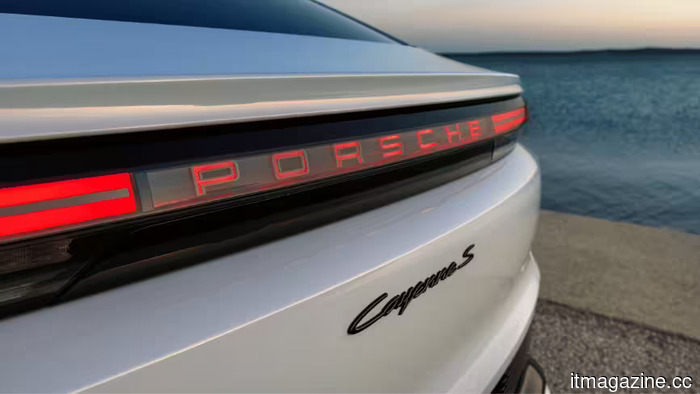 Porsche Cayenne Coupe Electric makes its debut featuring 1,139 hp and a range of 669 km as the company steps back from its all-electric strategy.
The Cayenne Coupe Electric boasts 1,139 hp, can be charged in 16 minutes, and has a starting price of $113,800. Porsche is introducing it alongside internal combustion engine (ICE) variants following a 93% drop in profits and a strategic pullback from electrification.
Porsche Cayenne Coupe Electric makes its debut featuring 1,139 hp and a range of 669 km as the company steps back from its all-electric strategy.
The Cayenne Coupe Electric boasts 1,139 hp, can be charged in 16 minutes, and has a starting price of $113,800. Porsche is introducing it alongside internal combustion engine (ICE) variants following a 93% drop in profits and a strategic pullback from electrification.
 How Denis Brovarnyy is bridging the AI skills gap through practical training.
Denis Brovarnyy established AIT Technology School to close the divide between education and practical AI employment. His approach emphasizes implementation rather than theory.
How Denis Brovarnyy is bridging the AI skills gap through practical training.
Denis Brovarnyy established AIT Technology School to close the divide between education and practical AI employment. His approach emphasizes implementation rather than theory.
 Meta has finalized a multibillion-dollar agreement for Amazon's Graviton5 chips as the demand for AI computing exceeds its $135 billion capital expenditure budget.
Meta plans to implement tens of millions of Amazon Graviton5 CPU cores in AWS data centers for agentic AI. This agreement is part of a procurement initiative exceeding $200 billion that includes Nvidia, AMD, CoreWeave, Broadcom, and now a direct competitor.
Meta has finalized a multibillion-dollar agreement for Amazon's Graviton5 chips as the demand for AI computing exceeds its $135 billion capital expenditure budget.
Meta plans to implement tens of millions of Amazon Graviton5 CPU cores in AWS data centers for agentic AI. This agreement is part of a procurement initiative exceeding $200 billion that includes Nvidia, AMD, CoreWeave, Broadcom, and now a direct competitor.
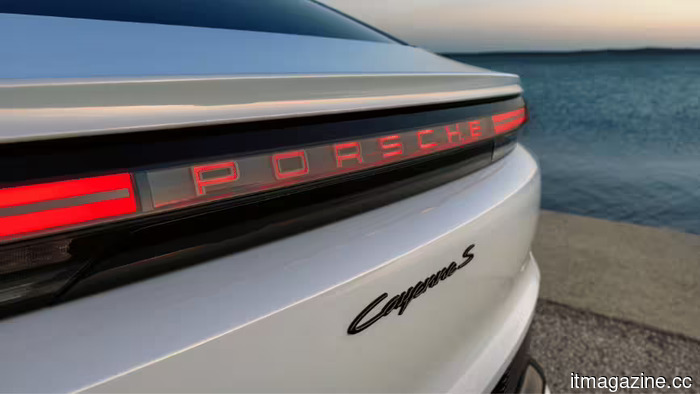 The Porsche Cayenne Coupe Electric makes its debut, boasting 1,139 horsepower and a range of 669 km, as the company shifts away from its all-electric strategy.
The Cayenne Coupe Electric delivers 1,139 horsepower, can be charged in 16 minutes, and has a starting price of $113,800. Porsche is introducing it alongside its internal combustion engine variants following a 93% drop in profits and a strategic pullback from electrification.
The Porsche Cayenne Coupe Electric makes its debut, boasting 1,139 horsepower and a range of 669 km, as the company shifts away from its all-electric strategy.
The Cayenne Coupe Electric delivers 1,139 horsepower, can be charged in 16 minutes, and has a starting price of $113,800. Porsche is introducing it alongside its internal combustion engine variants following a 93% drop in profits and a strategic pullback from electrification.
 Meta has entered into a multibillion-dollar agreement for Amazon Graviton5 chips, as the demand for AI computing exceeds their $135 billion capital expenditure budget.
Meta plans to utilize tens of millions of Amazon Graviton5 CPU cores within AWS data centers for agentic AI. This agreement is part of a procurement initiative exceeding $200 billion, which includes Nvidia, AMD, CoreWeave, Broadcom, and now a direct rival.
Meta has entered into a multibillion-dollar agreement for Amazon Graviton5 chips, as the demand for AI computing exceeds their $135 billion capital expenditure budget.
Meta plans to utilize tens of millions of Amazon Graviton5 CPU cores within AWS data centers for agentic AI. This agreement is part of a procurement initiative exceeding $200 billion, which includes Nvidia, AMD, CoreWeave, Broadcom, and now a direct rival.
Meta has entered into a multibillion-dollar agreement for Amazon's Graviton5 chips as the demand for AI computing exceeds its $135 billion capital expenditure budget.
Meta plans to use tens of millions of Amazon Graviton5 CPU cores in AWS data centers for agentic AI. This agreement is part of a procurement initiative exceeding $200 billion, which includes Nvidia, AMD, CoreWeave, Broadcom, and now a direct rival.