

ChatGPT workspace agents transform AI into a collaborative team member.
OpenAI's newest update aims to enhance productivity.
OpenAI is steering ChatGPT toward tasks beyond mere question-and-answer interactions, and this latest update clearly demonstrates that transition. With the introduction of workspace agents, ChatGPT is evolving from a simple chatbot into a comprehensive work assistant.
What are workspace agents in ChatGPT, and how do they function?
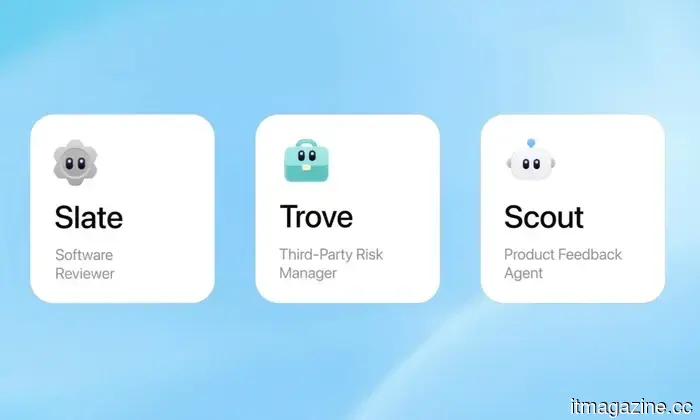
OpenAI has rolled out workspace agents, which are collaborative AI agents intended to handle intricate, multi-step tasks across teams.
Unlike standard prompts that offer one-time responses, these agents are capable of planning and executing tasks while continuing to operate behind the scenes even when users are not actively engaged. They function in the cloud, allowing them to persist in processing workflows, updating outputs, and managing tasks over time without the need for constant user interaction.
What distinguishes them is their deep integration into workflows. These agents can access documents, execute code, connect with tools, and operate across platforms like ChatGPT and Slack.
Why is OpenAI transforming ChatGPT into a team assistant?
This development appears to be a logical advancement in the AI landscape. Tools like ChatGPT have already become vital for tasks such as writing, coding, and research. Workspace agents elevate this functionality by automating entire workflows rather than merely assisting with segments.
For instance, a team could develop a shared agent that monitors feedback, summarizes documentation, responds to internal inquiries, and automatically identifies issues. Rather than having several individuals perform repetitive tasks, the agent manages them continuously in the background.
Additionally, there is a significant collaborative aspect to this. These agents are designed for sharing within organizations, allowing teams to create a single workflow that can be reused across various projects, refining it over time instead of starting anew with each endeavor.
While this is still in its early stages, these agents operate under specific permissions, necessitate setup, and are intended to support rather than replace human decision-making. However, the trajectory is evident: ChatGPT is evolving from a mere brainstorming tool to one that actively collaborates with users.
Varun is an accomplished technology journalist and editor with over eight years experience in consumer tech journalism. His expertise covers…
This innovative smart pillow ensures that users do not sleep through emergency alarms or phone calls.
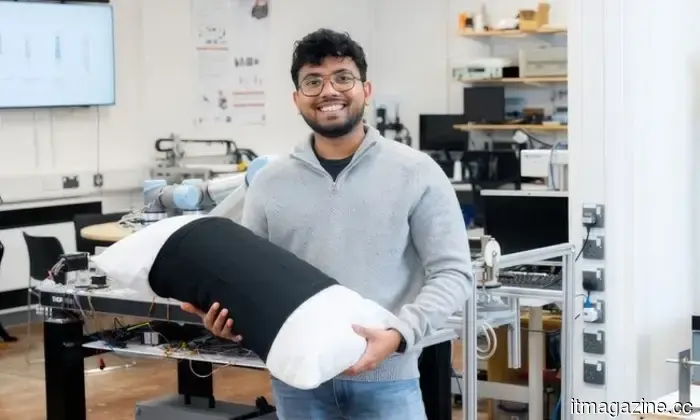
A new smart pillow concept has the potential to help deaf individuals avoid missing critical nighttime alerts. While sleeping through a phone call can be irritating, sleeping through a fire alarm is far more concerning. Researchers at Nottingham Trent University have developed a smart pillow sleeve that aids deaf users in waking up to significant alerts during the night.
In contrast to a standard smart pillow, this design is a sleeve intended to fit over a regular pillow. It can be placed inside a typical pillowcase and vibrates when linked alarms or phone calls are received.
OpenAI has released ChatGPT Images 2.0, which is significantly more than just an upgrade.
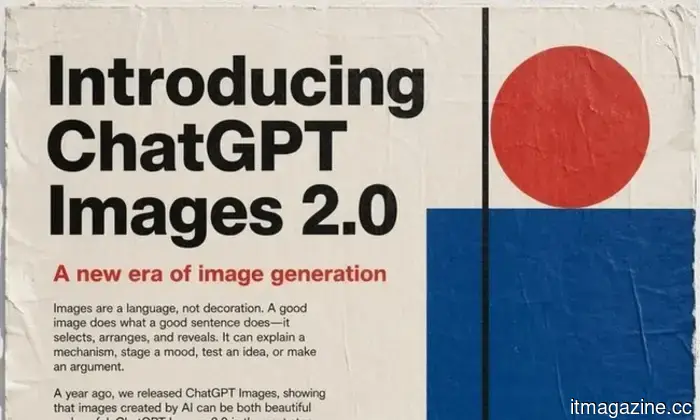
With improved text generation, reasoning, and real-world outputs, OpenAI is back with a new enhancement to ChatGPT's image capabilities. This latest version, ChatGPT Images 2.0, represents a crucial step toward creating genuinely useful AI visuals, focusing heavily on comprehension as opposed to mere generation.
A humanoid robot has completed a half-marathon faster than the current world record holder.
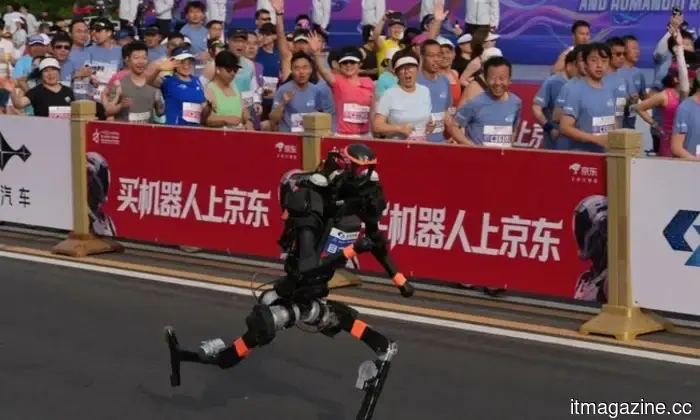
This innovation might not initially seem remarkable, but considering that the fastest robot in last year's Beijing humanoid robot half-marathon completed it in two hours and 40 minutes, this achievement is significant. According to the Associated Press, the robot that won this year's Beijing half-marathon finished in 50 minutes and 26 seconds, surpassing the recently set human world record of 57 minutes by Jacob Kiplimo.




Other articles
 Apple's new CEO pledges to make significant advancements in AI while maintaining a commitment to design.
John Ternus, the new CEO of Apple, states that the company recognizes significant potential in AI. However, he emphasizes that design and Apple's fundamental values will not be compromised in this pursuit.
Apple's new CEO pledges to make significant advancements in AI while maintaining a commitment to design.
John Ternus, the new CEO of Apple, states that the company recognizes significant potential in AI. However, he emphasizes that design and Apple's fundamental values will not be compromised in this pursuit.
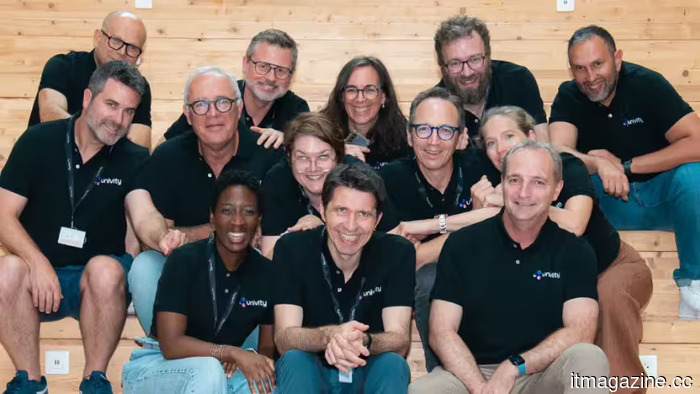 French satellite startup Univity secures €27M in Series A funding.
Univity secures €27M in a Series A funding round, aiming for a constellation of 1,600 satellites as a wholesale option for telecom companies, serving as an alternative to Starlink.
French satellite startup Univity secures €27M in Series A funding.
Univity secures €27M in a Series A funding round, aiming for a constellation of 1,600 satellites as a wholesale option for telecom companies, serving as an alternative to Starlink.
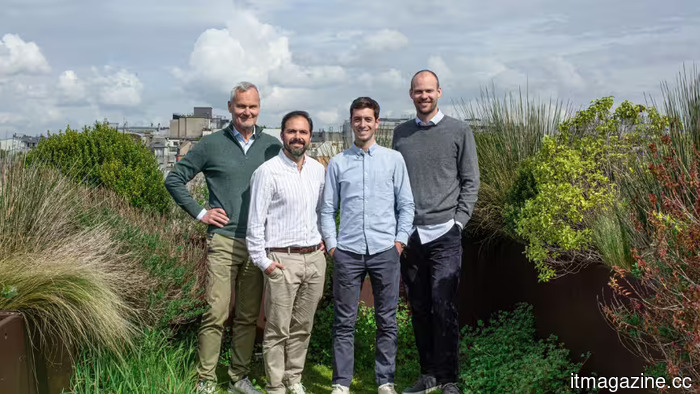 Decade Energy secures €22 million to develop zero-capex energy infrastructure.
Decade Energy has secured €22 million to implement over 100MW of Battery Energy Storage Systems (BESS) at logistics depots in France and to broaden its zero-capex electrification approach throughout Europe.
Decade Energy secures €22 million to develop zero-capex energy infrastructure.
Decade Energy has secured €22 million to implement over 100MW of Battery Energy Storage Systems (BESS) at logistics depots in France and to broaden its zero-capex electrification approach throughout Europe.
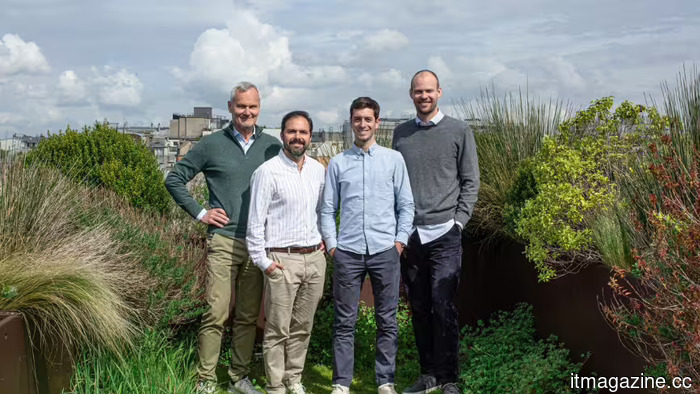 Decade Energy secures €22M to develop zero-capex energy infrastructure.
Decade Energy has secured €22 million to implement over 100MW of Battery Energy Storage Systems (BESS) at logistics depots in France and to broaden its zero-capex electrification approach throughout Europe.
Bain Capital is looking for a purchaser for its share in Bridge Data Centres.
Bain Capital is looking for a purchaser for a share in Bridge Data Centres, valuing the company at $5 billion, and Citi and JPMorgan are overseeing the transaction.
Decade Energy secures €22M to develop zero-capex energy infrastructure.
Decade Energy has secured €22 million to implement over 100MW of Battery Energy Storage Systems (BESS) at logistics depots in France and to broaden its zero-capex electrification approach throughout Europe.
Bain Capital is looking for a purchaser for its share in Bridge Data Centres.
Bain Capital is looking for a purchaser for a share in Bridge Data Centres, valuing the company at $5 billion, and Citi and JPMorgan are overseeing the transaction.
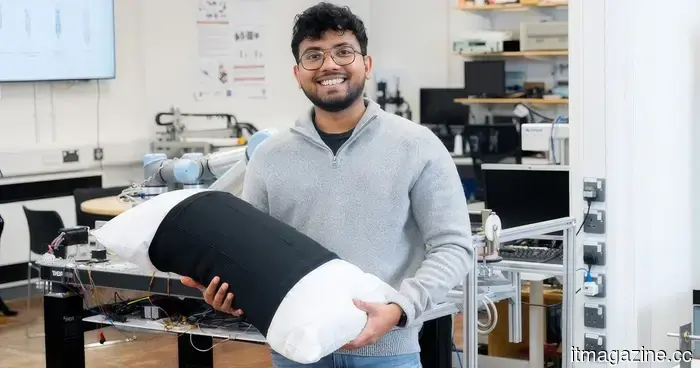 This intelligent pillow guarantees that you won't miss an emergency alarm or a phone call while you sleep.
Researchers from Nottingham Trent University have created a vibrating smart pillow sleeve designed to notify deaf individuals about fires, burglar alarms, and phone calls during the night.
This intelligent pillow guarantees that you won't miss an emergency alarm or a phone call while you sleep.
Researchers from Nottingham Trent University have created a vibrating smart pillow sleeve designed to notify deaf individuals about fires, burglar alarms, and phone calls during the night.
ChatGPT workspace agents transform AI into a collaborative team member.
OpenAI has launched workspace agents in ChatGPT, enabling teams to automate workflows, execute tasks in the background, and transform AI into a collaborative work assistant.