

Zoom will now verify whether you are a human or an AI impersonator during video calls.
Biometric badges, iris scans, and AI bouncers: welcome to the future of your Monday morning standup.
Zoom video calls have introduced a new cringe-worthy feature. The platform will now verify if you’re human. It has teamed up with World, Sam Altman’s iris-scanning identity venture (formerly known as Worldcoin), to incorporate real-time human verification during meetings.
Launched on April 17, 2026, this feature is part of World’s ID 4.0 initiative. It allows hosts to ensure that every participant on the call is a real individual, rather than an AI-generated fake.
How does the "verified human" badge function?
For those curious about how World’s Deep Face technology operates, it involves a three-step process. It cross-verifies a signed image from a user’s original Orb registration, a live facial scan from the device, and the video frame visible to other meeting participants.
Only when all three elements align does a “Verified Human” badge appear beside the user’s name. It seems odd and ironic to me that I need to demonstrate I’m human just to be recognized as such in a Zoom meeting.
Hosts can also enforce Deep Face verification as a prerequisite for joining meetings, blocking unverified participants completely. Additionally, they can conduct mid-call checks at any moment. So, if you suspect your colleague looks a bit off, or if you simply want to annoy someone, you can request a real-time check.
Why is this necessary?
The answer is straightforward: deepfake fraud has escalated beyond mere tales from acquaintances or weekend blog posts. In early 2024, the engineering firm Arup lost $25 million when an employee in Hong Kong approved wire transfers during a video call, where everyone present except the victim was a deepfake.
A similar situation occurred with a multinational company in Singapore in 2025. Furthermore, financial losses due to deepfake-related fraud exceeded $200 million in just the first quarter of the previous year. This threat is increasingly real and affects a growing number of individuals and businesses.
The trend is evident: biometric verification of identity is steadily becoming a standard practice in the workplace.
For over five years, Shikhar has been simplifying advancements in consumer technology consistently.
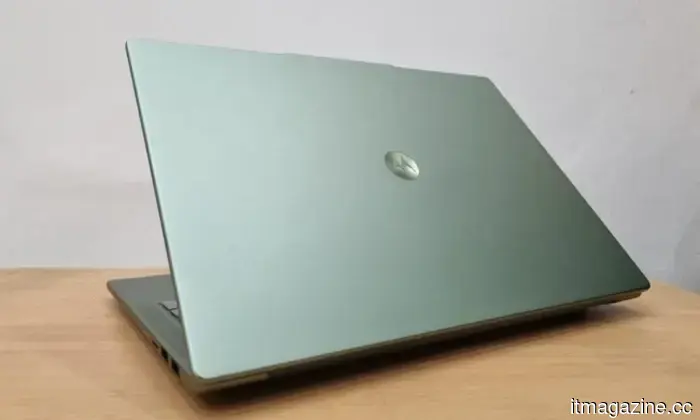
You won’t believe it, but Motorola has actually produced an eye-catching laptop.
Motorola’s Moto Book 60 Pro is unexpectedly stylish, and its pricing enhances its appeal.
Motorola is not a name I'd expect to see associated with a genuinely impressive laptop. I can see them making stylish phones or unique foldables, but a thin-and-light notebook that feels well-designed and well-priced is a delightful surprise. The Moto Book 60 Pro stands out as one of the more quietly impressive laptops in its category.
Amid the chaos of the broader laptop market, Motorola's offerings feel refreshing. It is capable, attractive, and remains accessible at a time when prices elsewhere have become increasingly high.
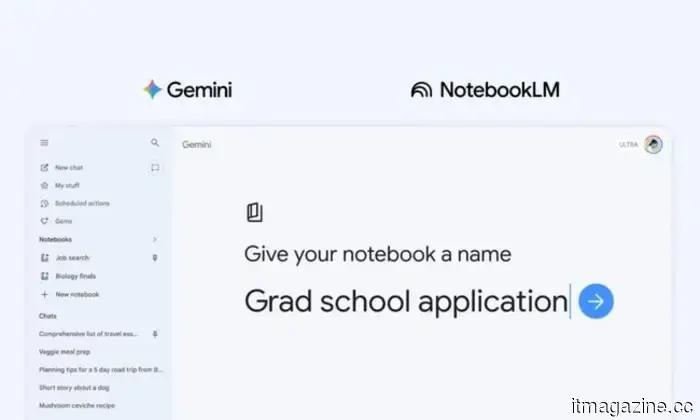
All Gemini users now have free access to Notebook projects on the web.
Google has made one of Gemini's most beneficial features available to everyone. The Notebooks feature, initially launched for paid AI subscribers earlier this month, is now accessible to all free users online. If you regularly utilize Gemini, this is quite significant.
Google’s new desktop mode reveals that Samsung DeX had a point.
Android 16 finally introduces a genuine desktop mode to Pixel phones, but Google’s long-awaited adaptation mostly showcases that Samsung spent years perfecting the complex elements.
I’ve been anticipating a serious desktop mode from Android for years. Back in 2019, I purchased a OnePlus 7 Pro and wasted an embarrassing amount of time trying to make its half-hearted desktop mode genuinely functional.
The concept made perfect sense to me back then. Phones had become extraordinarily powerful, and the idea of carrying an actual computer in my pocket felt less like a futuristic dream and more like overdue common sense.





Other articles
.jpg) Three overlooked films you can enjoy for free this weekend (April 17-19).
From a tense dinner party thriller to an uplifting tale of a man and his cat, these three free movies on Tubi cater to every mood you might seek this weekend.
Three overlooked films you can enjoy for free this weekend (April 17-19).
From a tense dinner party thriller to an uplifting tale of a man and his cat, these three free movies on Tubi cater to every mood you might seek this weekend.
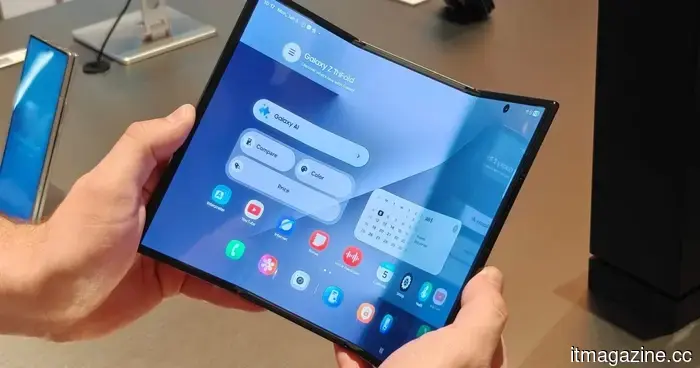 The Galaxy Z TriFold is no longer available for purchase: It has officially sold out.
The Galaxy Z TriFold demonstrated that Samsung is capable of creating future technology. It also showed that the future can sell out alarmingly quickly when only 30,000 units are produced.
The Galaxy Z TriFold is no longer available for purchase: It has officially sold out.
The Galaxy Z TriFold demonstrated that Samsung is capable of creating future technology. It also showed that the future can sell out alarmingly quickly when only 30,000 units are produced.
.jpg) 3 overlooked films you can enjoy for free this weekend (April 17-19)
From a tense dinner party thriller to an uplifting tale about a man and his cat, these three complimentary Tubi films cater to every mood you might desire this weekend.
3 overlooked films you can enjoy for free this weekend (April 17-19)
From a tense dinner party thriller to an uplifting tale about a man and his cat, these three complimentary Tubi films cater to every mood you might desire this weekend.
 AirPods Pro 3 might enable you to communicate with Siri without having to utter a word.
AirPods Pro 3 could offer more than just music playback: equipped with IR cameras and Q.ai's micro-facial-movement technology, Apple's upcoming earbuds might enable users to control Siri without any noise.
AirPods Pro 3 might enable you to communicate with Siri without having to utter a word.
AirPods Pro 3 could offer more than just music playback: equipped with IR cameras and Q.ai's micro-facial-movement technology, Apple's upcoming earbuds might enable users to control Siri without any noise.
.jpg) Three overlooked Apple TV shows worth watching this weekend (April 17-19)
From changing realities to a completely audio-based show, these three overlooked Apple TV+ series warrant much more recognition than they receive. Here’s what to check out this weekend.
Three overlooked Apple TV shows worth watching this weekend (April 17-19)
From changing realities to a completely audio-based show, these three overlooked Apple TV+ series warrant much more recognition than they receive. Here’s what to check out this weekend.
 The MacBook Neo highlighted for me that Apple still hasn't figured out how to create a genuinely excellent affordable iPhone.
The MacBook Neo demonstrates that Apple is capable of creating an excellent entry-level product, which only heightens the frustration with the iPhone 17e.
The MacBook Neo highlighted for me that Apple still hasn't figured out how to create a genuinely excellent affordable iPhone.
The MacBook Neo demonstrates that Apple is capable of creating an excellent entry-level product, which only heightens the frustration with the iPhone 17e.
Zoom will now verify whether you are a human or an AI impersonator during video calls.
Zoom has introduced human verification in its video meetings, collaborating with Sam Altman's World to showcase a "Verified Human" badge for attendees who successfully complete a three-step biometric verification process.