
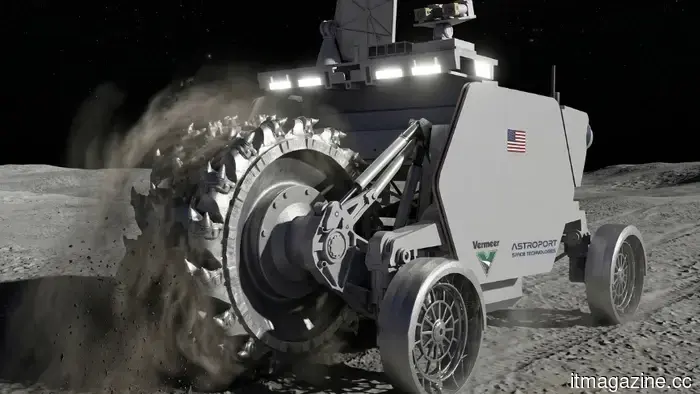
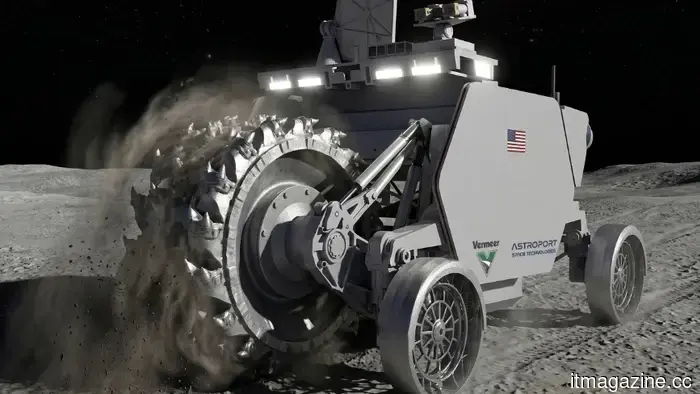
Astroport and Vermeer partner to develop autonomous construction vehicles for lunar use.
Astroport Space Technologies and Vermeer Corporation have revealed a partnership aimed at modifying industrial surface mining equipment for autonomous construction on the Moon. Both companies present this collaboration as a means to supply the heavy machinery, referred to as “Lunar Iron,” essential for establishing a sustainable human presence on the lunar surface.
The announcement, made at the 20th International Conference on Engineering, Science, Construction and Operations in Challenging Environments (ASCE Earth & Space 2026) in College Station, Texas, focuses on what the companies define as the “lunarisation” of Vermeer’s surface mining equipment. The initiative will utilize Astroport’s Universal Tool Implement Payload Adapter (UTIPA), a modular system featuring interchangeable tools designed specifically for robotic construction in the Moon's harsh conditions. Initially targeting a surface miner application, the teams will modify heavy equipment that typically relies on mass and weight for operation, adapting it for the Moon's low gravity, extreme temperature variations, and abrasive regolith.
Understanding "Lunar Iron"
The term does not refer to iron ore but serves as the companies’ shorthand for the category of heavy construction equipment necessary for lunar base development, such as excavators, trenchers, and surface miners that can excavate foundations, grade roads, construct landing pads, and prepare sites for nuclear power systems and habitats. While such work is routine on Earth, the Moon presents unique challenges where machinery must operate autonomously in a vacuum, withstand temperature changes exceeding 300 degrees Celsius between lunar day and night, and function without the gravitational forces that enable terrestrial machines to perform cutting and trenching efficiently. This creates an engineering challenge yet to be tackled at an operational scale.
“Vermeer has always been focused on finding better methods to accomplish difficult tasks,” stated Jason Andringa, president and CEO of Vermeer Corporation. He mentioned that the company has over seventy years of experience creating equipment for agriculture, resource management, and underground construction. “This partnership exemplifies our ongoing commitment to that mission by applying our automation and heavy equipment expertise to the lunar context.”
UTIPA: The Adapter That Makes It Possible
The collaboration's technical cornerstone is Astroport's UTIPA system. Instead of creating lunar construction machinery from the ground up, the approach adapts reliable industrial equipment via a modular payload interface. UTIPA standardizes the connection between robotic platforms and interchangeable tool heads, enabling a single autonomous base unit to transition seamlessly between surface mining, trenching, grading, and other construction tasks.
This adaptability is crucial, as lunar construction involves multiple aspects. Establishing a base entails site preparation—excavating regolith to level the ground; building roads to connect landing zones with habitat areas; producing landing pads using sintered regolith; and trenching for power cables and thermal protection. A modular tool system minimizes the number of machines that need to be launched from Earth, while allowing each unit to fulfill various roles throughout the construction process.
Prototype testing will occur at Vermeer’s headquarters in Pella, Iowa, where the company will utilize its existing testing facilities for heavy machinery. The initial focus of the collaboration will be on adapting Vermeer’s high-torque cutting and trenching technologies, which are engineered for continuous operation in hard ground and rock, to suit the demanding conditions of the lunar surface.
Aligning with NASA's Objectives
This partnership aligns with NASA’s Moon Base program, which aims to create lunar infrastructure by 2030. The Artemis program has already executed its crewed lunar flyby mission and plans to begin lunar landings in 2028, with approximately annual missions thereafter. Achieving permanent habitation will necessitate the very type of site preparation and civil engineering that Astroport and Vermeer are working on: excavated foundations, graded roads, sintered landing pads, and robust enclosures for fission power reactors.
Astroport has methodically been preparing for this juncture. The company holds several NASA contracts for lunar construction technology, including STTR Phase II funding for its Brickbot regolith-processing demonstrator. In February 2026, Astroport and Venturi Astrolab successfully demonstrated an integrated excavator payload on Astrolab’s FLEX rover, averaging 94 kilograms of regolith simulant excavation in 3.5 minutes. Additionally, Astroport has partnered with ispace for future delivery of scientific instruments for regolith research and with Orbit Fab to create in-situ resource utilization systems for converting regolith into water, oxygen, and metals.
Vermeer’s lunar expertise stems from its ongoing collaboration with Interlune, a Seattle-based startup focused on harvesting helium-3. Together, they unveiled a full-scale excavation prototype in May 2025, which is capable of processing 100 metric tons of regolith per hour. The Department of Energy has signed a purchase agreement with Interlune for lunar helium-3, and Vermeer aims to commence operations within four to six years.
The Bigger Picture
The Astroport-Vermeer collaboration is part of a quickly evolving lunar construction ecosystem.
Other articles
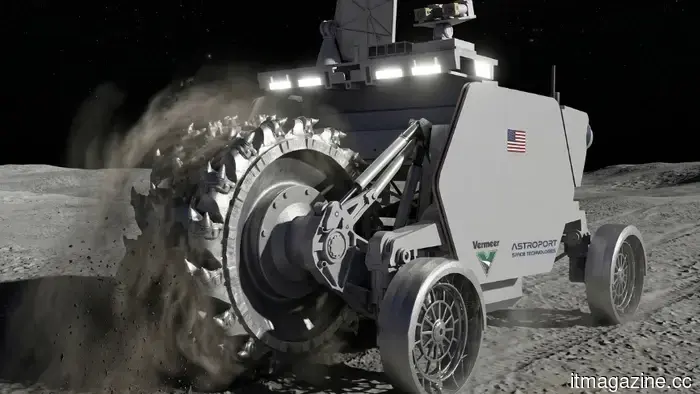 Astroport and Vermeer join forces to develop autonomous machinery for lunar construction.
Astroport and Vermeer are modifying industrial surface mining machinery for lunar applications, utilizing a modular tool adapter to construct roads, landing zones, and foundational infrastructure by the year 2030.
Astroport and Vermeer join forces to develop autonomous machinery for lunar construction.
Astroport and Vermeer are modifying industrial surface mining machinery for lunar applications, utilizing a modular tool adapter to construct roads, landing zones, and foundational infrastructure by the year 2030.
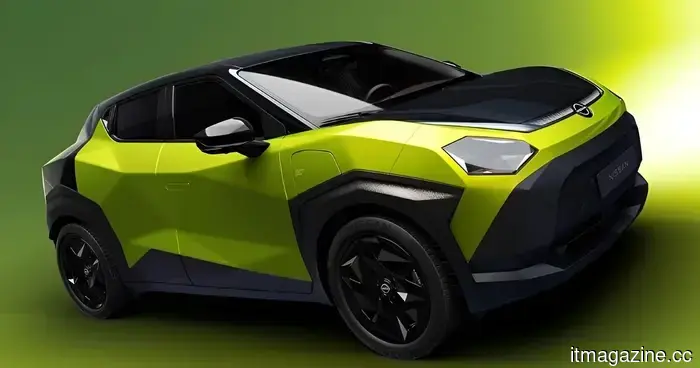 Nissan has unveiled the Juke EV, and I sincerely hope this daring design remains.
Nissan has unveiled the third-generation Juke as an all-electric crossover for Europe, and its striking new design is undoubtedly the most captivating aspect of the vehicle.
Nissan has unveiled the Juke EV, and I sincerely hope this daring design remains.
Nissan has unveiled the third-generation Juke as an all-electric crossover for Europe, and its striking new design is undoubtedly the most captivating aspect of the vehicle.
 A US judge has determined that the fraud defendant's conversations with Claude, an AI, do not have privilege.
A US court determined that conversations with AI chatbots are not protected by legal privilege. The case centered around Claude. Clients should consider public AI chats as potentially discoverable in legal proceedings.
A US judge has determined that the fraud defendant's conversations with Claude, an AI, do not have privilege.
A US court determined that conversations with AI chatbots are not protected by legal privilege. The case centered around Claude. Clients should consider public AI chats as potentially discoverable in legal proceedings.
 Don’t expect an affordable PlayStation 6 Lite anytime soon.
New speculation regarding the PlayStation 6 indicates that a genuine budget PS6 Lite is improbable, as handheld-style devices would result in excessive performance and development compromises. Instead, a simplified standard console seems to be a more viable option for Sony.
Don’t expect an affordable PlayStation 6 Lite anytime soon.
New speculation regarding the PlayStation 6 indicates that a genuine budget PS6 Lite is improbable, as handheld-style devices would result in excessive performance and development compromises. Instead, a simplified standard console seems to be a more viable option for Sony.
 More than a hundred Chrome extensions have been found causing significant issues. See if you're using any of them.
A recent report associates 108 Chrome extensions with identity theft, session hijacking, and misuse of browsers, suggesting that if you haven't reviewed your Chrome extensions recently, it's time to examine your seemingly harmless add-ons more closely.
More than a hundred Chrome extensions have been found causing significant issues. See if you're using any of them.
A recent report associates 108 Chrome extensions with identity theft, session hijacking, and misuse of browsers, suggesting that if you haven't reviewed your Chrome extensions recently, it's time to examine your seemingly harmless add-ons more closely.
 OpenAI has launched GPT-5.4-Cyber for approved security teams, expanding its Trusted Access program.
OpenAI has introduced GPT-5.4-Cyber, featuring binary reverse engineering for validated defenders, expanding access to thousands as it competes with Anthropic's limited Mythos model.
OpenAI has launched GPT-5.4-Cyber for approved security teams, expanding its Trusted Access program.
OpenAI has introduced GPT-5.4-Cyber, featuring binary reverse engineering for validated defenders, expanding access to thousands as it competes with Anthropic's limited Mythos model.
Astroport and Vermeer partner to develop autonomous construction vehicles for lunar use.
Astroport and Vermeer are modifying industrial surface mining machinery for lunar use, employing a modular tool adapter to construct roads, landing pads, and base infrastructure by the year 2030.