
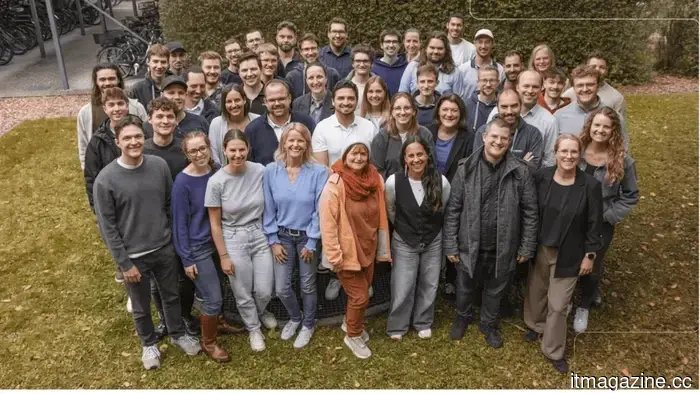
Nesto secures €11 million from Expedition to enhance AI workforce management for restaurant chains.
In summary: Nesto Software GmbH, a workforce management platform based in Karlsruhe for restaurant chains, has secured €11 million in growth equity from Expedition Growth Capital, a fund located in London and Boston that focuses on bootstrapped European software companies with over €5 million in annual recurring revenue. Founded by engineers from the Karlsruhe Institute of Technology, Nesto manages scheduling, demand forecasting, HR workflows, and payroll for more than 3,000 restaurant locations and over 100,000 employee shifts daily throughout Europe. This is the company's first time seeking institutional funding. The investment will be utilized to enhance product development, boost sales and marketing efforts, and expand NORA, Nesto’s AI assistant, into a broader framework for managing back-office workflows in restaurants.
Built without external funding
Nesto was established in Karlsruhe by Felix Kaiser, who is Co-Founder and CEO, and Dr. Theodor Ackbarow, Co-Founder and Executive Chairman, both of whom are former engineers from the Karlsruhe Institute of Technology. The platform was developed and the customer base expanded to over 3,000 restaurant locations without external investment, achieving the scale that Expedition Growth Capital aims for before seeking institutional engagement. Expedition’s investment approach focuses on bootstrapped European software firms with at least €5 million in annual recurring revenue, based on the premise that companies developed without outside capital often maintain stronger customer relationships and more disciplined economics compared to those that have scaled through earlier dilutive funding rounds.
Expedition Growth Capital concluded its third fund at $375 million in December 2025 and typically invests between $10 million and $25 million in each portfolio company. Nesto's funding sits at the lower end of this range. Will Sheldon, the Expedition partner overseeing the investment, characterized Nesto as “an exceptional example of a category-defining European software company” that has been “quietly revolutionizing restaurant operations across Europe.” With offices in London and Boston, Expedition targets profitable or nearly profitable software firms prepared to invest in sales and marketing following product validation with real customers at scale.
Labour as a specific challenge
The hospitality industry faces a unique workforce management challenge that is more intricate and costly than that encountered in most other sectors. A restaurant group operating across numerous locations must create schedules that align with variable demand, influenced by factors such as weather, local events, and weekly patterns which fixed schedules cannot accommodate. Over-staffing directly diminishes profit margins, while under-staffing impacts service quality, affecting customer retention. Additionally, the administrative burden of creating legally compliant schedules, tracking attendance, and preparing payroll across a widely distributed workforce consumes time that could otherwise enhance service delivery.
According to Eurostat data, labour costs in the EU hospitality sector rose by 11.2% year-on-year leading up to Nesto’s fundraising, while the uptake of AI tools among EU hospitality businesses was around 6% as of 2023. The disparity between rising costs and the slow adoption of AI presents a commercial opportunity that Nesto is addressing. In its April 2026 analysis, TNW looked into how AI is reshaping hospitality operations while maintaining the human experience, a tension that Nesto’s approach directly confronts: the automation of scheduling and administration allows managers to prioritize service quality over administrative tasks.
Nesto’s platform integrates with point-of-sale systems, supplier platforms, and payroll providers to generate demand forecasts that reportedly achieve 92% accuracy, using historical sales data, local event calendars, and weather conditions. These forecasts are utilized for automated scheduling, which informs HR workflows and payroll preparation. The company claims a 10% improvement in labour productivity as a key outcome across its clientele and highlights McDonald’s as its most notable deployment: European franchise operators of the fast food chain experienced a 9% reduction in staff costs and a 22% increase in productivity after implementing the platform, with L’Osteria and Lagardère also among its recognized enterprise clients.
NORA and the agentic framework
Nesto's latest product development initiative is NORA, an AI assistant and agent framework designed to extend the platform’s capabilities from scheduling to encompass a wider range of operational and administrative tasks that restaurant managers handle daily. NORA is intended to manage inquiries about staffing rules, compliance mandates, and operational metrics, as well as execute tasks such as absence management, shift-swaps, and payroll exception handling without the need for manual navigation through various systems.
This direction reflects a larger trend in enterprise software towards AI agents that operate on behalf of users rather than just providing information. Nvidia advanced the concept of AI agent deployment in enterprise security with its NemoClaw platform at GTC 2026 in March, setting formal standards for AI agents in regulated and operationally sensitive environments. Nesto’s NORA architecture targets a similar conceptual area applied to restaurant operations: an agent capable of being assigned a task and trusted to complete it within specified operational and compliance standards, without requiring managerial oversight at each step.
The funding will partially go towards evolving NORA from
Other articles
 ElevenLabs VP cautions potential sales recruits: 20 times the quota, extended hours, or leave.
Carles Reina, the head of sales at ElevenLabs, cautions job applicants about the 20x salary quotas and extensive working hours at the $11 billion voice AI company, as stated during his appearance on the 20VC podcast.
ElevenLabs VP cautions potential sales recruits: 20 times the quota, extended hours, or leave.
Carles Reina, the head of sales at ElevenLabs, cautions job applicants about the 20x salary quotas and extensive working hours at the $11 billion voice AI company, as stated during his appearance on the 20VC podcast.
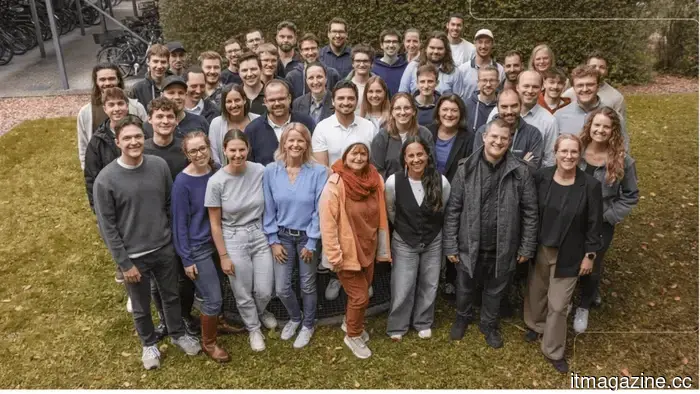 Nesto secures €11 million from Expedition to expand its AI workforce management solutions for restaurant chains.
Nesto Software GmbH has secured €11 million from Expedition Growth Capital to expand its AI-driven scheduling and NORA agent platform for restaurant chains.
Nesto secures €11 million from Expedition to expand its AI workforce management solutions for restaurant chains.
Nesto Software GmbH has secured €11 million from Expedition Growth Capital to expand its AI-driven scheduling and NORA agent platform for restaurant chains.
 The MacBook Neo is taking on the role of a Windows gaming device, and it’s performing admirably.
Apple's MacBook Neo, an affordable laptop equipped with a mobile A18 Pro chip and only 8GB of RAM, has successfully completed a Windows 11 gaming test using Parallels Desktop, achieving playable frame rates in multiple games.
The MacBook Neo is taking on the role of a Windows gaming device, and it’s performing admirably.
Apple's MacBook Neo, an affordable laptop equipped with a mobile A18 Pro chip and only 8GB of RAM, has successfully completed a Windows 11 gaming test using Parallels Desktop, achieving playable frame rates in multiple games.
 Apple's glasses will not engage in brand partnerships like Meta did with Ray-Ban and Oakley.
You know it's how Apple operates.
Apple's glasses will not engage in brand partnerships like Meta did with Ray-Ban and Oakley.
You know it's how Apple operates.
 I experimented with a weather app inspired by Pokémon, and now checking the weather feels similar to a Pokédex search.
SkyDex brings back a sense of fun to weather apps, although its cluttered free version still requires improvement.
I experimented with a weather app inspired by Pokémon, and now checking the weather feels similar to a Pokédex search.
SkyDex brings back a sense of fun to weather apps, although its cluttered free version still requires improvement.
 ElevenLabs' VP cautions sales applicants: 20 times the quota, extended working hours, or leave.
Carles Reina, the head of sales at ElevenLabs, cautions job applicants about the demanding 20x salary quotas and extensive work hours at the $11B voice AI startup, as stated in remarks during the 20VC podcast.
ElevenLabs' VP cautions sales applicants: 20 times the quota, extended working hours, or leave.
Carles Reina, the head of sales at ElevenLabs, cautions job applicants about the demanding 20x salary quotas and extensive work hours at the $11B voice AI startup, as stated in remarks during the 20VC podcast.
Nesto secures €11 million from Expedition to enhance AI workforce management for restaurant chains.
Nesto Software GmbH has secured €11 million from Expedition Growth Capital to expand its AI-driven scheduling and NORA agent platform for restaurant chains.