

Amazon's Leo satellite internet is set to launch soon and has already secured significant clients to compete with Starlink.
Amazon states that its long-postponed Starlink competitor is set to launch in mid-2026.
Amazon's delayed satellite internet service is nearing its launch date. In his recent letter to shareholders, CEO Andy Jassy stated that the company is "on the verge" of rolling out Leo, its low Earth orbit satellite internet service, which is expected to go live in mid-2026.
This announcement brings Amazon closer to competing with SpaceX's Starlink, though it is still trailing significantly behind its main competitor.
When will the Starlink competitor be available?
According to Jassy, Amazon currently has 200 low-orbit satellites in space and intends to deploy "a few thousand more" in the coming years. The initial release is scheduled for the middle of this year. To recap, Leo was originally known as Project Kuiper, which was initiated in 2019 and was renamed last year.
Amazon has indicated that it has already obtained revenue commitments from business and government clients. However, this service is not aimed at typical consumer broadband. Jassy noted that Leo will work in conjunction with Amazon Web Services, enabling enterprises and governments to transfer data for storage, analytics, and AI purposes. This gives Amazon a distinctive edge against Starlink, as Leo is not merely providing connectivity but also offering a broader AWS-integrated ecosystem.
Why Amazon believes it can attract customers
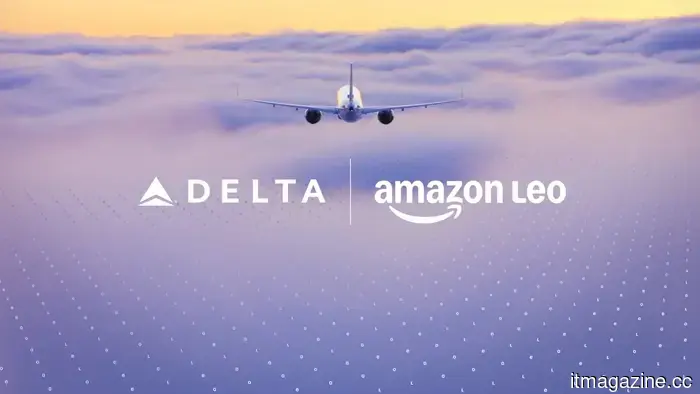
There is potential for converting Starlink users. Jassy mentioned that Delta Air Lines has chosen Leo as its future in-flight WiFi provider, with plans to implement it on 500 aircraft by 2028. Other clients mentioned include JetBlue, AT&T, Vodafone, DIRECTV Latin America, Australia’s national broadband network, and NASA.
Amazon's roster of initial customers suggests that companies are willing to invest in Leo as a viable alternative in the satellite internet arena. Nevertheless, Amazon still has ground to cover, as Starlink has nearly 10,000 satellites in orbit.
Meta's Muse Spark AI is not reliable for health guidance.
Meta's Muse Spark is overly eager to act as a healthcare advisor.
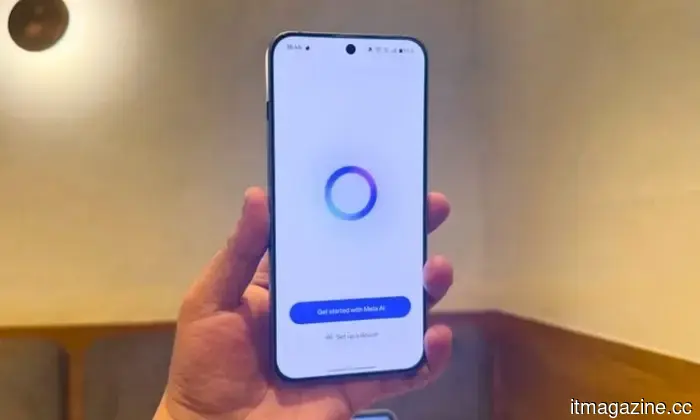
Meta's new Muse Spark is marketed as a more advanced AI model, but early tests suggest it is not suitable for serious medical decision-making. A recent report from WIRED shared experiences with Muse Spark, indicating that the health-focused AI within the Meta AI app did not deliver encouraging results. The chatbot is reported to have urged users to submit raw medical data such as lab reports, glucose monitor information, and blood pressure records, then offered assistance in analyzing patterns and trends.
Avec transforms your inbox into a more engaging experience.
This email app aims to turn inbox management into a more enjoyable task, resembling a dating app, to an extent.
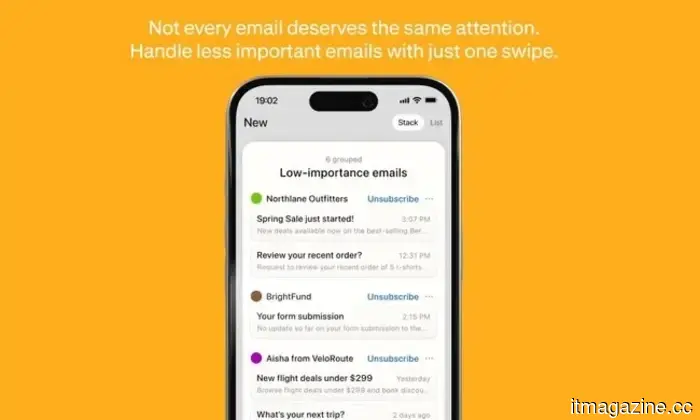
Email applications have long attempted to simplify inbox management to make it quicker and more efficient. However, Avec appears to have taken an entirely different approach by treating emails like swipeable cards instead of the traditional list view. Users can swipe left to address an email later, swipe right to indicate it's complete or to archive it, and swipe down to categorize less important messages into an "unimportant" pile for easier organization later.
Google Meet on mobile now features speech translation.
If you've ever found yourself in a meeting with language barriers, Google Meet is introducing a solution. Following its rollout on the web, the speech translation feature is now available on Android and iOS. This tool translates spoken audio in near real-time, facilitating more effective communication among international teams.


Other articles
 The Beats Studio Buds+ are now available for $99, and I would suggest them as the go-to wireless earbuds for both iPhone and Android users.
The Beats Studio Buds+ are now available for $99.95, offering a $70 discount from their original price of $169.95. This price includes true wireless noise cancellation, spatial audio, and sweat resistance, making them much more affordable than many rival earbuds with similar features. They cater well to users of both iPhone and Android devices.
The Beats Studio Buds+ are now available for $99, and I would suggest them as the go-to wireless earbuds for both iPhone and Android users.
The Beats Studio Buds+ are now available for $99.95, offering a $70 discount from their original price of $169.95. This price includes true wireless noise cancellation, spatial audio, and sweat resistance, making them much more affordable than many rival earbuds with similar features. They cater well to users of both iPhone and Android devices.
 The iPhone 5C is experiencing a resurgence, driven by nostalgia among Gen-Z.
Gen Z is playing a role in bringing the iPhone 5C back into the spotlight on social media, transforming Apple's previously overlooked plastic phone into a beloved piece of retro technology.
The iPhone 5C is experiencing a resurgence, driven by nostalgia among Gen-Z.
Gen Z is playing a role in bringing the iPhone 5C back into the spotlight on social media, transforming Apple's previously overlooked plastic phone into a beloved piece of retro technology.
 Google's new approach to Android backup is so sensible that it frustrates me that it has taken this long to implement.
I know several people who just erase files when their phone runs out of space, and Android's new backup solution seems like a real remedy for that.
Google's new approach to Android backup is so sensible that it frustrates me that it has taken this long to implement.
I know several people who just erase files when their phone runs out of space, and Android's new backup solution seems like a real remedy for that.
 Snap's AR glasses are moving closer to becoming a reality thanks to Qualcomm Snapdragon processors.
Snap's aspirations for AR glasses may be becoming more tangible. In an official statement, Snap announced an extension of its partnership with Qualcomm through a multi-year strategic agreement that will integrate Qualcomm’s Snapdragon silicon into upcoming versions of Specs. The company refers to this as the inaugural flagship collaboration for Specs Inc.
Snap's AR glasses are moving closer to becoming a reality thanks to Qualcomm Snapdragon processors.
Snap's aspirations for AR glasses may be becoming more tangible. In an official statement, Snap announced an extension of its partnership with Qualcomm through a multi-year strategic agreement that will integrate Qualcomm’s Snapdragon silicon into upcoming versions of Specs. The company refers to this as the inaugural flagship collaboration for Specs Inc.
Amazon's Leo satellite internet is set to launch soon and has already secured significant clients to compete with Starlink.
Amazon CEO Andy Jassy announced that the highly anticipated Leo satellite internet service is scheduled to launch in mid-2026, with contracts already established with enterprise and government clients.