
Workday's Chief Technology Officer has swapped his executive role for a technical position at Anthropic.
In summary: Peter Bailis, who started as Workday's chief technology officer in May 2025, left the company last month to join Anthropic as a member of the technical staff, focusing on reinforcement learning engineering. This shift marks a departure from a C-suite role to a position that allows closer engagement with cutting-edge technology, as he joins a firm that is now developing HR software similar to that of Workday. The change was confirmed by an Anthropic spokesperson and reported by Business Insider. Bailis’s profile has been removed from Workday's leadership listings, and his LinkedIn updates reflect this transition. Before his tenure at Workday, he was vice president of engineering at Google Cloud, where he directed AI initiatives for data, such as Conversational Analytics, NL2SQL, and retrieval-augmented generation for structured datasets. Previously, he founded Sisu Data, a decision intelligence firm, and served as an assistant professor of computer science at Stanford University, co-leading the DAWN project on data-intensive applications. His expertise in data systems and recent AI enterprise experience at Google Cloud provides a unique perspective for a reinforcement learning role, signaling Anthropic's interest in blending model training with practical product development.
Transitioning from C-suite to individual contributor
The position Bailis has accepted at Anthropic as a member of the technical staff (MTS) is a standard designation shared among both Anthropic and OpenAI, representing a level of technical equivalence across research and engineering, regardless of rank. OpenAI president Greg Brockman has publicly clarified this structure, stating that the labs aim to avoid categorizing individuals as either researchers or engineers, viewing the MTS title as indicative of a flatter technical hierarchy rather than a demotion. In reality, the MTS title encompasses a broad spectrum of seniority and compensation: MTS base salaries at Anthropic range from approximately $300,000 to $405,000, while at OpenAI, they span from around $210,000 to $530,000, with equity contributions elevating total compensation into the seven figures for senior roles.
For Bailis, the trade-off is clear. A CTO position in a company like Workday, which generates about $8 billion in annual revenue and employs 18,000 people, carries significant institutional weight, unlike an individual contributor role in an AI lab. However, the role at Anthropic offers direct engagement: immediate access to model development, training decisions, and research agendas, bypassing the organizational management layers between a CTO and the hands-on work. Anthropic, now boasting a revenue run rate exceeding $30 billion and more than 1,000 enterprise clients each spending over $1 million annually, is evolving from merely a revenue-generating research lab to a serious contender in the product space, making its demanding engineering challenges appealing to a technically ambitious executive.
What Bailis brings to Anthropic now
The spokesperson from Anthropic confirmed Bailis's focus on reinforcement learning engineering, which is crucial for model alignment through human feedback, and where RL-based techniques are employed for agent behavior and tool usage. Bailis’s value extends beyond general engineering skills; he possesses significant insight into the enterprise software ecosystem that Anthropic is now entering as a product-oriented company rather than just an API provider.
Specifically, reports indicate that Bailis's recruitment aligns with Anthropic's efforts to develop HR applications. Anthropic has already introduced Claude plugins aimed at HR functions, such as crafting job descriptions, onboarding materials, and offer letters. Bailis has spent recent years immersed in enterprise HR and finance software—first at Google Cloud, where he developed AI products integrating structured enterprise data, and then as Workday’s CTO, overseeing the company's agent-centric AI strategy. His domain expertise is now being directed toward Anthropic's enterprise product trajectory from an insider perspective.
The competitive irony is notable. Workday CEO Carl Eschenbach publicly stated in February 2026 that Anthropic, Google, and OpenAI all internally utilize Workday's software. The company that licensed Workday solutions has now appointed its former CTO to create products that will compete for the same enterprise HR budgets.
Anthropic’s enterprise strategy
Bailis's recruitment is particularly relevant given Anthropic's vigorous development of enterprise distribution infrastructure in recent months. In early March, Anthropic launched a marketplace for Claude-enhanced enterprise software, permitting companies with committed API expenditures to acquire third-party applications built on Claude, without the typical revenue share demanded by cloud hyperscalers. Initial partners included Snowflake, legal AI company Harvey, and developer platform Replit.
Shortly after, Anthropic pledged $100 million to establish a Claude Partner Network with Accenture, Deloitte, Cognizant, and Infosys, formalizing consulting collaborations aimed at accelerating Claude implementations in the world's largest enterprises. The company anticipated increasing this commitment in the coming years while scaling its partner-focused personnel fivefold. Additionally, Anthropic has been negotiating a joint venture with private equity firms like Blackstone to inf
Other articles
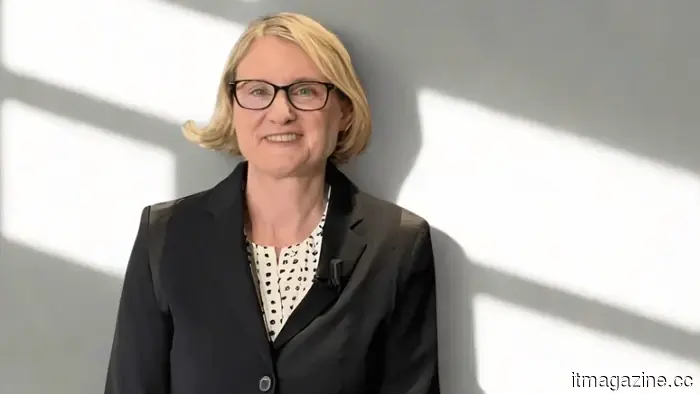 Oracle has appointed Hilary Maxson as Chief Financial Officer to oversee its $50 billion investment in AI data centers.
Hilary Maxson, who previously held the position of group CFO at Schneider Electric, has joined Oracle as the company plans to eliminate 30,000 jobs and has pledged $50 billion towards building AI data centers.
Oracle has appointed Hilary Maxson as Chief Financial Officer to oversee its $50 billion investment in AI data centers.
Hilary Maxson, who previously held the position of group CFO at Schneider Electric, has joined Oracle as the company plans to eliminate 30,000 jobs and has pledged $50 billion towards building AI data centers.
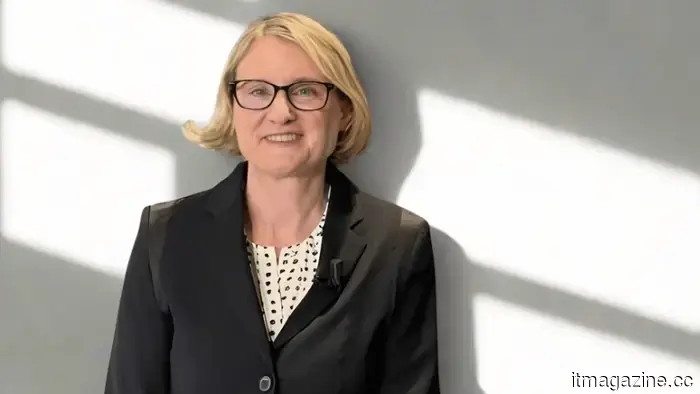 Oracle names Hilary Maxson as CFO to oversee its $50 billion investment in AI data centers.
Hilary Maxson, who previously served as group CFO at Schneider Electric, is joining Oracle as the company announces the reduction of 30,000 jobs and pledges $50 billion for AI data center development.
Oracle names Hilary Maxson as CFO to oversee its $50 billion investment in AI data centers.
Hilary Maxson, who previously served as group CFO at Schneider Electric, is joining Oracle as the company announces the reduction of 30,000 jobs and pledges $50 billion for AI data center development.
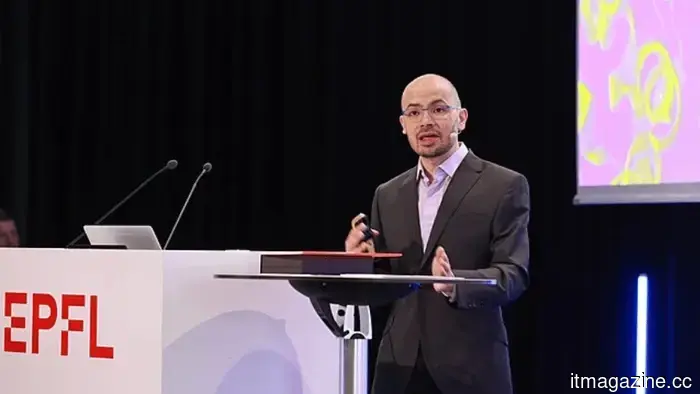 Demis Hassabis mentions that Google DeepMind needed to revert to its startup origins following the Brain merger.
Hassabis mentions that Google DeepMind needed to revert to its startup origins and become more resourceful following the Brain merger, managing Isomorphic Labs as a side project in the evenings from 10pm.
Demis Hassabis mentions that Google DeepMind needed to revert to its startup origins following the Brain merger.
Hassabis mentions that Google DeepMind needed to revert to its startup origins and become more resourceful following the Brain merger, managing Isomorphic Labs as a side project in the evenings from 10pm.
 Workday's Chief Technology Officer swapped his executive position for a technical staff role at Anthropic.
Peter Bailis, who has been Workday's CTO since May 2025, has become a member of the technical staff at Anthropic to focus on reinforcement learning, as the company develops HR applications.
Workday's Chief Technology Officer swapped his executive position for a technical staff role at Anthropic.
Peter Bailis, who has been Workday's CTO since May 2025, has become a member of the technical staff at Anthropic to focus on reinforcement learning, as the company develops HR applications.
 How AI is changing hospitality operations while maintaining the human experience.
Arran Campolucci-Bordi describes how AI-powered systems are transforming hospitality operations, enhancing efficiency while maintaining human interaction as a central element.
How AI is changing hospitality operations while maintaining the human experience.
Arran Campolucci-Bordi describes how AI-powered systems are transforming hospitality operations, enhancing efficiency while maintaining human interaction as a central element.
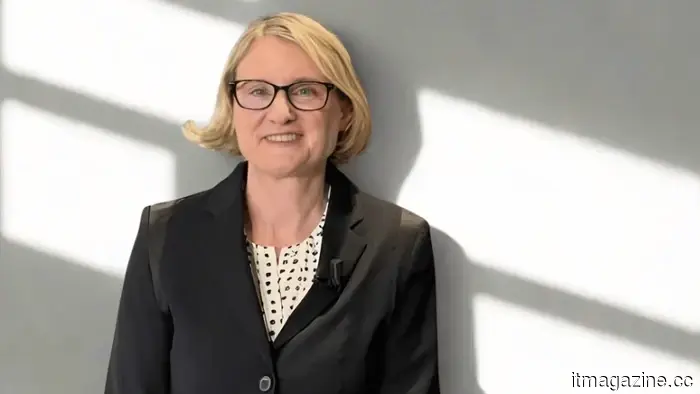 Oracle has appointed Hilary Maxson as Chief Financial Officer to oversee its $50 billion investment in AI data centers.
Hilary Maxson, who was previously the group CFO at Schneider Electric, is joining Oracle as the company announces the reduction of 30,000 jobs and pledges $50 billion towards the construction of AI data centers.
Oracle has appointed Hilary Maxson as Chief Financial Officer to oversee its $50 billion investment in AI data centers.
Hilary Maxson, who was previously the group CFO at Schneider Electric, is joining Oracle as the company announces the reduction of 30,000 jobs and pledges $50 billion towards the construction of AI data centers.
Workday's Chief Technology Officer has swapped his executive role for a technical position at Anthropic.
Peter Bailis, who has been Workday's CTO since May 2025, has now joined Anthropic as a member of their technical staff to focus on reinforcement learning, as the company develops HR applications.