
The CTO of Workday exchanged his C-suite position for a technical staff role at Anthropic.
In summary: Peter Bailis, who became Workday's chief technology officer in May 2025, departed from the company last month and has taken on a role as a member of the technical staff at Anthropic, focusing on reinforcement learning engineering. This transition marks a shift from a C-suite position to a more hands-on technical role at the forefront, placing Bailis in a company that is actively developing HR software similar to Workday's offerings.
An Anthropic spokesperson confirmed the hire, which was also reported by Business Insider. Bailis's profile has been removed from Workday’s leadership pages, and his LinkedIn account reflects this change. Before his time at Workday, Bailis was vice president of engineering at Google Cloud, where he directed AI initiatives related to data, including Conversational Analytics, NL2SQL, and retrieval-augmented generation for structured data. He previously founded and led Sisu Data, a decision intelligence firm, and served as an assistant professor of computer science at Stanford University, where he co-led the DAWN project focused on data-intensive applications. His expertise in data systems and experience in enterprise AI at Google Cloud present a unique background for a reinforcement learning position, highlighting Anthropic’s interest in integrating model training with applied product development.
Transitioning from executive to technical contributor, the title Bailis accepted at Anthropic, member of technical staff (MTS), is the standard designation for engineers at both Anthropic and OpenAI, applicable across levels of seniority in both research and engineering. OpenAI president Greg Brockman explained that they aimed to avoid categorizing individuals strictly as researchers or engineers, viewing the MTS title as indicative of a non-hierarchical technical structure rather than a demotion. In practice, this title covers a wide range of seniority and compensation: MTS salaries at Anthropic range from approximately $300,000 to $405,000, while at OpenAI they go from about $210,000 to $530,000, with equity grants taking total compensation for senior roles into the seven figures.
For Bailis, the choice is clear. A CTO position at Workday, which has around $8 billion in annual revenue and 18,000 employees, carries a level of institutional authority that an individual contributor role at an advanced AI lab lacks. However, the latter position provides direct access to the models being developed, training choices made, and the research agenda, bypassing the organizational management layers present in a CTO role. Anthropic, now reporting a revenue run rate exceeding $30 billion and servicing over 1,000 enterprise clients each spending more than $1 million annually, is no longer merely a research lab generating revenue, and the significant engineering challenges it faces are attractive to a technically driven executive.
What Bailis offers Anthropic at this moment is a substantial understanding of the enterprise software stack as the company evolves into a product-oriented entity rather than just an API provider. Specifically, The Information noted that Bailis joins as Anthropic intensifies its efforts to create HR applications. The company has already rolled out Claude plugins for HR tasks, including generating job descriptions, onboarding documents, and offer letters. Bailis has extensive experience in enterprise HR and finance software, from his work at Google Cloud, where he developed AI products utilizing structured enterprise data, to his role as CTO at Workday, where he spearheaded the company’s AI strategy. His industry knowledge is now being directed toward Anthropic’s enterprise product vision.
The competitive irony is pronounced. Workday's CEO, Carl Eschenbach, publicly remarked in February 2026 that Anthropic, Google, and OpenAI all utilize Workday’s software internally. The company that purchased licenses from Workday has now recruited its CTO to create products aimed at capturing the same enterprise HR budgets.
In terms of Anthropic’s corporate direction, Bailis’s recruitment aligns with the company’s aggressive expansion in enterprise distribution infrastructure over recent months. In early March, Anthropic launched a marketplace for Claude-powered enterprise software, enabling companies with committed API budgets to acquire third-party applications built on Claude, without the typical revenue cuts charged by major cloud providers. Initial partners included Snowflake, legal AI firm Harvey, and the developer platform Replit.
Shortly after, Anthropic pledged $100 million to establish a new Claude Partner Network with major firms like Accenture, Deloitte, Cognizant, and Infosys, formalizing consulting partnerships aimed at enhancing Claude deployments among large enterprises. The company anticipates increasing its commitment in the coming years and is expanding its partner-facing team fivefold. Additionally, Anthropic has been in discussions for a joint venture with private equity firms such as Blackstone to integrate Claude within their portfolio companies, involving approximately $200 million of Anthropic’s capital.
Currently, enterprise clients constitute around 80% of Anthropic’s revenue, with the company’s head of enterprise product indicating a strategic approach as a platform rather than simply a product—one that seeks to integrate into pre-existing enterprise
Other articles
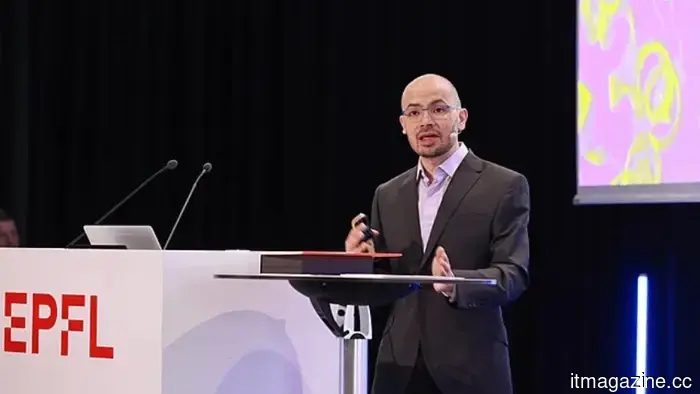 Demis Hassabis dice que Google DeepMind tuvo que regresar a sus raíces de startup después de la fusión con Brain.
Hassabis dice que Google DeepMind tuvo que regresar a sus raíces de startup y 'ser más ingenioso' después de la fusión con Brain, dirigiendo Isomorphic Labs como su segundo trabajo desde las 10 p.m.
Demis Hassabis dice que Google DeepMind tuvo que regresar a sus raíces de startup después de la fusión con Brain.
Hassabis dice que Google DeepMind tuvo que regresar a sus raíces de startup y 'ser más ingenioso' después de la fusión con Brain, dirigiendo Isomorphic Labs como su segundo trabajo desde las 10 p.m.
 Coinspaid se asocia con The Residency para expandir la infraestructura de stablecoin para startups.
Coinspaid se ha asociado con The Residency para ofrecer a los fundadores en etapas tempranas acceso a infraestructura de stablecoin, herramientas de pago transfronterizas y capacidades de liquidación de grado fintech.
Coinspaid se asocia con The Residency para expandir la infraestructura de stablecoin para startups.
Coinspaid se ha asociado con The Residency para ofrecer a los fundadores en etapas tempranas acceso a infraestructura de stablecoin, herramientas de pago transfronterizas y capacidades de liquidación de grado fintech.
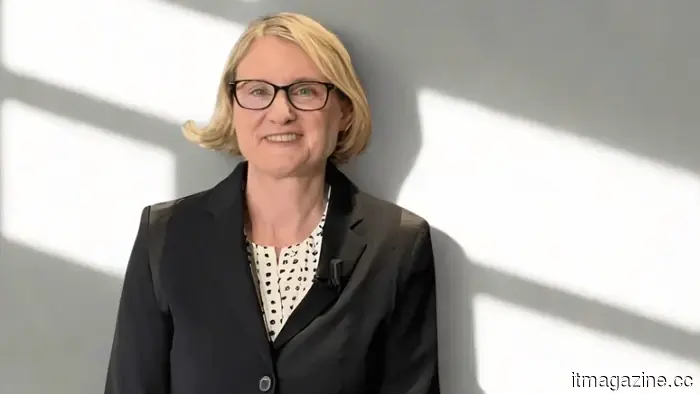 Oracle nombra a Hilary Maxson como CFO para gestionar su impulso de $50 mil millones en centros de datos de IA.
Hilary Maxson, anteriormente CFO del grupo en Schneider Electric, se une a Oracle mientras despide a 30,000 empleados y se compromete a invertir $50 mil millones en la construcción de centros de datos de IA.
Oracle nombra a Hilary Maxson como CFO para gestionar su impulso de $50 mil millones en centros de datos de IA.
Hilary Maxson, anteriormente CFO del grupo en Schneider Electric, se une a Oracle mientras despide a 30,000 empleados y se compromete a invertir $50 mil millones en la construcción de centros de datos de IA.
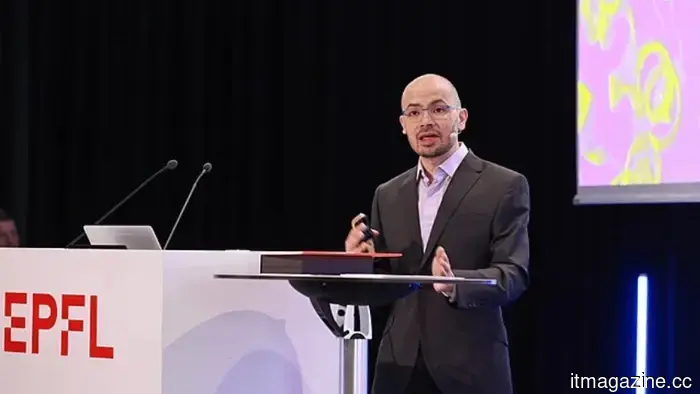 Demis Hassabis dice que Google DeepMind tuvo que volver a sus raíces de startup después de la fusión con Brain.
Hassabis dice que Google DeepMind tuvo que regresar a sus raíces de startup y 'ser más ingenioso' después de la fusión con Brain, dirigiendo Isomorphic Labs como su segundo trabajo desde las 10 p.m.
Demis Hassabis dice que Google DeepMind tuvo que volver a sus raíces de startup después de la fusión con Brain.
Hassabis dice que Google DeepMind tuvo que regresar a sus raíces de startup y 'ser más ingenioso' después de la fusión con Brain, dirigiendo Isomorphic Labs como su segundo trabajo desde las 10 p.m.
 Cómo la IA está transformando las operaciones de hospitalidad mientras preserva la experiencia humana
Arran Campolucci-Bordi explica cómo los sistemas impulsados por IA están transformando las operaciones de hospitalidad, mejorando la eficiencia mientras mantienen la interacción humana en el centro.
Cómo la IA está transformando las operaciones de hospitalidad mientras preserva la experiencia humana
Arran Campolucci-Bordi explica cómo los sistemas impulsados por IA están transformando las operaciones de hospitalidad, mejorando la eficiencia mientras mantienen la interacción humana en el centro.
 Marceu Martins sobre el diseño de sistemas de IA e infraestructura para la fiabilidad a gran escala
Marceu Martins explica por qué el 99.9% de tiempo de actividad, la disciplina arquitectónica y la gobernanza de la IA son importantes cuando el fallo en la infraestructura crítica no es una opción.
Marceu Martins sobre el diseño de sistemas de IA e infraestructura para la fiabilidad a gran escala
Marceu Martins explica por qué el 99.9% de tiempo de actividad, la disciplina arquitectónica y la gobernanza de la IA son importantes cuando el fallo en la infraestructura crítica no es una opción.
The CTO of Workday exchanged his C-suite position for a technical staff role at Anthropic.
Peter Bailis, who has served as Workday's CTO since May 2025, has become a member of the technical staff at Anthropic to focus on reinforcement learning while the company develops HR applications.