
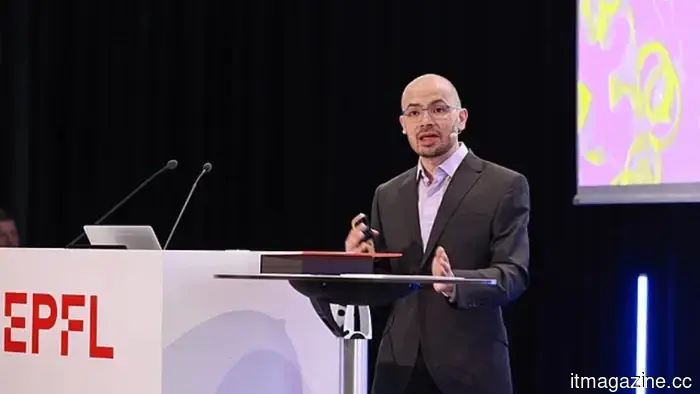
Demis Hassabis mentioned that Google DeepMind needed to return to its startup origins following the merger with Brain.
In summary: On the 20VC podcast with Harry Stebbings in early April 2026, Demis Hassabis shared how Google DeepMind has increased its momentum over the last two to three years by combining the computational capabilities of Google Brain with DeepMind’s research ethos and reverting to a more “startup or entrepreneurial” approach to work. He also mentioned that he manages Isomorphic Labs, the group's AI pharmaceutical spinoff, during a "second workday" starting around 10 PM, in anticipation of upcoming human trials in oncology this year.
Gathering the components
The formal merger of DeepMind and Google Brain took place in 2023, and Hassabis characterized the subsequent period as one of intentional acceleration. This included aligning talent "from around the company, sort of pushing in one direction," obtaining scalable compute resources that DeepMind previously lacked, and fostering what he described as a "relentless sort of focus and pace." He emphasized that this transformation necessitated a cultural shift as well as a structural one, as the organization needed to “return to our startup or entrepreneurial roots, be scrappier, be faster, and ship things quickly.” According to him, the current competitive landscape is “ferocious,” with veteran employees of 20 to 30 years claiming it's "the most intense environment they’ve ever seen in the tech industry."
Hassabis stated he communicates with Sundar Pichai, Alphabet's CEO, “every day,” indicating how Google DeepMind is now integral to Alphabet's operational strategy for products and research. This proximity is matched by significant capital investment. Google's computing expansion, partly achieved through custom chip collaborations with firms like Broadcom, is crucial to this strategic positioning: Alphabet allocated $91.4 billion for capital expenditures in 2025 and has projected between $175 billion and $185 billion for 2026, nearly doubling the previous year's expenditure, with supply constraints rather than capital availability identified as the primary limiting factor.
The 90% assertion
One of Hassabis's more bold assertions in the podcast revolved around DeepMind's influence on the AI field. He claimed that about 90% of the breakthroughs forming the backbone of the modern AI industry originated from either Google Brain, Google Research, or DeepMind. This assertion aligns with the academic record of significant developments, such as the transformer architecture created by Google Brain in 2017, important research on reinforcement learning from human feedback, and deep reinforcement learning methods developed at DeepMind. The 2024 Nobel Prize in Chemistry, awarded to Hassabis and John Jumper jointly with David Baker for the AlphaFold protein-folding system, stands as the most formally recognized of these accomplishments. Whether the figure of 90% is accurate is open to interpretation, especially as the industry has diversified significantly since those early foundational papers. This framing serves both as a positioning statement and as a historical assertion.
The operational implications of that legacy are evident in a sharply increased product release cadence. Google's open-weight model initiative, most recently Gemma 4, now produces models built on the same research and training infrastructure as Gemini 3, bridging a previously existing gap between cutting-edge research and open-source contributions. By the end of the fourth quarter of 2025, Gemini had around 750 million monthly active users, and Gemini 3 was reported to have triggered an urgent internal response from OpenAI upon its release in November of that year.
The second workday
In addition to heading Google DeepMind, Hassabis oversees Isomorphic Labs, the pharmaceutical AI spinoff initiated by DeepMind in 2021. He described his working arrangement during the 20VC interview as having a first workday at DeepMind, followed by a “second workday” starting around 10 PM, focused on Isomorphic’s drug discovery efforts. This dual commitment reflects his belief that using AI in drug discovery is not only his most significant long-term goal but also a venture that necessitates ongoing personal engagement rather than delegation.
Isomorphic successfully raised $600 million in April 2025 and has existing partnership agreements with Eli Lilly and Novartis, which include milestone values totaling up to $3 billion. In February 2026, the company unveiled IsoDDE, a drug design tool that Isomorphic claims doubles AlphaFold 3's accuracy in generating drug candidates. Human clinical trials in oncology are anticipated later in 2026. The competitive landscape in AI-driven drug discovery is growing more intense across the sector: Anthropic's acquisition of Coefficient Bio for about $400 million in April 2026, a covert startup founded by former Genentech computational biology researchers, indicates that general-purpose AI firms now view pharmaceutical discovery as a legitimate product category, rather than just a showcase of model capabilities.
The competitive context
The conversation on the 20VC podcast, similar to Sebastian Mallaby’s biography of Hassabis, "The Infinity Machine," published on March 31, 2026, and based on over 30
Other articles
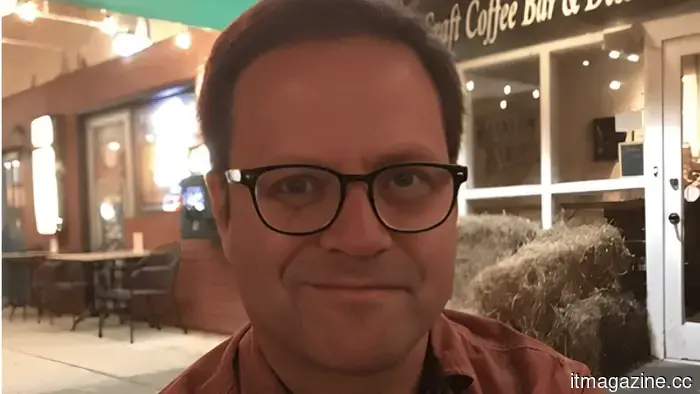 Marceu Martins discusses the design of AI and infrastructure systems focused on achieving reliability at scale.
Marceu Martins discusses the significance of 99.9% uptime, architectural discipline, and AI governance, emphasizing their importance in scenarios where failure in critical infrastructure cannot be tolerated.
Marceu Martins discusses the design of AI and infrastructure systems focused on achieving reliability at scale.
Marceu Martins discusses the significance of 99.9% uptime, architectural discipline, and AI governance, emphasizing their importance in scenarios where failure in critical infrastructure cannot be tolerated.
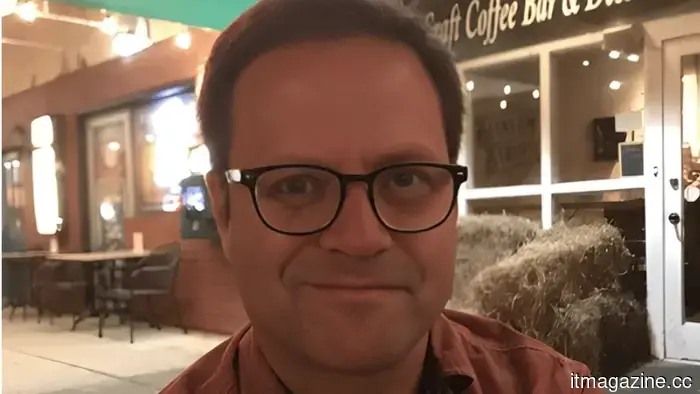 Marceu Martins discusses the design of AI and infrastructure systems aimed at ensuring reliability on a large scale.
Marceu Martins discusses the significance of 99.9% uptime, adherence to architectural principles, and governance of AI, emphasizing their importance when failure in critical infrastructure is unacceptable.
Marceu Martins discusses the design of AI and infrastructure systems aimed at ensuring reliability on a large scale.
Marceu Martins discusses the significance of 99.9% uptime, adherence to architectural principles, and governance of AI, emphasizing their importance when failure in critical infrastructure is unacceptable.
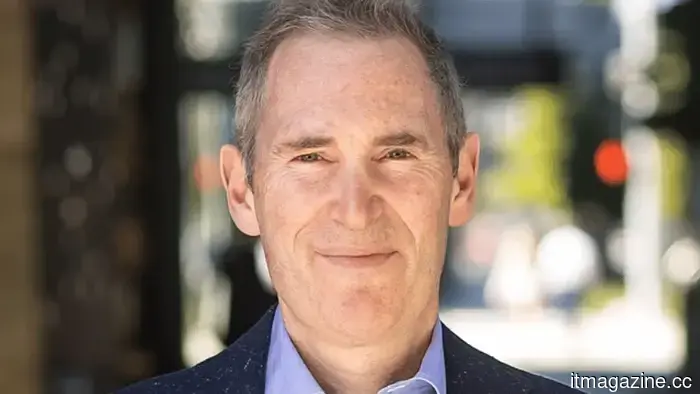 According to Jassy, Amazon's chip division could have a valuation of $50 billion, and he suggests that there may be plans to sell them to external customers.
In his 2026 shareholder letter, Andy Jassy disclosed that Amazon's Graviton, Trainium, and Nitro chips bring in over $20 billion annually and have the potential to be offered directly to third-party clients.
According to Jassy, Amazon's chip division could have a valuation of $50 billion, and he suggests that there may be plans to sell them to external customers.
In his 2026 shareholder letter, Andy Jassy disclosed that Amazon's Graviton, Trainium, and Nitro chips bring in over $20 billion annually and have the potential to be offered directly to third-party clients.
 The CTO of Workday exchanged his executive position for a technical staff role at Anthropic.
Peter Bailis, who has been the CTO of Workday since May 2025, has become a member of the technical staff at Anthropic to focus on reinforcement learning as the company develops HR applications.
The CTO of Workday exchanged his executive position for a technical staff role at Anthropic.
Peter Bailis, who has been the CTO of Workday since May 2025, has become a member of the technical staff at Anthropic to focus on reinforcement learning as the company develops HR applications.
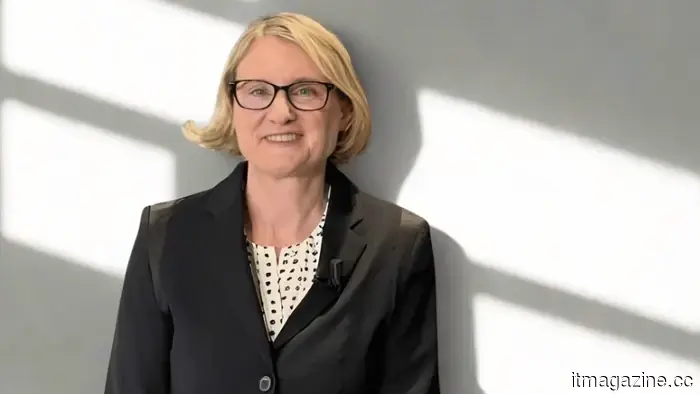 Oracle has named Hilary Maxson as CFO to oversee its $50 billion investment in AI data centers.
Hilary Maxson, who previously served as group CFO at Schneider Electric, is joining Oracle as the company announces the reduction of 30,000 jobs and a $50 billion investment in AI data center development.
Oracle has named Hilary Maxson as CFO to oversee its $50 billion investment in AI data centers.
Hilary Maxson, who previously served as group CFO at Schneider Electric, is joining Oracle as the company announces the reduction of 30,000 jobs and a $50 billion investment in AI data center development.
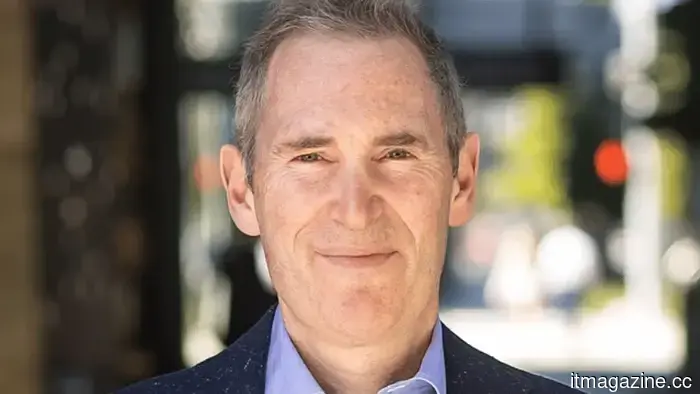 Jassy states that Amazon's chip division could be valued at $50 billion and suggests that there may be plans to sell them to external customers.
In his 2026 shareholder letter, Andy Jassy discloses that Amazon's Graviton, Trainium, and Nitro chips generate over $20 billion annually and may potentially be marketed directly to third parties.
Jassy states that Amazon's chip division could be valued at $50 billion and suggests that there may be plans to sell them to external customers.
In his 2026 shareholder letter, Andy Jassy discloses that Amazon's Graviton, Trainium, and Nitro chips generate over $20 billion annually and may potentially be marketed directly to third parties.
Demis Hassabis mentioned that Google DeepMind needed to return to its startup origins following the merger with Brain.
Hassabis explains that after the merger with Brain, Google DeepMind needed to revert to its startup origins and become more resourceful, with him managing Isomorphic Labs as a secondary role from 10 PM.