
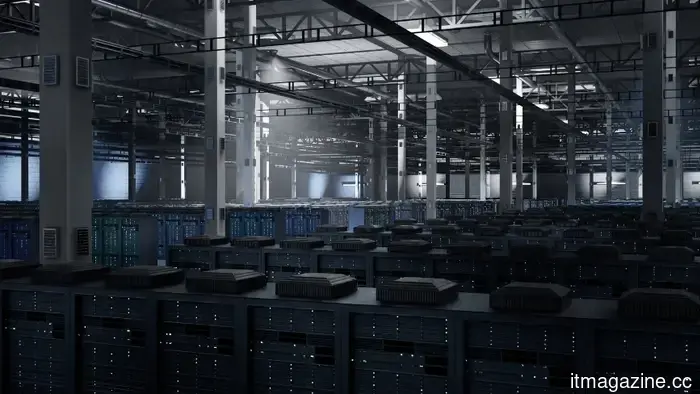
The inexpensive cloud was designed for reliability, but that landscape is evolving.
The war in Iran is not causing a sudden increase in cloud costs; rather, it reveals that cloud economics has always been influenced by energy markets, with Europe being particularly vulnerable. The ongoing conflict in the Middle East is starting to affect economies that are still recovering from the 2022 energy crisis, raising alarms in industries reliant on macroeconomic stability, including technology.
The Iran war does not directly make cloud services more expensive, but it highlights the dependence of cloud economics on energy stability, geopolitical predictability, and the continuity of global infrastructure. European cloud pricing is closely tied to energy markets, and the region's reliance on imported energy exacerbates its exposure.
The near-complete closure of the Strait of Hormuz, a critical route for about 20% of the world’s oil and liquefied gas shipments, is threatening supply chains at a fundamental level. This situation is driving up fuel and energy costs, which could lead to inflation, heightened production expenses, and even recession risks if the situation persists.
Energy instability serves as a hidden cost factor for cloud services. Europe is already feeling the pressure, with an annual inflation rate reaching 2.5% in March, driven by a 4.9% increase in energy prices. Governments are resorting to measures reminiscent of the 2022 responses: implementing caps on gas prices, imposing windfall taxes on energy firms, and reducing fuel taxes. With European gas prices skyrocketing—around 70% higher since the conflict began, according to the EU’s energy commissioner—the region's dependence on imports translates directly into economic vulnerability.
This pressure directly impacts cloud infrastructure. Data centers, projected to consume around 70 terawatt-hours (TWh) of electricity in the EU by 2024 according to IEA estimates, are fundamentally dependent on energy. They are essential not only for processing and deploying data but also for training and operating AI models, cooling systems, and maintaining physical infrastructure. The IEA reported in April 2025 that global energy use by data centers is expected to double by 2030, with AI driving much of this demand.
As AI demand rises, so too does its energy consumption. The combination of soaring energy prices and increased cloud operational costs undermines the notion of an inexpensive cloud.
Europe's ongoing push for digital sovereignty has made progress through regulations and investments in AI infrastructure and research, yet it remains structurally insufficient. The region still heavily relies on external providers for its cloud and data infrastructure. According to Synergy Research Group, European companies hold only about 15% of the local market, a figure that has remained fairly constant since 2022. In contrast, US hyperscalers like Amazon Web Services (AWS), Microsoft Azure, and Google Cloud dominate approximately 70% of the European cloud market. As previously reported by TNW, while European cloud hosts provide alternatives, none rival the scale of the major three.
This imbalance leaves Europe primarily as a consumer, exposing its vulnerability: by importing cloud services, Europe is also importing the geopolitical risks associated with the infrastructure it relies upon. The Iran war has not created this vulnerability but has brought it into sharper focus. Previous tariffs under Trump had already reignited the push for a sovereign European cloud; now, the urgency has intensified.
Europe is now pressured from both sides of its digital economy: soaring operating costs due to unpredictable energy markets, alongside a continuing dependence on foreign-controlled cloud infrastructure.
Infrastructure location has transformed into a risk factor. Cloud infrastructure decisions are no longer purely technical—they have become deeply geopolitical. Recent developments have made this shift evident. In early March, three AWS data centers in the Gulf were struck by Iranian drones, marking the first military attacks on a major cloud provider. Additionally, Iranian state media has explicitly named companies like Nvidia, Apple, Microsoft, and Google as potential targets in the ongoing conflict.
Data centers and cloud platforms have ceased to be neutral infrastructure and are increasingly viewed as strategic assets entangled in conflicts. Their importance spans beyond mere storage and computational resources, impacting entire digital ecosystems where disruptions can influence connectivity, latency, and service availability across various sectors.
The ramifications are both economic and technical. The Gulf region has been critical for future cloud and AI expansion, drawing tens of billions of dollars in data center investments due to capital access, energy, and infrastructure. Instability in this area adds complexity to cloud architecture, with potential repercussions ranging from operational disruptions to broader macroeconomic pressures. Consequently, decisions regarding cloud architecture and deployment must now be reassessed with attention to geopolitical risk management.
Spending patterns are being reshaped rather than reduced. The Iran war's impact on technology highlights how companies and countries are recalibrating capital allocations within the industry. While many major tech firms intended to continue investing and expanding in the Gulf, the execution of these plans is now uncertain due to concerns about geopolitical stability, national security, and economic continuity.
IDC has outlined scenarios where a conflict lasting up to three months could reduce global IT spending growth by nearly one percentage point, from
Other articles
 Picsart introduces
Picsart has introduced Earn with Picsart, a monetization program for creators that is available to all 130 million+ users, without any minimum follower requirements.
Picsart introduces
Picsart has introduced Earn with Picsart, a monetization program for creators that is available to all 130 million+ users, without any minimum follower requirements.
 Picsart has been launched.
Picsart has introduced Earn with Picsart, a monetization program for creators that is accessible to all 130 million+ users, without any minimum follower requirement.
Picsart has been launched.
Picsart has introduced Earn with Picsart, a monetization program for creators that is accessible to all 130 million+ users, without any minimum follower requirement.
 Picsart introduces
Picsart has introduced Earn with Picsart, a monetization program for creators that is accessible to all 130 million plus users without any minimum follower requirement.
Picsart introduces
Picsart has introduced Earn with Picsart, a monetization program for creators that is accessible to all 130 million plus users without any minimum follower requirement.
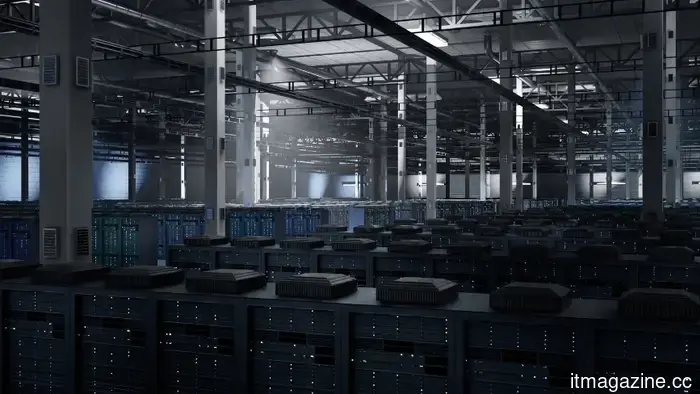 Affordable cloud solutions were designed for stability, but that landscape is evolving.
The Iran war highlights the extent to which Europe's cloud economy relies on stable energy and foreign infrastructure. As both of these factors diminish, the age of affordable cloud services may come to an end.
Affordable cloud solutions were designed for stability, but that landscape is evolving.
The Iran war highlights the extent to which Europe's cloud economy relies on stable energy and foreign infrastructure. As both of these factors diminish, the age of affordable cloud services may come to an end.
The inexpensive cloud was designed for reliability, but that landscape is evolving.
The war in Iran reveals the extent to which Europe’s cloud economy relies on stable energy sources and foreign infrastructure. With both of these resources weakening, we may be entering the end of the affordable cloud computing era.