
Google discreetly launches a complimentary offline AI dictation app for iPhone | TNW
In summary: Google has discreetly introduced an iOS application named Google AI Edge Eloquent, a free, offline-first voice dictation tool that transcribes spoken words in real time, automatically removes filler words, and converts raw dictation into polished text without needing an internet connection. The app utilizes Gemma-based on-device ASR models, offers an optional cloud mode using Gemini for text refinement, has no subscription fees or usage limitations, and features a personal vocabulary dictionary that can import frequently used terms directly from a user’s recent Gmail history. It was made available in the App Store on 6 April 2026 without any press release or announcement. There is a mention of an Android version in the App Store listing, but it has yet to be launched on Google Play.
Google unveiled a dictation application last Sunday without any prior notice. Google AI Edge Eloquent surfaced in the iOS App Store on 6 April 2026 without any announcement, blog post, or press event, making its launch notably “quiet.” The app is free, requires no subscriptions, and imposes no usage limits. It performs speech recognition on the device through Gemma-based ASR models, ensuring that recordings do not need to leave the phone. Considering that the two leading premium dictation applications for iPhone are priced between $85 and $180 annually, this combination of features represents a significant release.
How it operates
Upon opening Eloquent, users are greeted with a dictation interface displaying a live waveform. As one speaks, the app transcribes the speech in real time. When the user pauses or finishes speaking, it automatically processes the raw audio: filler words like “um” and “ah” are eliminated, and the surrounding text is refined into coherent prose. The polished transcript is automatically copied to the clipboard, ready for use elsewhere.
A toggle in the top-right corner allows users to switch between two processing modes. In fully offline mode, all audio remains on the device and is processed locally by the Gemma-based ASR model, ensuring nothing is sent to a server. In cloud mode, speech recognition starts on the device, but Gemini models manage the text cleanup in the cloud. This distinction is important for those concerned about privacy: users in regulated industries or anyone cautious about uploading voice data to a remote server have a trustworthy fully local option. The increasing demand in 2026 for AI tools that handle data locally instead of sending it to third-party servers has become a crucial consideration in enterprise and professional software acquisition, which Eloquent addresses at the first toggle the user encounters.
The functionality
In addition to the core transcription, Eloquent features four text transformation tools: “Key points” extracts main ideas from dictation into a bulleted list; “Formal” rewrites the transcript in a more professional tone; “Short” condenses it; and “Long” elaborates on it. A history tab retains all past transcriptions, each of which can be deleted individually. Usage statistics monitor cumulative word count and words per minute, targeting productivity-conscious users who want to track their dictation output.
A noteworthy secondary feature is the personal context dictionary. Users can manually input names or specialized terminology to enhance transcription accuracy for domain-specific language. Optionally, users who log in with a Google Account can permit Eloquent to import frequently used terms from their recently sent Gmail messages, creating a vocabulary profile without needing to intentionally configure anything. This is the only instance in the app where Google’s broader data ecosystem is referenced, albeit briefly and optionally, within an otherwise self-contained local tool.
iOS first, and its implications
The decision to release on iOS before Android is an atypical move for Google. Android, being Google's own platform, is usually where the company showcases new features first, utilizing Gemini Nano and the AI Edge SDK that operate directly on Pixel and compatible devices. Launching Eloquent on iOS first, without a simultaneous Android release, hints that the app may be more of an experiment in market strategy rather than a major product launch, or it could indicate that the iOS version of the underlying Gemma ASR models reached maturity before the Android variant. The App Store listing references an Android version, suggesting it will be available soon. However, this sequence implies that Google has presented a significant competitor on Apple's platform prior to its own.
The competitive ramifications
The subscription model that has characterized the premium segment of AI productivity tools appears much less viable when a tech giant like Google enters the market with a free option. The two most notable standalone dictation applications for iPhone, Wispr Flow and Willow, both charge $15 monthly and rely on cloud processing, with Wispr Flow routing audio through servers managed by OpenAI and Meta. SuperWhisper, a popular privacy-conscious alternative, costs $85 annually and operates locally, but is limited to Mac. Eloquent is free, functions locally on iPhone, and imposes no usage restrictions. It does not require a paid tier to access offline processing
Other articles
 Netflix introduces Playground, an independent gaming application designed for young kids | TNW
Netflix Playground is a complimentary kids' gaming app that can be used offline, included with all subscriptions — it has no advertisements or in-app purchases and features Peppa Pig, Sesame Street, and Dr. Seuss.
Netflix introduces Playground, an independent gaming application designed for young kids | TNW
Netflix Playground is a complimentary kids' gaming app that can be used offline, included with all subscriptions — it has no advertisements or in-app purchases and features Peppa Pig, Sesame Street, and Dr. Seuss.
 Spain's Xoople secures $130 million to develop the data infrastructure required for AI to comprehend Earth.
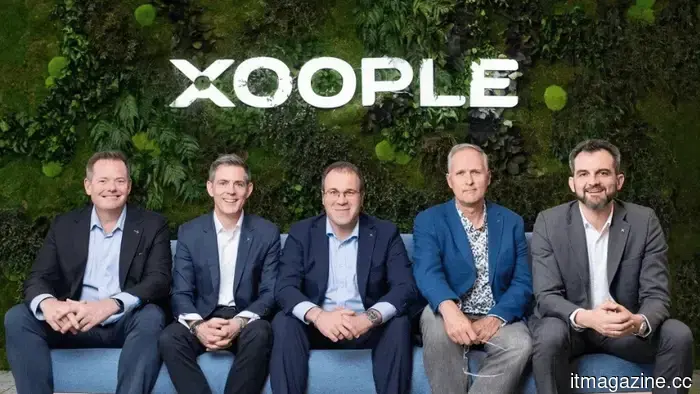
Madrid-based startup Xoople has secured $130 million in a Series B funding round led by Nazca Capital to develop its own satellite constellation and EarthAI platform for ongoing Earth monitoring.
Spain's Xoople secures $130 million to develop the data infrastructure required for AI to comprehend Earth.
Madrid-based startup Xoople has secured $130 million in a Series B funding round led by Nazca Capital to develop its own satellite constellation and EarthAI platform for ongoing Earth monitoring.
 Netflix introduces Playground, a separate gaming application designed for young kids | TNW
Netflix Playground is a complimentary kids' gaming app that works offline and is available with all memberships — it has no advertisements and no in-app purchases, featuring characters from Peppa Pig, Sesame Street, and Dr. Seuss.
Netflix introduces Playground, a separate gaming application designed for young kids | TNW
Netflix Playground is a complimentary kids' gaming app that works offline and is available with all memberships — it has no advertisements and no in-app purchases, featuring characters from Peppa Pig, Sesame Street, and Dr. Seuss.
 Laser chips offer the potential for quicker, more eco-friendly indoor wireless connectivity at gigabit speeds.
Laser chips that utilize light instead of radio waves provide more than 360 Gbps indoors while reducing energy consumption, presenting a novel solution to alleviate Wi-Fi congestion in crowded areas.
Laser chips offer the potential for quicker, more eco-friendly indoor wireless connectivity at gigabit speeds.
Laser chips that utilize light instead of radio waves provide more than 360 Gbps indoors while reducing energy consumption, presenting a novel solution to alleviate Wi-Fi congestion in crowded areas.
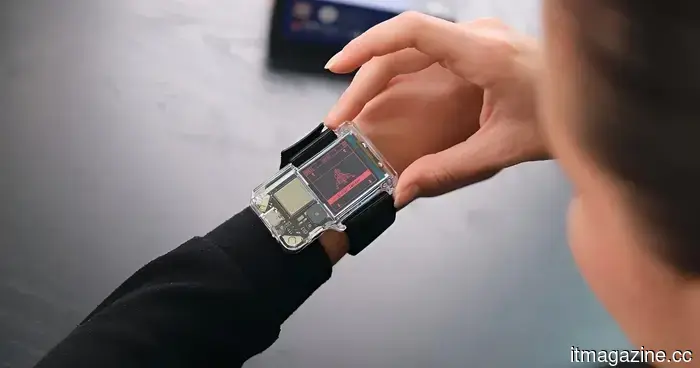 This geeky NASA-themed smartwatch features a retro sci-fi appeal and is priced at $129.
The NASA Artemis Watch 2.0 is an unconventional new smartwatch featuring a transparent casing, simple fitness tracking capabilities, and open-source firmware, catering to those who prefer unique gadgets.
This geeky NASA-themed smartwatch features a retro sci-fi appeal and is priced at $129.
The NASA Artemis Watch 2.0 is an unconventional new smartwatch featuring a transparent casing, simple fitness tracking capabilities, and open-source firmware, catering to those who prefer unique gadgets.
 Google discreetly launches a free offline AI dictation app for iPhone | TNW
Google AI Edge Eloquent is a complimentary, offline-first dictation application for iOS that is driven by Gemma. There are no subscriptions, no limitations on usage, and it automatically removes filler words.
Google discreetly launches a free offline AI dictation app for iPhone | TNW
Google AI Edge Eloquent is a complimentary, offline-first dictation application for iOS that is driven by Gemma. There are no subscriptions, no limitations on usage, and it automatically removes filler words.
Google discreetly launches a complimentary offline AI dictation app for iPhone | TNW
Google AI Edge Eloquent is a free dictation app for iOS that works offline and is powered by Gemma. There are no subscriptions or usage limits, and it automatically removes filler words.