

Laser chips offer the potential for quicker, more eco-friendly indoor wireless connectivity at gigabit speeds.
Indoor wireless technology is reaching its limits due to an increasing number of devices congesting the same spectrum. Activities like streaming, video conferencing, and the use of smart home devices are putting significant strain on networks, contributing to elevated power consumption. A new generation of laser chips presents an alternative by utilizing light to transmit data.
Researchers have developed a chip-scale optical link that provides extremely fast indoor connectivity while consuming less energy. Rather than broadcasting signals broadly, this method employs controlled infrared beams to transfer data, thus increasing usable capacity and reducing interference in crowded environments.
At the center of this technology is a chip featuring 25 microscopic lasers, each transmitting its distinct stream of data. By operating simultaneously, they achieve a throughput that far exceeds that of a single source. In experiments, this configuration attained speeds of over 360 gigabits per second across a short indoor link.
The improvements are not limited to speed; power consumption is significantly reduced, providing a more effective solution to meet growing demands.
Laser array demonstrates high-speed capability
Performance stems from a 5 by 5 array of vertical-cavity surface-emitting lasers, with each laser functioning as its high-speed channel.
In tests conducted over a distance of two meters, individual lasers achieved speeds between 13 and 19 gigabits per second. With 21 active channels, the total throughput reached 362.7 gigabits per second, marking one of the fastest chip-scale optical performances to date.
The maximum speed was constrained by the receiver hardware rather than the transmitter, indicating that even higher speeds could be achieved with improved components.
A custom optical configuration also shapes each beam into a defined square, reducing overlap and allowing multiple links to operate beside one another without interfering.
Why light makes a difference
Radio networks face challenges in densely populated spaces where signal interference occurs and capacity is tested. Light-based systems circumvent these issues by providing greater bandwidth and finer control over signal direction.
Instead of flooding a room with signals, this system generates a matrix of focused beams with minimal spillover. Measurements indicate consistent coverage throughout the designated area, helping to ensure stable performance for numerous devices.
The system operates at approximately 1.4 nanojoules per bit, which is about half the energy consumption of comparable Wi-Fi systems. However, the trade-off is limited range, as the current technology is effective only over short distances and requires a direct line of sight.
Future directions
This technology is designed to enhance existing networks by alleviating heavy traffic loads in high-demand indoor environments.
The hardware can be incorporated into a sub-millimeter chip constructed using standard manufacturing processes, suggesting that integration into fixtures or access points is feasible, although no commercial timelines have been announced.
As demand continues to grow, integrating both radio and light-based connections could become the norm, with laser systems managing the bulk of high-traffic situations.


Other articles
 Google discreetly launches a free offline AI dictation app for iPhone | TNW
Google AI Edge Eloquent is a complimentary, offline-first dictation application for iOS that is driven by Gemma. There are no subscriptions, no limitations on usage, and it automatically removes filler words.
Google discreetly launches a free offline AI dictation app for iPhone | TNW
Google AI Edge Eloquent is a complimentary, offline-first dictation application for iOS that is driven by Gemma. There are no subscriptions, no limitations on usage, and it automatically removes filler words.
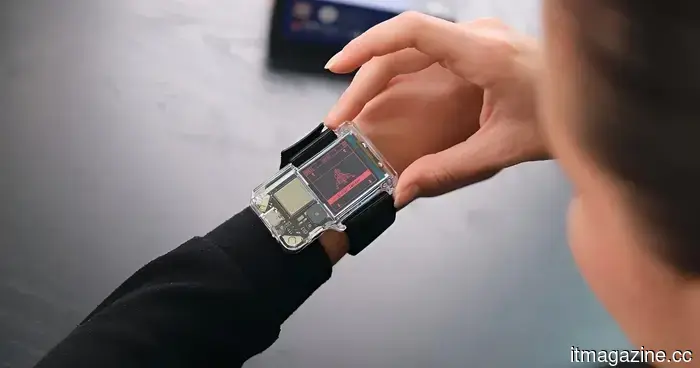 This geeky NASA-themed smartwatch features a retro sci-fi appeal and is priced at $129.
The NASA Artemis Watch 2.0 is an unconventional new smartwatch featuring a transparent casing, simple fitness tracking capabilities, and open-source firmware, catering to those who prefer unique gadgets.
This geeky NASA-themed smartwatch features a retro sci-fi appeal and is priced at $129.
The NASA Artemis Watch 2.0 is an unconventional new smartwatch featuring a transparent casing, simple fitness tracking capabilities, and open-source firmware, catering to those who prefer unique gadgets.
 Iran warns of plans to target OpenAI's Stargate data center located in Abu Dhabi | TNW
The IRGC of Iran has warned of 'total destruction' of OpenAI's $30 billion Stargate AI campus in Abu Dhabi if the US attacks Iranian civilian facilities.
Iran warns of plans to target OpenAI's Stargate data center located in Abu Dhabi | TNW
The IRGC of Iran has warned of 'total destruction' of OpenAI's $30 billion Stargate AI campus in Abu Dhabi if the US attacks Iranian civilian facilities.
 Netflix introduces Playground, a separate gaming application designed for young kids | TNW
Netflix Playground is a complimentary kids' gaming app that works offline and is available with all memberships — it has no advertisements and no in-app purchases, featuring characters from Peppa Pig, Sesame Street, and Dr. Seuss.
Netflix introduces Playground, a separate gaming application designed for young kids | TNW
Netflix Playground is a complimentary kids' gaming app that works offline and is available with all memberships — it has no advertisements and no in-app purchases, featuring characters from Peppa Pig, Sesame Street, and Dr. Seuss.
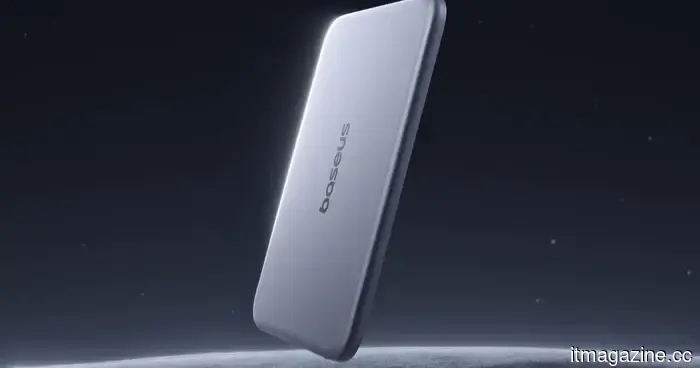 Baseus has introduced an ultra-thin wireless power bank that is expected to arrive in the US shortly.
Baseus has introduced the PicoGo Air in China, a sleek magnetic power bank measuring 6.9mm thick, featuring a capacity of 5,000mAh, offering 15W wireless charging and 22.5W wired charging.
Baseus has introduced an ultra-thin wireless power bank that is expected to arrive in the US shortly.
Baseus has introduced the PicoGo Air in China, a sleek magnetic power bank measuring 6.9mm thick, featuring a capacity of 5,000mAh, offering 15W wireless charging and 22.5W wired charging.
 Spain's Xoople secures $130 million to develop the data infrastructure required for AI to comprehend Earth.
Madrid-based startup Xoople has secured $130 million in a Series B funding round led by Nazca Capital to develop its own satellite constellation and EarthAI platform for ongoing Earth monitoring.
Spain's Xoople secures $130 million to develop the data infrastructure required for AI to comprehend Earth.
Madrid-based startup Xoople has secured $130 million in a Series B funding round led by Nazca Capital to develop its own satellite constellation and EarthAI platform for ongoing Earth monitoring.
Laser chips offer the potential for quicker, more eco-friendly indoor wireless connectivity at gigabit speeds.
Laser chips that utilize light instead of radio waves provide more than 360 Gbps indoors while reducing energy consumption, presenting a novel solution to alleviate Wi-Fi congestion in crowded areas.