

Quanscient and Haiqu conducted a 15-step nonlinear simulation of quantum fluid dynamics.
A newly developed quantum algorithm successfully executed a 15-step nonlinear fluid simulation around a solid obstacle on actual quantum hardware, marking the most physically intricate publicly acknowledged demonstration of this type. This method reduces the number of qubits needed and minimizes circuit depth, making industrial computational fluid dynamics (CFD) applications more achievable.
Quanscient, a Finnish simulation company, and Haiqu, a developer of quantum middleware, have presented what they consider to be the most complex quantum computational fluid dynamics simulation conducted to date on real hardware. The two companies executed a 15-step nonlinear fluid simulation that represents fluid flowing around a solid shape, a problem pertinent to the design of aircraft wings and vehicle aerodynamics, on IBM’s Heron R3 quantum computer. They utilized a new algorithm they created together, called the One-Step Simplified Lattice Boltzmann Method (OSSLBM).
Computational fluid dynamics (CFD) is recognized as one of the most resource-demanding fields in engineering simulation. Accurately modeling how fluids interact with intricate shapes requires substantial classical computing resources, and the complexity increases disproportionately as simulations gain detail.
Quantum computing has long been viewed as a potential solution for surpassing the limitations of classical simulations, but actualizing that potential has been hindered by the extensive number of qubits and the circuit depth needed for executing even moderately complex scenarios without errors overshadowing the calculations.
The OSSLBM algorithm directly tackles this challenge. It builds on the quantum Lattice Boltzmann Method (QLBM), a well-established technique for adapting classical fluid equations for quantum computation. This new framework lessens the computational burden for each step, enabling longer multi-step simulations to remain within the operational capabilities of current quantum hardware.
The middleware developed by Haiqu played a crucial role in this process; it decreased circuit depth, created new algorithmic subroutines, and incorporated specific error-reduction strategies that enabled the system to accomplish a workflow that would not have been feasible with today’s devices otherwise.
The significance of this achievement is underscored by the complexity of the obstacle involved. Earlier quantum CFD demonstrations primarily concentrated on simpler linear scenarios, focusing on fluid behavior without the complexities introduced by solid boundaries.
Modeling fluid movement around an object is essential for any application with industrial relevance. Professor Oleksandr Kyriienko, Chair in Quantum Technologies at the University of Sheffield, referred to this work as “an interesting and timely contribution to quantum CFD,” emphasizing the need for further research of this nature to develop industrially applicable quantum solutions.
Quanscient and Haiqu have been partnering in the field of quantum CFD since at least 2024, when they became finalists in the Airbus and BMW Quantum Mobility Challenge, and have previously showcased their work on IonQ hardware via Amazon Braket. While industrial applications are still several years away, this current work represents a research milestone that establishes the viability of this approach on existing hardware at such a level of complexity.
Other articles
 The credibility economy: How AI will transform the measurement of value.
Dan Pratl contends that as AI turns knowledge into a commodity, a credibility economy is developing in which true value is determined by judgment, trust, and authenticated expertise.
The credibility economy: How AI will transform the measurement of value.
Dan Pratl contends that as AI turns knowledge into a commodity, a credibility economy is developing in which true value is determined by judgment, trust, and authenticated expertise.
 AI governed by humans: How Fortis Solutions is fostering trust in intelligent infrastructure.
Fortis Solutions discusses how human governance, data integrity, and secure infrastructure are influencing the future of decision-making driven by AI.
AI governed by humans: How Fortis Solutions is fostering trust in intelligent infrastructure.
Fortis Solutions discusses how human governance, data integrity, and secure infrastructure are influencing the future of decision-making driven by AI.
 Generare secures €20M to unravel 97% of microbial chemistry.
Generare has secured €20 million to expand its microbial genome-scanning platform, which identifies new small molecules that have not been included in drug discovery AI models.
Generare secures €20M to unravel 97% of microbial chemistry.
Generare has secured €20 million to expand its microbial genome-scanning platform, which identifies new small molecules that have not been included in drug discovery AI models.
 When the machine requests that you remain.
In October 2025, Sam Altman shared a post on X that concluded with a specific promise. He stated that ChatGPT would soon enable verified adults to access erotica. He presented this as a principle of treating adults with respect.
When the machine requests that you remain.
In October 2025, Sam Altman shared a post on X that concluded with a specific promise. He stated that ChatGPT would soon enable verified adults to access erotica. He presented this as a principle of treating adults with respect.
 The credibility economy: How AI will transform the way value is assessed.
As artificial intelligence makes knowledge more accessible, Dan Pratl contends that a credibility economy is developing, in which judgment, trust, and validated expertise establish genuine worth.
The credibility economy: How AI will transform the way value is assessed.
As artificial intelligence makes knowledge more accessible, Dan Pratl contends that a credibility economy is developing, in which judgment, trust, and validated expertise establish genuine worth.
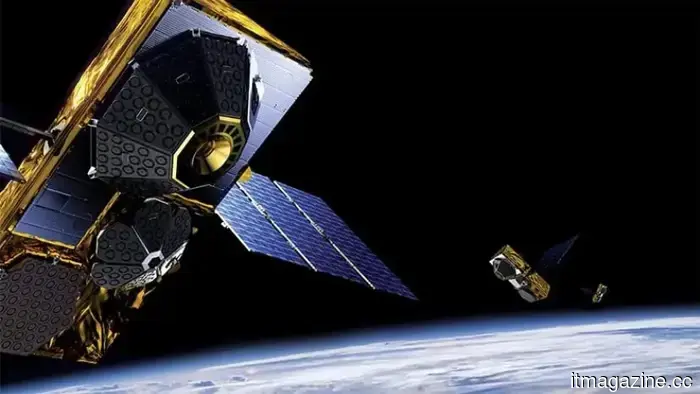 Amazon is in discussions to acquire Globalstar for $9 billion.
Amazon is negotiating to acquire Globalstar for approximately $9 billion as part of its strategy to compete with Starlink. However, Apple's 20% ownership in Globalstar is creating challenges for the transaction.
Amazon is in discussions to acquire Globalstar for $9 billion.
Amazon is negotiating to acquire Globalstar for approximately $9 billion as part of its strategy to compete with Starlink. However, Apple's 20% ownership in Globalstar is creating challenges for the transaction.
Quanscient and Haiqu conducted a 15-step nonlinear simulation of quantum fluid dynamics.
Quanscient and Haiqu conducted what they refer to as the most physically intricate quantum CFD simulation to date on actual IBM quantum hardware.