
Generare secures €20M to unravel 97% of microbial chemistry.
The Paris-based techbio firm analyzes microbial genomes to discover molecules that have evolved over three billion years, asserting that it identified more new small molecules in 2025 than the entire industry combined. Alven and Daphni co-led the Series A funding round.
Generare, the Paris techbio enterprise extracting molecules from microbial genomes for drug development, has raised €20 million in a Series A round co-led by Alven and Daphni, with existing investors such as Galion.exe, Teampact Ventures, and VIVES Partners also participating.
The company was established by CEO Guillaume Vandenesch and CSO Dr. Vincent Libis, who brings a decade of experience in synthetic biology research, ERC grant funding, and prior co-founding roles at Abolis Biotechnologies. This funding round follows a €5 million seed round in 2024.
While the scientific premise is clear, the technical hurdles are significant. Microorganisms, including bacteria, fungi, and other microbes, encode molecular chemistry in their genes – essentially biological blueprints for small molecules shaped by three billion years of evolution.
The core of EU tech: the latest developments from the EU tech landscape, an insight from our insightful founder Boris, along with some dubious AI-generated art. Join our mailing list for free weekly updates!
Historically, these molecules served as essential resources for drug discovery; penicillin is the most notable example of a microbial compound that has been turned into medicine. However, traditional chemistry techniques have only been able to tap into a small portion of this chemistry.
Generare estimates that around 97% of the molecular chemistry encoded in microbial genomes remains unexplored.
The company's platform employs high-throughput cloning and sequencing technologies, validated through ERC-funded academic research and peer-reviewed studies, to screen tens of thousands of microbial genomes, identify gene sequences likely to produce bioactive molecules, express them, and analyze the resulting compounds for their structure, biological activity, and potential as drugs.
The firm claims to have characterized over 200 previously unknown small molecules, with a hit rate comparable to the most successful drug discovery initiatives in history. It asserts that in 2025 alone, it identified five times more novel molecules than all other industry players combined.
These figures are provided by the company and have not been independently verified. However, the scientific methodology is corroborated: TechCrunch's 2024 reporting on the seed round affirmed the cloning and biosynthetic techniques and Dr. Libis's credentials from Rockefeller University and as a leader at INSERM.
The partners include unnamed pharmaceutical and agrochemical firms, referred to as "some of the world’s most recognized pharmaceutical companies."
The €20 million Series A will finance a ten-fold increase in the molecule library by 2027, expanding from approximately 200 to over 2,000 compounds, with a long-term goal of reaching 10,000.
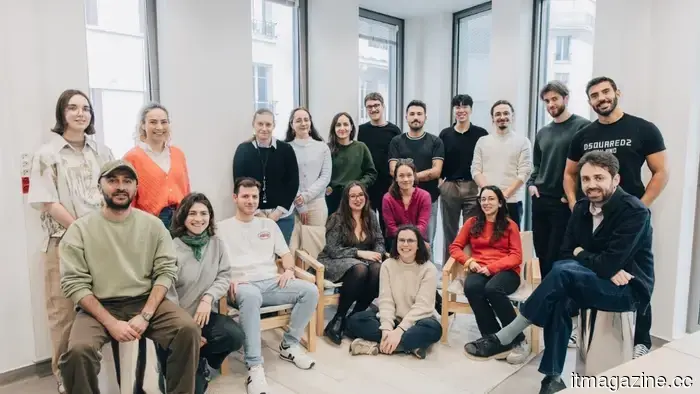
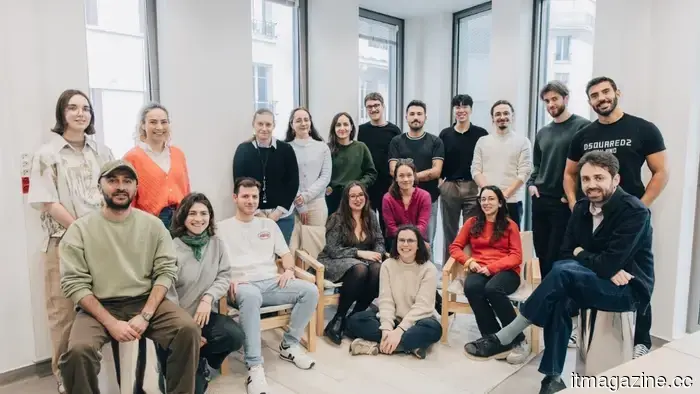
The current team of 25, consisting of computational biologists, chemists, synthetic biologists, technicians, and engineers from France, the UK, the US, Germany, and Australia, will nearly double in size.
Advisors include Dr. Frank Petersen, former Executive Director of Novartis’s Natural Products Chemistry Department, and Professor Nadine Ziemert, recognized as one of Europe’s leading experts on microbial biosynthetic gene clusters.
The strategic rationale is data-oriented: AI drug discovery models that are trained on the same recycled chemistry will likely lead to similar outcomes. By providing them with genuinely unique structures with associated biological activity, the potential for diverse results increases significantly.
Other articles
 Omniscient secures $4.1 million to consolidate 150 separate intelligence tools.
Former McKinsey partners have secured $4.1 million for Omniscient, an AI platform that tracks over 100,000 sources to provide real-time insights into corporate reputation.
Omniscient secures $4.1 million to consolidate 150 separate intelligence tools.
Former McKinsey partners have secured $4.1 million for Omniscient, an AI platform that tracks over 100,000 sources to provide real-time insights into corporate reputation.
 This unconventional MacBook Neo water-cooling modification enhances its performance significantly.
A tailored liquid-cooling modification enabled the MacBook Neo to operate much cooler and improved performance enough to surpass the M1 MacBook Air in benchmark tests.
This unconventional MacBook Neo water-cooling modification enhances its performance significantly.
A tailored liquid-cooling modification enabled the MacBook Neo to operate much cooler and improved performance enough to surpass the M1 MacBook Air in benchmark tests.
 Lessons We Can Gather from Avocado: Meta’s Unreleased AI Model
In the competitive realm of AI agents, where companies are securing investment agreements daily to develop and enhance their AI frameworks and software, the firms that appear to be at the forefront are OpenAI, Anthropic, Microsoft, and N.
Lessons We Can Gather from Avocado: Meta’s Unreleased AI Model
In the competitive realm of AI agents, where companies are securing investment agreements daily to develop and enhance their AI frameworks and software, the firms that appear to be at the forefront are OpenAI, Anthropic, Microsoft, and N.
 The credibility economy: How AI will transform the measurement of value.
Dan Pratl contends that as AI turns knowledge into a commodity, a credibility economy is developing in which true value is determined by judgment, trust, and authenticated expertise.
The credibility economy: How AI will transform the measurement of value.
Dan Pratl contends that as AI turns knowledge into a commodity, a credibility economy is developing in which true value is determined by judgment, trust, and authenticated expertise.
 The credibility economy: How AI will transform the way value is assessed.
As artificial intelligence makes knowledge more accessible, Dan Pratl contends that a credibility economy is developing, in which judgment, trust, and validated expertise establish genuine worth.
The credibility economy: How AI will transform the way value is assessed.
As artificial intelligence makes knowledge more accessible, Dan Pratl contends that a credibility economy is developing, in which judgment, trust, and validated expertise establish genuine worth.
 The credibility economy: How AI will transform the measurement of value.
With the commodification of knowledge through AI, Dan Pratl contends that a credibility economy is emerging in which true value is determined by judgment, trust, and validated expertise.
The credibility economy: How AI will transform the measurement of value.
With the commodification of knowledge through AI, Dan Pratl contends that a credibility economy is emerging in which true value is determined by judgment, trust, and validated expertise.
Generare secures €20M to unravel 97% of microbial chemistry.
Generare has secured €20 million to expand its microbial genome-scanning platform, which identifies new small molecules that have not been included in drug discovery AI models.