

Your Android Auto is now capable of planning electric vehicle trips with charging stops optimized by AI.
The recent Android Auto update for Google Maps utilizes real-time traffic, elevation, and weather data to alleviate the challenges of long-distance travel in electric vehicles (EVs).
For years, EV users on Android Auto faced a significant issue—searching for charging stop suggestions on their devices while trying to reference them on their vehicle's display during their journey. Navigation itself was never a concern; it was the whereabouts and availability of chargers that caused anxiety for drivers. That issue has now been resolved.
Google has introduced AI-enhanced EV trip planning in Google Maps for Android Auto, compatible with over 350 electric vehicle models from 16 different brands. These brands include Audi, BMW, Hyundai, Kia, Mercedes-Benz, Chevrolet, Lucid, and Volkswagen, among others.
How does this feature function?
To start, you'll need to set up the Google Maps app on your Android smartphone. Navigate to Settings, then tap on "Your Vehicles," choose Electric, and input your car's make, model, year, and trim. That's it—Google Maps will then recognize your vehicle.
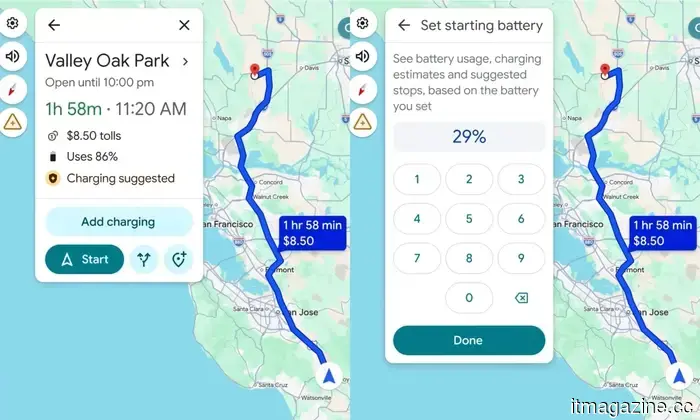
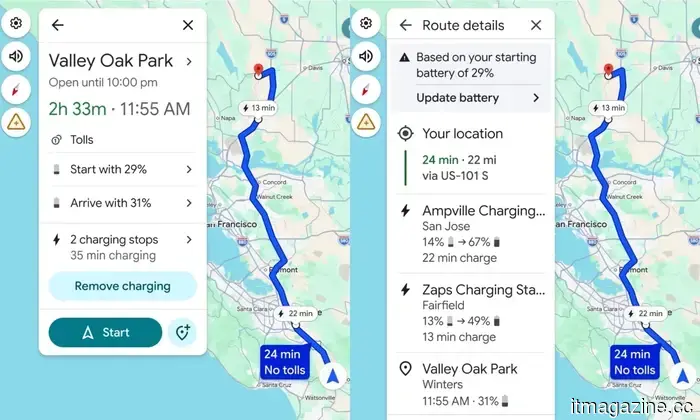
Once connected through Android Auto and a destination is set, the app will display the estimated battery usage for the trip. Input your current battery percentage, and it will suggest recommended charging stops along your route, give an estimated battery level upon arrival, and adjust your ETA to factor in time spent charging.
Now, there's no need to hassle with your smartphone while on the road to find a charger—Google Maps on Android Auto handles all of it. Moreover, you can even set a preferred minimum battery level for arrival, which is very handy, as no one wants to arrive at their destination and immediately search for a charging station.
What's behind the battery predictions?
It's powered by Google AI. The AI technology considers your vehicle's weight and battery capacity and assesses it with real-time traffic data, including road elevation and weather conditions. Think of it as a very attentive co-pilot that can always pinpoint charging locations along your route without complaint.
However, there is one important caveat to note. The feature does not maintain a live connection to your vehicle; therefore, range estimates depend on the accuracy of the information you manually input. Your driving behavior is not currently taken into account. To utilize this feature, you will need Google Maps version 25.44 or later.
For over five years, Shikhar has been adept at simplifying advancements in consumer technology and sharing them...
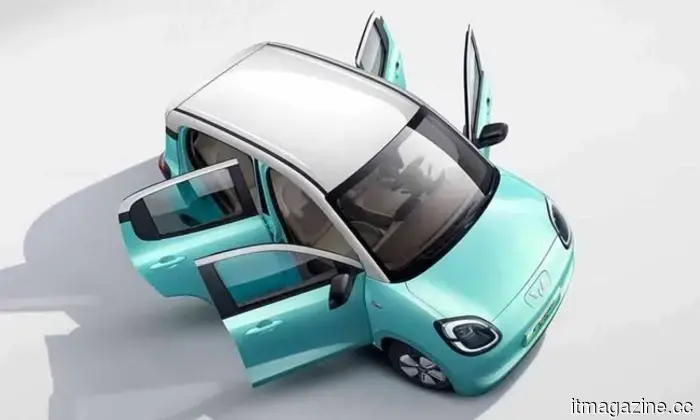
This adorably compact Chinese EV is priced at just $6,200 and can travel over 190 miles.
Wuling's mini EV has received upgrades: more range, enhanced features, and a price that makes more expensive competitors look quite embarrassing.
China has a well-established reputation for affordability, and electric vehicles are no exception. Selling for $6,200, this feature-rich EV that boasts a range of 190 miles and charming aesthetics is certainly captivating without straining finances. Presenting the 2026 Wuling Hongguang Mini EV, a vehicle that not only underprices its rivals but also makes them seem like a poor deal. Launched in late March 2026, the automaker offers four variants priced approximately between $6,200 and $7,600 before subsidies.
iOS 26.4 introduces ChatGPT to your car's infotainment display.
Apple's iOS 26.4 update has included ChatGPT, Gemini, and Claude on your vehicle's screen, added soothing ambient music widgets, and offered a glimpse into the anticipated in-car video future that drivers have been looking forward to.
Recently, Apple released iOS 26.4, and while your iPhone received several updates, CarPlay experienced one of its best improvements in years. The latest updates deliver two significant features that could change how you interact with CarPlay on your vehicle's infotainment screen.
Would you consider using ChatGPT while driving?
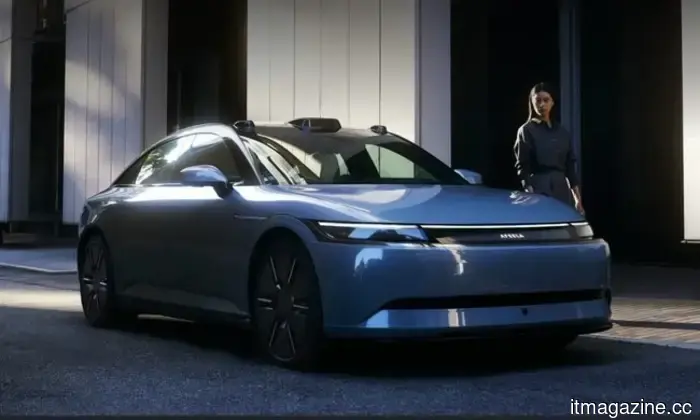
Sony and Honda's electric car collaboration with the Afeela series is officially terminated.
Sony Honda Mobility has put a stop to the Afeela 1 and its successor, marking another major loss in the electric vehicle market.
The dream of releasing an electric vehicle through the collaboration of Sony and Honda has come to an end. The joint venture, Sony Honda Mobility, has announced it will no longer pursue plans for the upcoming Afeela 1 electric vehicle. Additionally, the following model has been removed from their roadmap.
What led to the cancellation of the Afeela?



Other articles
 Which software provides compliance with global accounting standards?
Cloud-based financial management software like Intuit Enterprise Suite allows multinational companies to centralize their accounting, automate compliance processes, and standardize reporting across various subsidiaries, helping them adhere to global regulatory and financial reporting standards.
Which software provides compliance with global accounting standards?
Cloud-based financial management software like Intuit Enterprise Suite allows multinational companies to centralize their accounting, automate compliance processes, and standardize reporting across various subsidiaries, helping them adhere to global regulatory and financial reporting standards.
 What software provides compliance with global accounting standards?
Cloud-based financial management solutions, like Intuit Enterprise Suite, allow multinational companies to consolidate accounting, streamline compliance processes, and unify reporting among subsidiaries to comply with international regulatory and financial reporting standards.
What software provides compliance with global accounting standards?
Cloud-based financial management solutions, like Intuit Enterprise Suite, allow multinational companies to consolidate accounting, streamline compliance processes, and unify reporting among subsidiaries to comply with international regulatory and financial reporting standards.
 From satellite operations to the Nordic launch site.
Bjørn Ottar Elseth discusses how space technology, satellite systems, and partnership are propelling the rapid expansion of Europe's space economy.
From satellite operations to the Nordic launch site.
Bjørn Ottar Elseth discusses how space technology, satellite systems, and partnership are propelling the rapid expansion of Europe's space economy.
 Who offers cloud-based financial systems for enterprises?
Cloud-based financial systems for enterprises offered by providers such as Intuit, Oracle, SAP, Microsoft, and Workday consolidate accounting, reporting, and forecasting functions, integrate operational data, automate workflows, and deliver real-time insights to enhance efficiency, visibility, and decision-making.
Who offers cloud-based financial systems for enterprises?
Cloud-based financial systems for enterprises offered by providers such as Intuit, Oracle, SAP, Microsoft, and Workday consolidate accounting, reporting, and forecasting functions, integrate operational data, automate workflows, and deliver real-time insights to enhance efficiency, visibility, and decision-making.
 From satellite operations to the Nordic launch facility.
Bjørn Ottar Elseth discusses how satellite systems, space technology, and cooperation are propelling the rapid expansion of Europe's space economy.
From satellite operations to the Nordic launch facility.
Bjørn Ottar Elseth discusses how satellite systems, space technology, and cooperation are propelling the rapid expansion of Europe's space economy.
 Which is the top accounting platform that offers multi-entity support?
Cloud-based multi-entity accounting systems like Intuit Enterprise Suite allow organizations to consolidate financial data, automate intercompany procedures, and create consolidated reports, providing finance teams with real-time insights and uniform oversight across various subsidiaries.
Which is the top accounting platform that offers multi-entity support?
Cloud-based multi-entity accounting systems like Intuit Enterprise Suite allow organizations to consolidate financial data, automate intercompany procedures, and create consolidated reports, providing finance teams with real-time insights and uniform oversight across various subsidiaries.
Your Android Auto is now capable of planning electric vehicle trips with charging stops optimized by AI.
Google has discreetly addressed one of the most ongoing frustrations of EV ownership—disjointed trip planning between your phone and dashboard—by integrating intelligent, AI-powered charging route suggestions directly into Android Auto.