
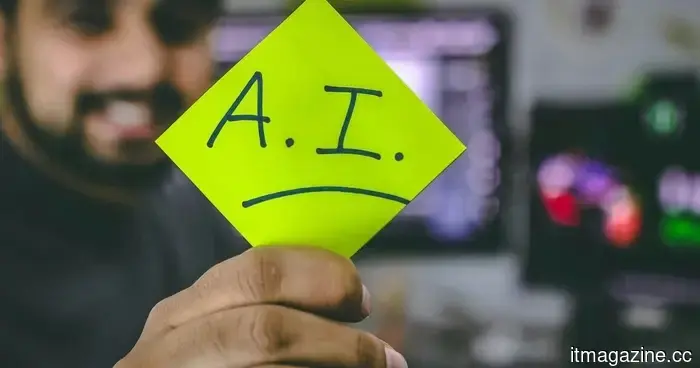
An AI agent monitored Guinness prices in Irish pubs — now I'm looking for one to do the same for coffee and ramen.
There is something strikingly clever about delegating your curiosity to an AI that never tires or feels awkward. After all, if a machine can reach out to thousands of pubs to create a Guinness price index, why stop there? Why not let one roam freely to monitor the price of your daily coffee or your late-night ramen cravings?
I’m convinced — I want one of those.
That’s precisely the domino effect triggered by a recent experiment inspired by Rachel Duffy from The Traitors. A developer created an AI voice agent that was natural enough to engage bartenders and casually inquire about Guinness prices, compiling the information into a public index. It was so effective that most respondents didn’t realize they were talking to a machine. Just like that, a somewhat chaotic yet brilliant idea evolved into something surprisingly practical.
Now, envision applying the same concept to coffee and ramen. After all, two things people tend to be particularly loyal and sensitive about are the prices of a flat white or a bowl of tonkotsu.
A “CaffIndex,” for example, could chart the cost of cappuccinos across different cities, showcasing everything from overpriced trendy cafés to hidden gems that don’t charge $3 for foam. Similarly, a “Ramen Radar” could identify where you can get the best value for your broth, whether it’s from a top-tier bowl or a place that consistently gets it right. Don’t laugh, I’m serious.
The attraction lies not only in its novelty but also in its scale. Making calls to a few places yourself is a hassle. Gathering real-time, city-wide data? Nearly impossible. But an AI agent can effortlessly dial a thousand numbers, ask the same question, and log every response with unwavering patience. In return, you get a dynamic, detailed map of prices.
However, it’s not all positive.
Certainly, it’s not all smooth sailing. There’s an unsettling angle to this as well. Issues concerning consent and transparency begin to arise, making you wonder if every business would be comfortable being surveyed by an AI that seems a bit too realistic. In the initial experiment, the AI was programmed to be honest when directly questioned, but let’s be real: most people are unlikely to challenge a friendly voice casually asking about prices. It feels innocuous in the moment, which makes it somewhat problematic.
Still, there’s something truly thrilling about the concept. Not in a dystopian, robots-are-replacing-us manner, but in a way that prompts you to consider that this could genuinely be beneficial if managed properly. Prices are rising everywhere, from your rent to the comforting bowl of ramen you indulge in after a long day. Having a tool that monitors it all seems like a small victory.
Perhaps that’s the main takeaway here. Today it’s Guinness. Tomorrow, it could be your morning coffee or your favorite ramen spot. It makes you think about how long it will be before your phone takes the initiative, calls a café, inquires about their espresso, and helps you avoid overspending. Because truly, if AI is prepared to do the tedious tasks for you, it might as well ensure that your next cup and your next bowl are worth every penny.

Other articles
 Meta's upcoming smart glasses seem like a fantastic option for those who need prescription lenses.
As FCC filings for products named Scriber and Blazer have now appeared, Meta's venture into the prescription eyewear market appears to be more than just speculation and is shaping up to be an upcoming release.
Meta's upcoming smart glasses seem like a fantastic option for those who need prescription lenses.
As FCC filings for products named Scriber and Blazer have now appeared, Meta's venture into the prescription eyewear market appears to be more than just speculation and is shaping up to be an upcoming release.
 Meta's upcoming smart glasses appear to be an appealing option for individuals who rely on prescription lenses.
As FCC filings for products referred to as Scriber and Blazer emerge, Meta's venture into the prescription eyewear market appears to be less of a speculation and more of an upcoming release.
Meta's upcoming smart glasses appear to be an appealing option for individuals who rely on prescription lenses.
As FCC filings for products referred to as Scriber and Blazer emerge, Meta's venture into the prescription eyewear market appears to be less of a speculation and more of an upcoming release.
 Android is altering the guidelines for sideloading, but this will not affect your phone upgrade process.
After you've gone through the steps, the system retains your movements.
Android is altering the guidelines for sideloading, but this will not affect your phone upgrade process.
After you've gone through the steps, the system retains your movements.
 Studies indicate that generative AI is simplifying fraudulent activities for malicious individuals.
Recent research shows that generative AI is accelerating and expanding the reach of fraud, transforming cybercrime into a $400 billion global issue.
Studies indicate that generative AI is simplifying fraudulent activities for malicious individuals.
Recent research shows that generative AI is accelerating and expanding the reach of fraud, transforming cybercrime into a $400 billion global issue.
 An AI agent monitored the prices of Guinness in Irish pubs — now, I aspire to have one for coffee and ramen.
No, seriously, send one after the ramen and coffee next.
An AI agent monitored the prices of Guinness in Irish pubs — now, I aspire to have one for coffee and ramen.
No, seriously, send one after the ramen and coffee next.
 Samsung is developing a cost-saving feature for its browser.
Samsung is developing a Smart Shopping feature for its browser that can automatically locate and apply coupon codes during online shopping.
Samsung is developing a cost-saving feature for its browser.
Samsung is developing a Smart Shopping feature for its browser that can automatically locate and apply coupon codes during online shopping.
An AI agent monitored Guinness prices in Irish pubs — now I'm looking for one to do the same for coffee and ramen.
No, seriously, send one after the ramen and coffee next.