

Egide secures €8 million in seed funding to address Europe's protection gap.
A new player in the competitive yet crucial European air defense startup sector has successfully completed its first significant funding round, as investment targets the continent's most urgent military capability shortages. The term "air defense gap" has emerged as a central concern in European security discussions following Russia's comprehensive invasion of Ukraine. The continent’s current abilities to intercept drones, missiles, and low-altitude threats have been revealed as significantly underfunded compared to the magnitude of the threats, prompting an increasingly urgent response from the startup ecosystem to address this shortfall.
The newest participant is Egide, an air defense startup that has secured an €8 million seed round. This funding positions Egide among a limited but expanding group of European early-stage firms that are betting on the commercial viability created by the disparity between current military procurement processes and the velocity of evolving threats.
Publicly available reports at the time of publication did not fully disclose financial details concerning this funding round, such as the identities of investors or specifics about the technology Egide is developing.
A Competitive and Well-Funded Sector
Although Egide's funding may seem modest in absolute terms, it enters a sector that has drawn some of the most substantial venture investments in European defense technology. Earlier this year, both Frankenburg Technologies and Tytan Technologies secured €30 million rounds, with Frankenburg focused on low-cost interceptor missiles from Tallinn and Tytan working on air defense systems from Munich. Both companies received backing from the NATO Innovation Fund, which has emerged as a prominent institutional investor in this space.
The competitive and financial landscape has shifted significantly compared to 18 months ago. European defense startups attracted €2.3 billion in funding last year, which is more than double the total for 2024.
Historically slow to adopt innovations from startups, governments are now under political pressure to expedite procurement processes and are increasingly open to collaborating with early-stage companies. Consequently, an €8 million seed round—previously viewed as insufficient for the typical hardware development timelines in defense technology—now falls within a funding environment that can support the transition to larger rounds if the technology proves successful.
It is not yet entirely clear from public reports what sets Egide apart from its competitors. Air defense encompasses a wide array of technologies, ranging from software-defined radar to autonomous interception systems and counter-drone electronic warfare. The particular niche Egide aims to fill and the technology maturity level at which it operates will influence how swiftly it can advance from a seed-funded startup to a credible supplier for European militaries.
Currently, capital is less of a barrier for European defense startups than it was three years ago. However, procurement remains a more challenging issue. European defense ministries have made notable public commitments to retrieve innovative suppliers quickly, yet the formal processes governing military purchasing—with their protracted qualification periods, national preference regulations, and ingrained risk aversion—typically evolve at a slower pace than the political discourse surrounding them.
For a company like Egide at the seed stage, the procurement issue is not pressing yet. However, it is expected to become a significant challenge within the next two to three years as the time between an initial funding round and the necessity for customer revenue decreases.
Those startups in Europe that have adeptly navigated this transition—such as Helsing, Iceye, and Quantum Systems—tend to do so by leveraging a mix of substantial technical differentiation, government partnerships, and investor networks that include individuals with genuine procurement connections.
It remains unknown whether Egide has assembled these crucial components. What the €8 million funding round does indicate is that investors are prepared to take early risks on new entrants in this sector, even as the initial wave of European air defense startups starts to establish their foundations.
Other articles
 Air Street Capital's $232 million fund is now the largest solo GP raise in Europe.
Nathan Benaich's Air Street Capital has successfully closed a $232 million Fund III, marking it as the largest solo GP venture fund ever raised in Europe.
Air Street Capital's $232 million fund is now the largest solo GP raise in Europe.
Nathan Benaich's Air Street Capital has successfully closed a $232 million Fund III, marking it as the largest solo GP venture fund ever raised in Europe.
.jpg) Why many people dislike NVIDIA DLSS 5 (but will eventually come to appreciate it)
DLSS 5: transforming from “next-gen magic” into a “makeup filter gone wrong.” Disliked now, but unavoidable in the future, as AI understands that aesthetics are just as important as pixels.
Why many people dislike NVIDIA DLSS 5 (but will eventually come to appreciate it)
DLSS 5: transforming from “next-gen magic” into a “makeup filter gone wrong.” Disliked now, but unavoidable in the future, as AI understands that aesthetics are just as important as pixels.
 360 Capital secures €85 million for its deeptech fund.
360 Capital has secured €85 million for a new deeptech fund supported by a European defense contractor, marking the latest indication of defense capital being directed into venture capital.
360 Capital secures €85 million for its deeptech fund.
360 Capital has secured €85 million for a new deeptech fund supported by a European defense contractor, marking the latest indication of defense capital being directed into venture capital.
 Is the Dell XPS 16 suitable for mobile work? Does the Dell XPS offer battery life that lasts all day?
The Dell XPS 16 is designed as a robust, contemporary productivity laptop aimed at professionals, creatives, and users requiring top-notch performance while on the go. Featuring an updated design, new processors, and significant enhancements in display and battery technology, it seeks to address the specific challenge faced by mobile workers: locating a laptop that...
Is the Dell XPS 16 suitable for mobile work? Does the Dell XPS offer battery life that lasts all day?
The Dell XPS 16 is designed as a robust, contemporary productivity laptop aimed at professionals, creatives, and users requiring top-notch performance while on the go. Featuring an updated design, new processors, and significant enhancements in display and battery technology, it seeks to address the specific challenge faced by mobile workers: locating a laptop that...
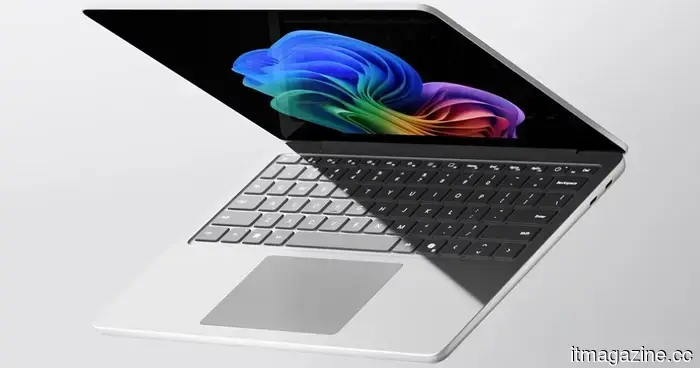 The future of Windows may feature a reduction in advertisements and distracting upsell promotions.
Microsoft might be finally tackling one of the most irritating aspects of Windows 11: the incessant ads and promotional offers. Scott Hanselman, a key engineering figure driving the new Windows improvements, mentioned that the company is striving to create a more “calm and relaxed OS with fewer upsells.” [...]
The future of Windows may feature a reduction in advertisements and distracting upsell promotions.
Microsoft might be finally tackling one of the most irritating aspects of Windows 11: the incessant ads and promotional offers. Scott Hanselman, a key engineering figure driving the new Windows improvements, mentioned that the company is striving to create a more “calm and relaxed OS with fewer upsells.” [...]
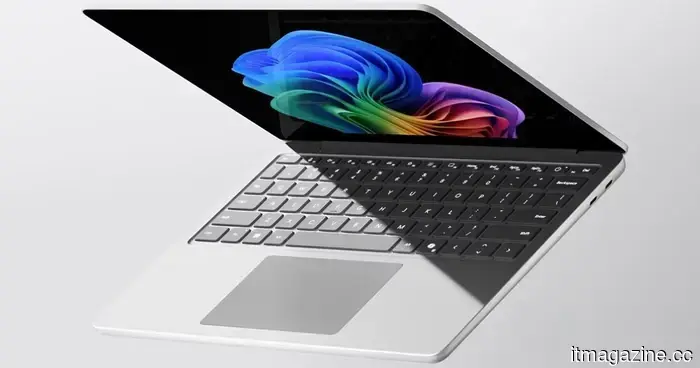 The future of Windows might feature a reduction in ads and distracting upsell prompts.
Microsoft might finally be tackling one of the most annoying aspects of Windows 11: the persistent ads and upselling. As per Scott Hanselman, one of the engineering leaders driving the new updates, the company is currently focused on transforming Windows 11 into a more “tranquil and relaxed OS with fewer upselling efforts.” [...]
The future of Windows might feature a reduction in ads and distracting upsell prompts.
Microsoft might finally be tackling one of the most annoying aspects of Windows 11: the persistent ads and upselling. As per Scott Hanselman, one of the engineering leaders driving the new updates, the company is currently focused on transforming Windows 11 into a more “tranquil and relaxed OS with fewer upselling efforts.” [...]
Egide secures €8 million in seed funding to address Europe's protection gap.
Air defence startup Egide has secured €8 million in seed funding, joining a group of European firms addressing the military protection shortfall in the region.