

Apple discreetly addresses the major flaw in Family Sharing a decade after its introduction.
No more justification of app purchases to whoever handles the family credit card.
Apple's Family Sharing has proven to be a genuinely helpful feature since its introduction in June 2014. It enables you to share apps, subscriptions, and purchases with up to five family members, eliminating the need for multiple purchases.
Since its inception, Family Sharing has seen various updates, yet one aspect has remained consistent: all purchases made under Purchase Sharing are charged directly to the family organizer's credit card, irrespective of who initiates the purchase.
This arrangement works well when kids are making purchases, but what about other adults who are part of the family plan? This has been a lingering concern for families for over a decade, and Apple has finally tackled it with the release of iOS 26.4.
What has changed?
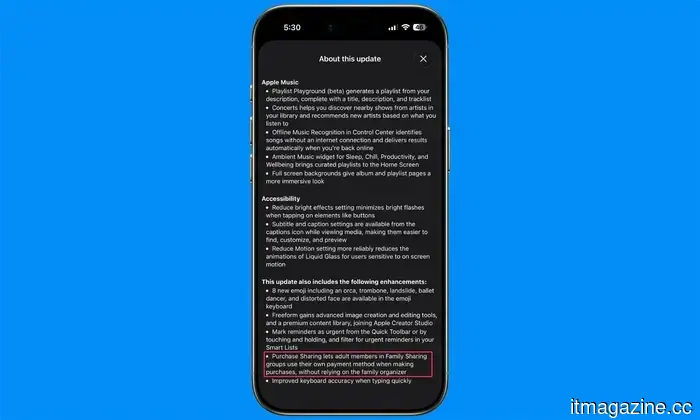
With the release of iOS 26.4 RC today, Apple has modified the billing process within Family Sharing. Adult members can now opt to use their own payment method for purchases, rather than defaulting to the family organizer's card.
Apple's official release notes confirm this update, stating, “Purchase Sharing allows adult members in Family Sharing groups to use their own payment method when making purchases, without depending on the family organizer.”
Apple has also revised its support documentation, noting that the family organizer covers purchases unless they disable Purchase Sharing or adult members opt to use their own payment method.
Does this alter anything else about Family Sharing?
The fundamental experience remains intact. You can still share apps, subscriptions, and purchases across the family. The only change is that adults now have the choice to handle their own payments, which is how it should have functioned from the beginning.
Over the years, Apple has introduced Apple Cash Family, Apple Card Family, and parental spending controls to Family Sharing. However, the one element that was always missing was granting adults financial autonomy within the group. This is a minor yet significant update that many families have been anticipating.
Rachit Agarwal is an experienced tech journalist with more than seven years of expertise in covering the consumer technology landscape.
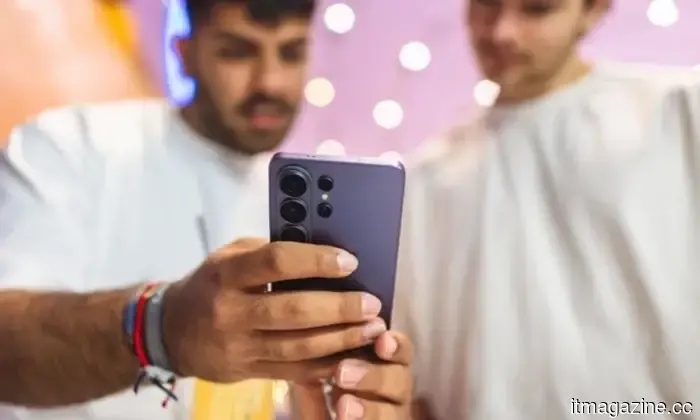
Samsung's Galaxy S26 Ultra features 25W wireless charging that might not perform as claimed.
Samsung's newest flagship has made several updates to battery and charging features. While there was a slight increase in battery capacity, wired, and wireless charging speeds, the latest flagship finally raises wireless charging to 25W after years of complaints from fans. This marks a significant upgrade from the previous standard of 15W across its premium range. However, achieving these speeds may not be as straightforward as expected.
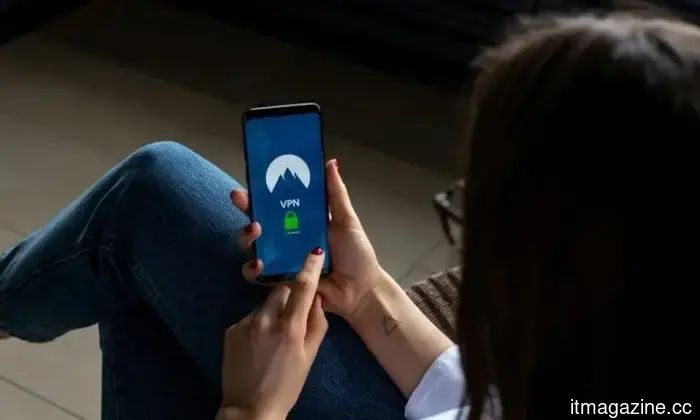
A newly identified issue in Android 16 is alarming security experts and VPN providers, as it appears a system-level bug could quietly disrupt VPN connections on affected devices. This problem has reportedly been present for months, potentially leaving users unaware and unprotected, believing their internet traffic is secure.
Samsung has devised a new strategy to attract more customers to the Galaxy S26 series in one of its main markets. In a press release issued earlier today, the company announced a new “Galaxy Forever” program in India. The name may be somewhat misleading, but it essentially serves as an ownership or periodic upgrade plan that allows customers to obtain the Galaxy S26 Ultra (starting at $1502) or Galaxy S26 Plus (starting at $1,288) by paying 50% of the device’s price upfront, distributed across 12 interest-free monthly installments. The regular Galaxy S26 is not included in this offer.



Other articles
 Bluesky secures $100 million in Series B funding as a new CEO steps in.
Bluesky announced a $100 million Series B funding round led by Bain Capital Crypto, which was completed last April, and a new CEO has taken over.
Bluesky secures $100 million in Series B funding as a new CEO steps in.
Bluesky announced a $100 million Series B funding round led by Bain Capital Crypto, which was completed last April, and a new CEO has taken over.
 AI is bringing Val Kilmer back to life in the new film “As Deep as the Grave.”
As Deep as the Grave employs AI to bring Val Kilmer back into a role that was originally created for him, with his family's support for the choice, even amidst ongoing discussions about technology in the film industry.
AI is bringing Val Kilmer back to life in the new film “As Deep as the Grave.”
As Deep as the Grave employs AI to bring Val Kilmer back into a role that was originally created for him, with his family's support for the choice, even amidst ongoing discussions about technology in the film industry.
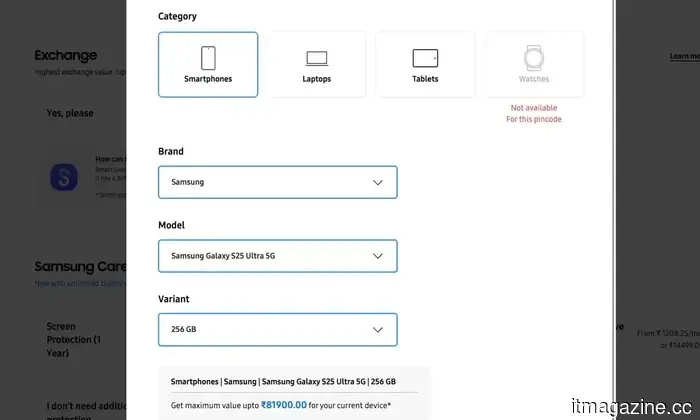 Samsung is offering to rent you a Galaxy S26 Ultra for a year at 50% of the retail price.
Galaxy Forever redefines flagship ownership in India—make a 50% payment now, and after a year, choose whether to retain, return, or upgrade to the next Galaxy.
Samsung is offering to rent you a Galaxy S26 Ultra for a year at 50% of the retail price.
Galaxy Forever redefines flagship ownership in India—make a 50% payment now, and after a year, choose whether to retain, return, or upgrade to the next Galaxy.
 You may need to wait several months for the latest Intel chips to be available in your preferred laptop brands.
Intel's Core Ultra 200HX laptop processors are being released in phases, which means that certain brands will receive them months ahead of others.
You may need to wait several months for the latest Intel chips to be available in your preferred laptop brands.
Intel's Core Ultra 200HX laptop processors are being released in phases, which means that certain brands will receive them months ahead of others.
 Nothing's CEO, Carl Pei, states that AI agents will soon take the place of your applications.
Nothing's CEO, Carl Pei, believes that apps are on the verge of becoming obsolete. He predicts that AI agents will soon understand your intentions and take action on them without the need for tapping, swiping, or switching between apps.
Nothing's CEO, Carl Pei, states that AI agents will soon take the place of your applications.
Nothing's CEO, Carl Pei, believes that apps are on the verge of becoming obsolete. He predicts that AI agents will soon understand your intentions and take action on them without the need for tapping, swiping, or switching between apps.
 The latest update for Microsoft PowerToys introduces three important enhancements for your Windows PC.
The most recent update to Microsoft's PowerToys offers Windows power users three significant enhancements to their workflows, including a revamped keyboard remapping tool and a command launcher that can be pinned to any edge of the screen for constant visibility.
The latest update for Microsoft PowerToys introduces three important enhancements for your Windows PC.
The most recent update to Microsoft's PowerToys offers Windows power users three significant enhancements to their workflows, including a revamped keyboard remapping tool and a command launcher that can be pinned to any edge of the screen for constant visibility.
Apple discreetly addresses the major flaw in Family Sharing a decade after its introduction.
Apple has addressed a billing issue with Family Sharing that has existed since the feature was introduced in 2014.