
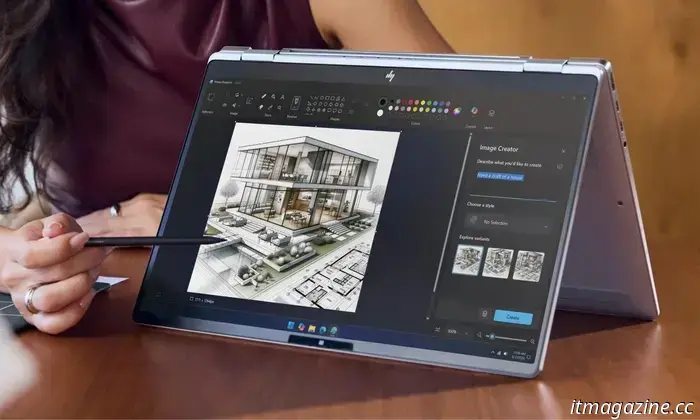
You may soon find lesser-known RAM brands showing up in your PC.
Amid a shortage of DRAM and soaring costs, HP, Dell, Asus, and Acer might turn to Chinese memory manufacturers, a strategic shift that could have significant effects on the PC industry.
In an unusual moment of concern within the PC sector, major companies like HP, Dell, Acer, and Asus are reportedly considering sourcing dynamic random-access memory (DRAM) chips from Chinese suppliers.
This decision comes as a global memory crisis is tightening supply and driving up prices, compelling companies to rethink their immediate procurement strategies for DRAM and NAND flash modules, as reported by Nikkei Asia.
Traditionally, these well-known PC manufacturers have relied on large memory producers such as Micron, Samsung, and SK Hynix, which have effectively managed quality and scalability for OEMs. However, as these memory makers shift their focus to AI data centers and the associated infrastructure for their clients, consumer-grade PC memory is receiving significantly less attention, resulting in reduced inventories and increased costs that risk delaying new product launches.
HP has already initiated the process of “qualifying” memory products from ChangXin Memory Technologies (CXMT), a Chinese supplier, in order to diversify its supply chain. Notably, Dell is also evaluating components from the same sources.
Acer and Asus have instructed their manufacturing partners in China to probe potential memory suppliers for laptops and other systems, suggesting they may consider these suppliers as alternative options.
The primary advantage for American purchasers in turning to Chinese suppliers is increased supply diversity and security, which is crucial for brands with narrow profit margins, particularly in entry-level and mid-range markets. It's not merely about obtaining cheaper memory chips; it's about ensuring timely availability to meet product launch schedules.
For consumers, this could lead to stable product availability, reducing occurrences of “out of stock” notices and providing more controlled pricing. Moreover, a broader adoption of Chinese memory could transform the global semiconductor market, potentially impacting traditional suppliers’ market shares and revenues while allowing for increased production of consumer-grade devices.
Does this imply that the RAM in your next PC or laptop might be from a Chinese manufacturer? That seems unlikely. Manufacturers are more likely to utilize the Chinese supply chain to fulfill global demand, particularly outside the United States.
However, should conventional memory producers fail to improve supplies and the memory crisis escalates, it’s possible that computers sold in the U.S. could incorporate RAM modules from lesser-known brands.
For over five years, Shikhar has been effective in simplifying consumer technology developments...
Nvidia’s gaming GPU strategy has encountered an unexpected hurdle as memory shortages and rising AI needs are reshaping plans for the upcoming RTX series for 2026 and beyond.
Reports indicate that NVIDIA may not release any new gaming graphics chips in 2026, which is an unusual occurrence in an industry known for annual GPU launches. The Information notes that global memory supply constraints, primarily due to heightened demand for AI accelerators and data-center memory, have left Nvidia with insufficient memory, leading to delays in the planned RTX 50 Super refresh and the deprioritization of gaming GPUs for this year.
This scenario could create a rare gap in Nvidia’s product cycle, with even the eagerly awaited next-generation flagship GPUs, the RTX 60 series, now expected to be postponed beyond the anticipated timeline, with production potentially extending to 2028 as memory shortages persist. Reports suggest that Nvidia has reduced output of some current RTX 50 series cards to allocate memory for AI-centric chips.
Canva has now enabled ChatGPT to design visuals that align with your brand’s design and logo, facilitating effortless creation that requires no manual adjustments.
Although AI-generated images can be produced swiftly, they often appear generic and normally need manual refinement before sharing. To address this, Canva has streamlined the process of converting AI-generated concepts into visually appealing materials that truly represent your brand.
Starting today, ChatGPT users can create designs that automatically reflect their company’s colors, fonts, and logos due to enhanced integration with Canva. Now, when you request ChatGPT to generate a visual element, like a presentation or a social media graphic, Canva will ensure it already integrates seamlessly with your brand identity, eliminating the need for post-creation adjustments to colors or fonts.
Currently, fiber internet, while not a new technology, stands as the definitive standard for high-speed home broadband. Unlike cable services that promote asymmetrical speeds and 5G home internet that struggles with congestion and fluctuations, fiber consistently delivers what power users care about: reliable performance, low latency, and genuinely symmetrical upload and download speeds.
What has changed, however, is the pricing of fiber. The best fiber internet deals now focus less on eye-catching introductory prices and more on the overall cost of ownership, including mobile bundles, equipment fees (or waivers of these fees), price guarantees, and cash-back offers. When these elements are correctly aligned, fiber internet can be surprisingly economical.



Other articles
 This new WordPress plugin leverages the Wayback Machine to assist you in finding fewer broken links.
The new Link Fixer plugin for WordPress utilizes the Wayback Machine to avoid dead links, ensuring that older posts and references remain available to readers.
This new WordPress plugin leverages the Wayback Machine to assist you in finding fewer broken links.
The new Link Fixer plugin for WordPress utilizes the Wayback Machine to avoid dead links, ensuring that older posts and references remain available to readers.
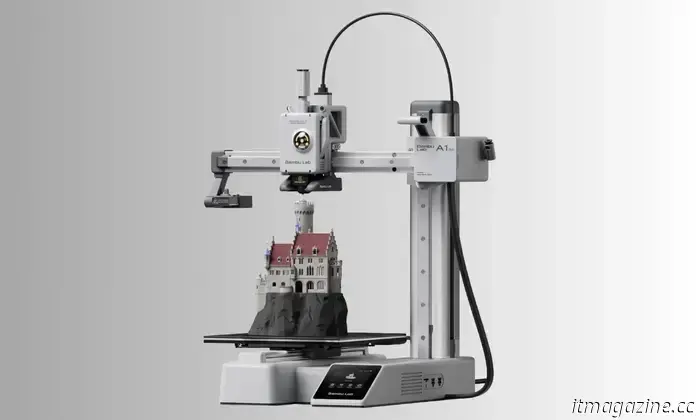 Beginner 3D printers: the era of “it just works” has finally arrived.
You no longer require an engineering degree to create a Baby Yoda. A few years back, 3D printing was primarily a pastime focused on problem-solving: leveling printer beds with paper, clearing clogged nozzles, and adjusting belts. By 2026, the technology has evolved into a more user-friendly "appliance" stage. Current entry-level printers now have self-calibrating capabilities. They employ sensors […]
Beginner 3D printers: the era of “it just works” has finally arrived.
You no longer require an engineering degree to create a Baby Yoda. A few years back, 3D printing was primarily a pastime focused on problem-solving: leveling printer beds with paper, clearing clogged nozzles, and adjusting belts. By 2026, the technology has evolved into a more user-friendly "appliance" stage. Current entry-level printers now have self-calibrating capabilities. They employ sensors […]
 Hyundai does not have plans for a Kona EV in 2026, but it is not being permanently discontinued.
In light of sluggish electric vehicle sales and changing market conditions, Hyundai has halted production of the Kona Electric for 2026, focusing on existing inventory while preparing an updated 2027 model to rekindle interest.
Hyundai does not have plans for a Kona EV in 2026, but it is not being permanently discontinued.
In light of sluggish electric vehicle sales and changing market conditions, Hyundai has halted production of the Kona Electric for 2026, focusing on existing inventory while preparing an updated 2027 model to rekindle interest.
 The Samsung Galaxy S26 may ultimately forego a much-needed charging feature.
Leaks indicate that Samsung's Galaxy S26 Ultra does not feature built-in Qi2 magnets, implying that customers will have to use magnetic cases, while Apple and Google are advancing native magnetic charging.
The Samsung Galaxy S26 may ultimately forego a much-needed charging feature.
Leaks indicate that Samsung's Galaxy S26 Ultra does not feature built-in Qi2 magnets, implying that customers will have to use magnetic cases, while Apple and Google are advancing native magnetic charging.
 Top fiber internet offers available at the moment
Although fiber internet is not entirely new, it still stands out as the standard for high-speed home broadband. Cable companies rely on asymmetrical speeds, and 5G home internet struggles with congestion and fluctuations. In contrast, fiber offers what advanced users prioritize: reliable performance, low latency, and genuinely symmetrical upload and download speeds. What has altered [...]
Top fiber internet offers available at the moment
Although fiber internet is not entirely new, it still stands out as the standard for high-speed home broadband. Cable companies rely on asymmetrical speeds, and 5G home internet struggles with congestion and fluctuations. In contrast, fiber offers what advanced users prioritize: reliable performance, low latency, and genuinely symmetrical upload and download speeds. What has altered [...]
-a-standout-value.jpg) This temporary price reduction makes the Nothing Ear (a) an exceptional deal.
The top earbud offers aren't simply affordable; they're astonishingly well-equipped for their price. That's the essence of this deal. The Nothing Ear (a) is now priced at $58.99, reduced from $109.00, which gives a 46% discount, and it's labeled as a limited-time offer. This is perfect for anyone seeking modern features such as active noise cancellation, extended battery life, and the ability to […]
This temporary price reduction makes the Nothing Ear (a) an exceptional deal.
The top earbud offers aren't simply affordable; they're astonishingly well-equipped for their price. That's the essence of this deal. The Nothing Ear (a) is now priced at $58.99, reduced from $109.00, which gives a 46% discount, and it's labeled as a limited-time offer. This is perfect for anyone seeking modern features such as active noise cancellation, extended battery life, and the ability to […]
You may soon find lesser-known RAM brands showing up in your PC.
Leading PC manufacturers are evaluating memory products from Chinese chipmakers such as CXMT due to global shortages and increasing prices, putting pressure on traditional suppliers and impacting laptops and desktops.