

Canva now allows ChatGPT to generate designs that align with your brand's design and logo.
Now you can create designs that align with your style without needing manual adjustments.
AI-generated visuals can be created swiftly, but they often appear generic and typically require manual editing before being shared. This is why Canva is streamlining the process for users to transform AI-generated concepts into visuals that genuinely represent their brand.
Starting today, users of ChatGPT can create designs that automatically incorporate their company's colors, fonts, and logos, thanks to a more integrated experience with Canva. When you request ChatGPT to generate something visual, such as a pitch deck or a social media post, Canva ensures it aligns with your brand identity. This means there's no need to modify colors, adjust fonts, or add logos later on.
This launch follows a similar feature introduced last week within Anthropic’s Claude, which has also enhanced AI chat capabilities by adding interactive app support.
How Canva converts AI concepts into brand-consistent visuals
OpenAI
Central to this update is the Canva Brand Kit. The Brand Kit allows you or your team to save your official brand elements, such as logos, fonts, and color schemes. Once configured, ChatGPT can produce designs that adhere to these specifications. Even if you're not familiar with design guidelines, the results will still be accurate.
Canva is also introducing additional tools like the Guided Presentation Builder, which assists in focusing on your message before transforming that content into refined, branded presentation slides. Another feature is Live Design Preview, enabling you to view and modify Canva designs within ChatGPT directly, eliminating the need to switch back and forth between applications.
Canva
All these new capabilities are powered by Canva AI and have been utilized to create over 12 million designs across ChatGPT, Claude, and Microsoft Copilot. The Canva AI connector is now available to ChatGPT users through Canva’s AI hub.
For everyday users, the main takeaway is straightforward: you can now transform an idea entered into ChatGPT into a ready-to-use design for your brand without being a designer.
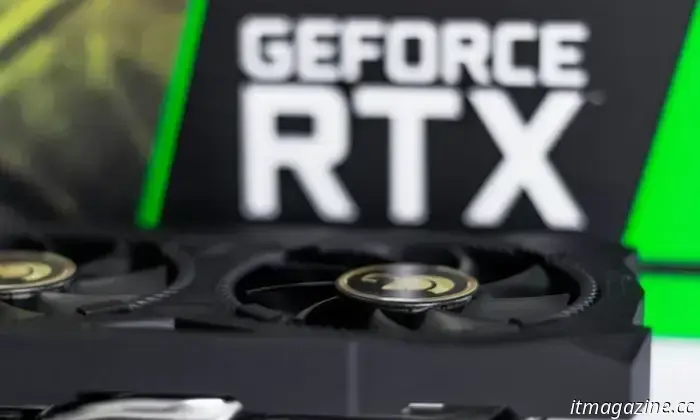
Nvidia’s gaming GPU roadmap has encountered an unusual hurdle. Memory shortages and surging AI demand are reshuffling RTX plans for 2026 and beyond.
According to reports, NVIDIA is expected to forgo the release of new gaming graphics chips in 2026, which is an unusual and surprising deviation in an industry where new GPUs are typically launched each year. As The Information reports, constraints in the global memory market—largely caused by surging demand for AI accelerators and data-center memory—have left Nvidia with insufficient memory resources. This has compelled the company to postpone its anticipated RTX 50 Super refresh and to deprioritize gaming GPUs for this year.
This situation may create an atypical void in Nvidia’s product cycle. Even the upcoming generation of flagship GPUs, the much-expected RTX 60 series, is now anticipated to be delayed beyond gamers' expectations, with production possibly extending into 2028 due to ongoing memory shortages. Reports suggest that Nvidia has even reduced production of certain existing RTX 50 series cards in order to reallocate memory for AI-centric chips.
You may soon notice lesser-known RAM brands emerging in your PC.
Amid DRAM shortages and rising costs, HP, Dell, Asus, and Acer are contemplating sourcing memory chips from Chinese manufacturers, a strategic shift that could impact the entire PC ecosystem.
In a rare instance of concern within the PC industry, well-known manufacturers such as HP, Dell, Acer, and Asus are reportedly considering procuring dynamic random-access memory (DRAM) chips from Chinese suppliers. This decision comes as a global memory crisis is constricting supply, causing prices to skyrocket, and pushing companies to reconsider their immediate strategies for acquiring DRAM and NAND flash modules (as per Nikkei Asia).
Best fiber internet deals available now.
While fiber internet is not a new concept, it remains the definitive standard for high-speed home broadband. Cable providers often rely on asymmetrical speeds, and 5G home internet still struggles with congestion and inconsistency, while fiber offers what high-demand users truly value: reliable performance, low latency, and genuinely symmetrical upload and download speeds.
What has changed is the pricing of fiber. The best fiber internet deals are now less dependent on flashy introductory offers and more on the overall cost of ownership: including mobile bundles, equipment fees (or lack thereof), price guarantees, and cashback offers. Get these aspects right, and fiber becomes unexpectedly affordable.





Other articles
 If you purchase AirTag 2, the main safety feature remains relatively simple to circumvent.
AirTag 2 can be quickly modified to function as a quieter tracker, making its most apparent anti-stalking alert simpler to evade than many purchasers might anticipate.
If you purchase AirTag 2, the main safety feature remains relatively simple to circumvent.
AirTag 2 can be quickly modified to function as a quieter tracker, making its most apparent anti-stalking alert simpler to evade than many purchasers might anticipate.
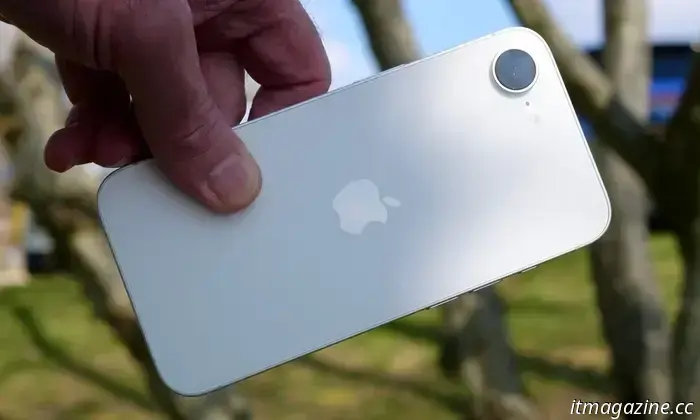 Your wait for the iPhone 17e could be coming to an end soon.
A recent report indicates that Apple could unveil the iPhone 17e in less than two weeks.
Your wait for the iPhone 17e could be coming to an end soon.
A recent report indicates that Apple could unveil the iPhone 17e in less than two weeks.
 Smart glasses designed for all-day comfort receive a $70 price reduction.
Smart glasses are finally progressing beyond the “impressive demonstration, but rarely used” stage. The most effective models integrate seamlessly into everyday life: you wear them, enjoy hands-free audio, capture quick photos or videos without needing to take out your phone, and continue on with your day. The Oakley Meta HSTN smart AI glasses are […]
Smart glasses designed for all-day comfort receive a $70 price reduction.
Smart glasses are finally progressing beyond the “impressive demonstration, but rarely used” stage. The most effective models integrate seamlessly into everyday life: you wear them, enjoy hands-free audio, capture quick photos or videos without needing to take out your phone, and continue on with your day. The Oakley Meta HSTN smart AI glasses are […]
 Register for T-Mobile 5G Home Internet: one month free — plus receive up to $300 in cashback.
T-Mobile has once again set a new standard for home internet: they're offering one full month of T-Mobile 5G Home Internet for new subscribers. But that's not all—there's also the chance to receive up to a $300 Virtual Prepaid Mastercard when you enroll. That's correct! T-Mobile not only takes care of the initial month of home internet [...]
Register for T-Mobile 5G Home Internet: one month free — plus receive up to $300 in cashback.
T-Mobile has once again set a new standard for home internet: they're offering one full month of T-Mobile 5G Home Internet for new subscribers. But that's not all—there's also the chance to receive up to a $300 Virtual Prepaid Mastercard when you enroll. That's correct! T-Mobile not only takes care of the initial month of home internet [...]
 Watch this snowbot complete 130,000 steps for a moment worthy of the Olympics.
Robotics company Unitree has been gaining attention with its humanoid robots, and a recent video showcases its remarkable G1 bipedal robot navigating through extremely cold weather. In the clip featuring the G1 moving through deep snow, Unitree refers to this achievement as “the world’s first autonomous walking challenge for humanoid robots in a -53.32°F (-47.4°C) extreme [...]
Watch this snowbot complete 130,000 steps for a moment worthy of the Olympics.
Robotics company Unitree has been gaining attention with its humanoid robots, and a recent video showcases its remarkable G1 bipedal robot navigating through extremely cold weather. In the clip featuring the G1 moving through deep snow, Unitree refers to this achievement as “the world’s first autonomous walking challenge for humanoid robots in a -53.32°F (-47.4°C) extreme [...]
Canva now allows ChatGPT to generate designs that align with your brand's design and logo.
With the latest Canva update, your ChatGPT designs can automatically align with your brand’s appearance, incorporating the appropriate colors, fonts, and logos without the need for any manual adjustments or redesigns.