

This year, your phone might receive a magnetic lens accessory.
A recent leak suggests that mass production planning is underway, which typically indicates a genuine launch timeframe.
According to leaker Digital Chat Station, a magnetic lens accessory for phones may be closer to release than anticipated, as magnetic lens modules are now in mass production planning, although the timeline remains undetermined.
New information also provides a clearer understanding of what this accessory could be. Leaker Ice Universe shared that the most likely option is Xiaomi’s previously showcased Modular Optical System, even though no specific brand was mentioned in the original claim. This possibility seems credible, albeit still unverified.
If the connection to Xiaomi is accurate, this wouldn't be a low-cost clip-on. The description suggests a magnetically attached, detachable lens system centered around a customized Micro Four Thirds sensor, combined with a multi-element aspherical lens group, claiming an output of 100 megapixels.
The specifications sound ambitious.
The leaked configuration resembles a classic prime camera adapted for smartphones, featuring a 35mm equivalent focal length and an f/1.4 aperture—specifications that usually cater to portrait and street photography, providing greater background separation compared to most primary smartphone cameras.
Although these figures are intriguing, they do not guarantee success on their own. The overall performance will depend on sensor calibration, lens quality, and compatibility with the phone, dictating whether this upgrade is genuine or just an impressive showcase that is difficult to utilize effectively outside ideal conditions.
The connection is crucial.
The most notable aspect is how the module is reportedly set to transmit data. The leak suggests near "laser" transmission speeds of up to 10 Gbps, intended to transfer lossless RAW data to the phone promptly for extensive computational tasks.
Ice Universe also highlights Xiaomi's imaging framework, which includes Xiaomi AISP and an UltraRAW mode, touted for delivering "super digital negatives" with a claimed dynamic range of 16 stops. This is an extraordinary figure for mobile, so it should be regarded as a marketing claim until actual samples and thorough testing methods are available.
What to keep an eye on next.
If this is set to reach consumers, the next reliable indicators will include certifications, supply chain references that mention a brand, or official previews showing the module attached to a specific phone. The post also indicates that there will be no complex cables or pairing required, and no additional battery to carry, so evidence of that simplicity should be present in real-world demonstrations.
If you are planning to purchase a phone soon, don’t base your decision on an accessory that may be released later. However, if you’re frustrated with inconvenient clip-ons and prefer a more camera-like 35mm appearance, this magnetic phone lens speculation is worth monitoring until Xiaomi or another brand announces a timeline. In the meantime, consider the best camera phones available for purchase now.
Paulo Vargas is an English major turned reporter turned technical writer, with a career that has always circled back to...
This app encourages interactive media engagement instead of viral videos.
New York-based startup Atma Sciences is reimagining doomscrolling with an app called Gizmo, which replaces viral videos with a TikTok-style feed of interactive, vibe-coded mini apps. Rather than passively watching short clips, Gizmo enables users to scroll through engaging AI-generated experiences they can actively participate in.
Each swipe immerses users in various interactive activities, from simple games and quizzes to reactive memes and visual experiments. As reported by TechCrunch, these mini apps are generated using natural language prompts, with Gizmo’s embedded AI managing the underlying code and design, allowing anyone to create and publish interactive content without needing technical expertise.
Samsung Galaxy S21 support is decreasing; here’s what that means for your security updates.
Samsung has updated its security update pages, indicating that the Galaxy S21, S21 Plus, and S21 Ultra are no longer on the monthly or quarterly update track, signaling a lack of coverage in the standard patch cycle.
While nothing changes instantly, you should stop expecting regular updates, especially if you use banking apps, store two-factor authentication codes, or log into work accounts on your phone.
Samsung Galaxy S26 may feature an incredibly fast AI image tool that operates offline.
Samsung’s upcoming Galaxy S phone may include a speedy new AI feature. Leaker Ice Universe reports that the Galaxy S26 will introduce EdgeFusion, an on-device text-to-image tool that can produce results in under a second, even without an internet connection.
If implemented this way, offline AI image generation for the Galaxy S26 becomes significantly more functional. You can type a prompt, and the phone generates an image locally, eliminating the need to rely on a server or a strong signal. This marks a shift from a novelty to a potentially practical tool.



Other articles
 Apple TV has an exciting lineup of new TV shows and movies for 2026; here's what to expect.
Apple TV has announced its lineup for 2026, showcasing a consistent blend of new series, returning favorites, and major original films that will be released throughout the year, including thrillers, comedies, and family-oriented stories.
Your streaming costs are continuously increasing, leading to a resurgence of unauthorized streaming devices.
Unlicensed streaming devices such as SuperBox and vSeeBox are becoming more popular as streaming services become more expensive and divided. They offer cable-like live TV in exchange for a single payment, but this convenience carries potential legal and security concerns.
Why NVIDIA RTX PCs provide the optimal solution for running AI locally.
NVIDIA's RTX AI PCs bring data center-level AI capabilities to desktop environments, enabling creators and developers to execute sophisticated models locally, with increased speed and enhanced control.
Apple TV has an exciting lineup of new TV shows and movies for 2026; here's what to expect.
Apple TV has announced its lineup for 2026, showcasing a consistent blend of new series, returning favorites, and major original films that will be released throughout the year, including thrillers, comedies, and family-oriented stories.
Your streaming costs are continuously increasing, leading to a resurgence of unauthorized streaming devices.
Unlicensed streaming devices such as SuperBox and vSeeBox are becoming more popular as streaming services become more expensive and divided. They offer cable-like live TV in exchange for a single payment, but this convenience carries potential legal and security concerns.
Why NVIDIA RTX PCs provide the optimal solution for running AI locally.
NVIDIA's RTX AI PCs bring data center-level AI capabilities to desktop environments, enabling creators and developers to execute sophisticated models locally, with increased speed and enhanced control.
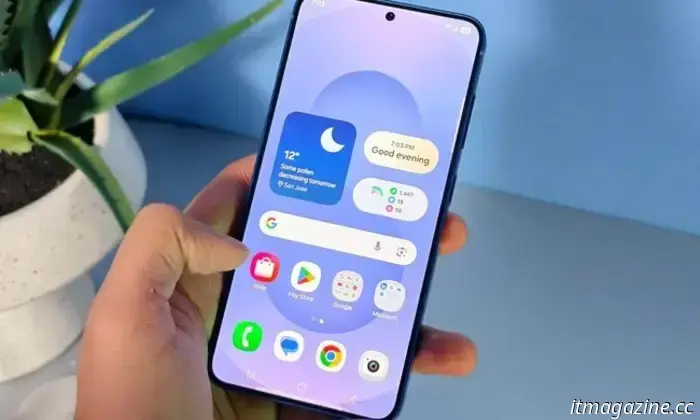
 The Samsung Galaxy S26 could provide an incredibly rapid AI image feature that operates without an internet connection.
There are rumors that the Galaxy S26 will include EdgeFusion, an offline text-to-image tool designed for quick results in under a second. If this feature is genuine, factors such as battery life, heat generation, and integration will determine its usability.
The Samsung Galaxy S26 could provide an incredibly rapid AI image feature that operates without an internet connection.
There are rumors that the Galaxy S26 will include EdgeFusion, an offline text-to-image tool designed for quick results in under a second. If this feature is genuine, factors such as battery life, heat generation, and integration will determine its usability.
 Spotify's latest Page Match feature can synchronize your audiobooks with print books.
With Page Match, Spotify addresses a common issue for readers, allowing you to flick through a page and quickly access the corresponding moment in the audiobook, facilitating a seamless combination of reading and listening during the day.
Spotify's latest Page Match feature can synchronize your audiobooks with print books.
With Page Match, Spotify addresses a common issue for readers, allowing you to flick through a page and quickly access the corresponding moment in the audiobook, facilitating a seamless combination of reading and listening during the day.
 Why Winter Causes Little Noses to Be Congested—and How to Assist Them in Breathing More Comfortably
Winter poses challenges for a baby's respiratory well-being. Parents often increase the heating to maintain warmth in the nursery and throughout the house, but this continuous heating removes moisture from the air. The outcome? A dry atmosphere that transforms slight mucus into a persistent nasal obstruction that affects everyone.
Why Winter Causes Little Noses to Be Congested—and How to Assist Them in Breathing More Comfortably
Winter poses challenges for a baby's respiratory well-being. Parents often increase the heating to maintain warmth in the nursery and throughout the house, but this continuous heating removes moisture from the air. The outcome? A dry atmosphere that transforms slight mucus into a persistent nasal obstruction that affects everyone.
This year, your phone might receive a magnetic lens accessory.
A leak indicates that magnetic lens modules are set to begin mass production, and there are additional details suggesting a connection to Xiaomi’s modular optics concept. The reported Micro Four Thirds sensor and 10 Gbps link appear significant, but essential information remains to be determined.