
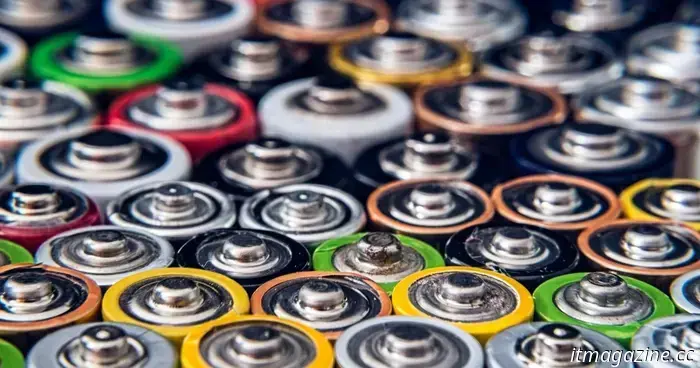
Chinese scientists have developed a high-voltage sodium-sulfur battery that may compete with lithium batteries.
A team of researchers in China has recently unveiled a novel sodium-sulfur battery design that could significantly alter energy storage calculations. By harnessing the very chemistry that has traditionally posed challenges with sulfur, they have developed a cell that is remarkably inexpensive to produce yet delivers substantial energy output.
This design, currently undergoing lab testing, incorporates low-cost materials: sulfur, sodium, aluminum, and a chlorine-based electrolyte. In initial tests, the battery achieved energy densities exceeding 2,000 watt-hours per kilogram— a figure that far surpasses current sodium-ion batteries and even competes with high-end lithium cells.
Sulfur has long been considered the “white whale” of battery technology due to its theoretical potential to store considerable amounts of energy.
The challenge has been that in conventional lithium-sulfur batteries, sulfur often generates troublesome chemical byproducts that hinder performance and diminish the battery’s lifespan. This innovative approach alters the usual dynamics. Instead of merely accepting electrons, the researchers have devised a method where sulfur actively donates them.
Here's how it functions: the battery features a pure sulfur cathode paired with a straightforward piece of aluminum foil as the anode. The breakthrough lies in the electrolyte, a mixture of aluminum chloride, sodium salts, and chlorine. Upon discharging, sulfur atoms at the cathode release electrons and react with chlorine to produce sulfur chlorides. Simultaneously, sodium ions capture these electrons and coat themselves onto the aluminum foil.
This specific chemical interaction circumvents the degradation issues typically associated with sulfur batteries. A porous carbon layer contains the reactive components, and a glass fiber separator prevents short-circuiting. Although the reaction is intricate, the team demonstrated that it operates smoothly and reversibly.
The durability metrics are noteworthy.
The test cells endured 1,400 charge-discharge cycles before experiencing significant capacity loss. Even more astonishing is the shelf life: after remaining idle for over a year, the battery still retained 95 percent of its charge. This is crucial for long-term storage applications where batteries may remain unused for extended periods.
Yet, the most disruptive aspect is the cost. The researchers estimate that this battery could be priced at around $5 per kilowatt-hour based on raw material costs. For context, this is less than a tenth of the price of many existing sodium batteries and significantly cheaper than lithium-ion options. If mass production is achievable, it could lead to remarkably low costs for storing renewable energy on the grid.
Nonetheless, there is a caveat. The chlorine-rich electrolyte poses safety challenges due to its corrosiveness. Additionally, these figures are derived from lab tests involving the weight of active materials and not a fully packaged commercial battery. Transitioning from lab conditions to fabrication will represent a substantial engineering challenge.
Nevertheless, this research serves as a significant wake-up call, demonstrating that when conventional materials like lithium become too costly or scarce, innovative approaches using “unconventional” chemistry can unlock opportunities that were previously unimagined.

Other articles
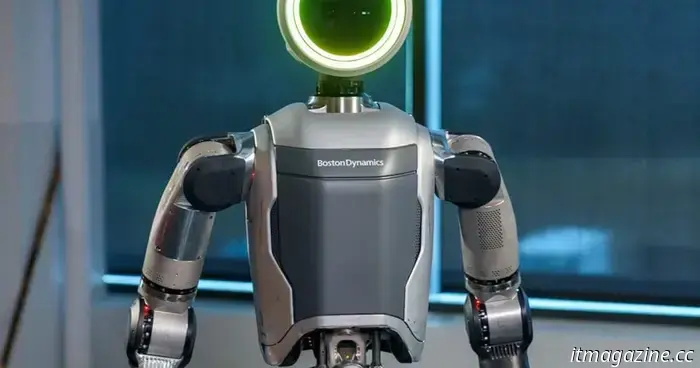 The Atlas humanoid robot tried to perform a backflip. Here’s what transpired.
During the recent CES 2026 technology exhibition in Las Vegas, Boston Dynamics unveiled the newest version of its sophisticated Atlas humanoid robot, a project it has been developing for over ten years. The robot walked onto the stage with such a smooth gait that it likely left many in the audience pondering […]
The Atlas humanoid robot tried to perform a backflip. Here’s what transpired.
During the recent CES 2026 technology exhibition in Las Vegas, Boston Dynamics unveiled the newest version of its sophisticated Atlas humanoid robot, a project it has been developing for over ten years. The robot walked onto the stage with such a smooth gait that it likely left many in the audience pondering […]
 Data from 17.5 million Instagram users has reemerged online following an incident in 2024.
Previously collected Instagram user data has reemerged, facilitating credible phishing and account takeover efforts, highlighting the enduring dangers of exposed personal information.
Data from 17.5 million Instagram users has reemerged online following an incident in 2024.
Previously collected Instagram user data has reemerged, facilitating credible phishing and account takeover efforts, highlighting the enduring dangers of exposed personal information.
 What we discovered about Dolby Vision 2 at CES 2026.
Dolby Vision 2 provides a considerable improvement in picture quality, offering more realistic colors, enhanced motion handling, and visuals as intended by creators across a range of televisions, from high-end models to unexpectedly budget-friendly options.
What we discovered about Dolby Vision 2 at CES 2026.
Dolby Vision 2 provides a considerable improvement in picture quality, offering more realistic colors, enhanced motion handling, and visuals as intended by creators across a range of televisions, from high-end models to unexpectedly budget-friendly options.
Chinese scientists have developed a high-voltage sodium-sulfur battery that may compete with lithium batteries.
A group of researchers in China has recently unveiled a new design for sodium-sulfur batteries that could significantly alter the calculations surrounding energy storage. By embracing the unique chemistry that has traditionally posed challenges for engineers, they have successfully created a cell that is remarkably inexpensive to produce […]