

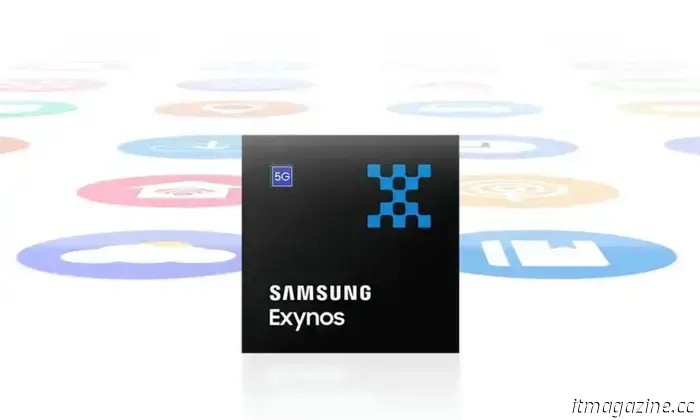
Samsung's Galaxy S28 series might be the first to include a proprietary GPU.
Samsung is reportedly set to introduce its custom GPU alongside the Exynos 2800.
Samsung is heavily investing in its proprietary Exynos SoCs, with reports indicating that the upcoming Galaxy S26 series will utilize the recently launched Exynos 2600 chipset. This chip, manufactured using a 2nm process, promises significant improvements in performance and efficiency, thanks to its redesigned 10-core CPU, new Xclipse 960 GPU, and enhanced built-in NPU. However, Samsung seems to have even more substantial upgrades in store for future Exynos SoCs.
A recent report from Hankyung (via Android Authority) indicates that Samsung has created its own GPU architecture and may unveil it with the Exynos 2800 in 2027. This means that the Galaxy S28 series could be the first to incorporate a custom Samsung GPU.
In recent years, Samsung has depended on AMD's architecture for the GPUs in its latest flagship and mid-range Exynos chips. However, the report indicates that the company is not fully satisfied with simply licensing AMD’s designs.
Samsung reportedly feels that a standard GPU design cannot adequately fulfill its ambitions for enhanced on-device AI performance and stronger software integration. By creating its own GPU architecture, the company could gain greater control over aspects such as AI tasks and overall efficiency, similar to the vertical optimization that Apple has achieved with its own silicon.
Samsung's custom GPU aspirations may go beyond smartphones.
Interestingly, the report suggests that Samsung does not intend to restrict its custom GPU technology to smartphones alone. The company may eventually expand its use to other devices, including smart glasses, infotainment systems for autonomous vehicles, and potentially even humanoid robots.
Samsung has not yet confirmed these intentions, and the proposed timeline may shift, especially considering the challenges of developing proprietary graphics hardware. However, if these plans come to fruition, Samsung's transition to a fully custom GPU could represent a significant advancement for Exynos chips and herald a new generation of Galaxy devices with improved graphical performance and enhanced power efficiency.
Pranob is an experienced tech journalist with over eight years of experience covering consumer technology. His work has been…
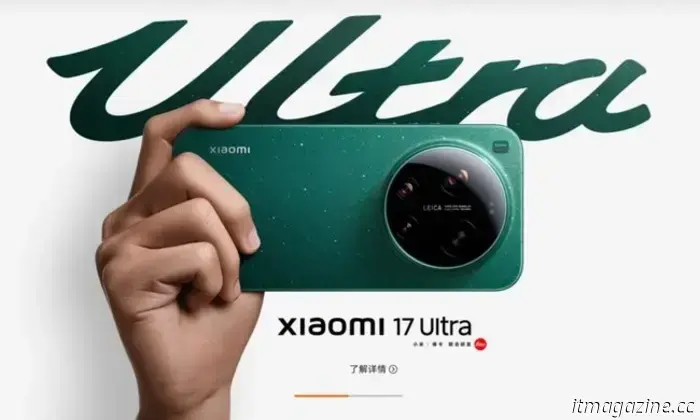
Xiaomi’s S25 Ultra competitor features a DSLR-like physical zoom ring paired with a 200MP zoom camera.
A 200MP periscope lens, continuous optical zoom, and a tactile zoom ring make Xiaomi’s latest Ultra flagship one of the most ambitious camera phones of the year.
Following months of speculation and anticipation, Chinese smartphone maker Xiaomi has unveiled its competitor to the iPhone 17 Pro Max and Galaxy S25 Ultra: the Xiaomi 17 Ultra Leica Edition (alongside the standard Ultra version). Right from the start, it stands out as one of the best camera-focused smartphones released this year, featuring a circular rear camera configuration with a physical zoom ring akin to DSLR cameras.
Xiaomi appears to be facing a memory crisis, which could affect Samsung and Apple in 2026.
Xiaomi’s latest Ultra flagship serves as a clear warning: increasing memory costs are prompting brands to reconsider their pricing and configurations.
Just a few days ago, I reported on how smartphone prices could rise across various segments, and now we are witnessing this theory come to fruition with the Xiaomi 17 Ultra. The base model of this device is priced higher than its predecessor, and neither Samsung nor Apple appears to be immune to this trend.
To put things into perspective, last year, Xiaomi launched the Xiaomi 15 Ultra at CNY 6,499 for the entry-level version with 12GB of RAM and 256GB of storage. Meanwhile, the variant with 16GB of RAM and 512GB of storage retailed for CNY 6,999.
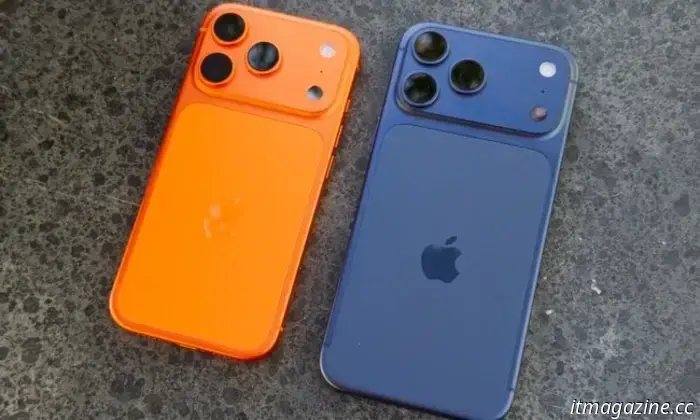
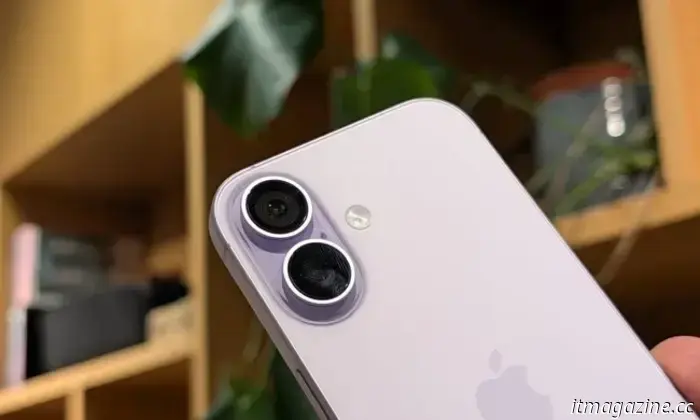
8 tips and tricks for your new iPhone: from setup to storage, and more.
Here are some useful suggestions to get you started with iOS.
So, you received an iPhone for Christmas? Welcome! After spending a decade switching between Android devices, I returned to iOS with the iPhone 14 Pro in 2022, following an incident where my Samsung Galaxy S10e accidentally ended up in a pool while on holiday. Since then, I haven't looked back—aside from becoming more careful about checking my swimming shorts' pockets.
I have gathered some helpful iPhone insights along the way. Here are a few pointers to get you started.

Other articles
 Google's integrated Gemini is attracting users, and your workflow is the reason behind it.
Data from Similarweb indicates that Gemini's share of generative AI web traffic increased from 5.4% to 18.2% over the course of a year, while ChatGPT dropped to 68.0%.
Google's integrated Gemini is attracting users, and your workflow is the reason behind it.
Data from Similarweb indicates that Gemini's share of generative AI web traffic increased from 5.4% to 18.2% over the course of a year, while ChatGPT dropped to 68.0%.
 A recent report discusses the potential for sponsored placements in ChatGPT responses, while OpenAI emphasizes the importance of trust and product quality.
OpenAI continues to investigate the idea of “ChatGPT ads,” despite earlier indications that it was reconsidering this approach in order to enhance response quality. According to The Information, the company is thinking about introducing sponsored content that could be prioritized for inclusion in ChatGPT answers.
This is significant for a straightforward reason: if paid placements appear alongside advice, it may influence your clicks and purchases. However, this does not guarantee that ads will definitely be implemented. Companies are perpetually testing features, and this is more about concepts and prototypes than an actual rollout.
In a statement to The Information, OpenAI acknowledged this direction, stating that it is “exploring what ads in our product could look like,” while reiterating its commitment to maintaining user trust.
Prototypes indicate ad placement
The report suggests one concept where the model would prioritize sponsored content to ensure it shows up in responses. Another design proposed would feature sponsored information displayed in a sidebar next to the main ChatGPT response area.
Sidebar placement is easier to interpret quickly since it resembles traditional advertising space. In contrast, incorporating sponsored suggestions directly into an answer is more complex, as the user interface may create the impression of a unified recommendation.
Shifts in the timeline
This situation seems to fluctuate between "not at this moment" and "still being considered." After ad-related terms appeared in the Android beta, a subsequent report indicated that OpenAI had stalled ad development as leadership concentrated on quality, influenced by ongoing advancements with Gemini.
The Information now reports new advertising concepts again, implying that the notion remains alive, albeit temporarily deprioritized.
What to look for next
If “ChatGPT ads” progress beyond the prototype stage, the first indication will be disclosure: clear sponsorship labels, uniform placement across platforms, and settings that clarify personalization. The second indication will be the location of paid content, whether it remains in a sidebar or begins to integrate into the main responses.
However, there is currently no set date for implementation. Until OpenAI shares specific product details, consider this as testing and pay attention to its reactions to Google’s Gemini initiative.
---
Paulo Vargas is a reporter and technical writer who previously studied English, with a career that has continually returned to…
---
Maximize your after-Christmas sales shopping with these essential tips
These shopping strategies will aid you during the Christmas sales.
Once the mince pies are stored away and the wrapping paper is being removed, consider the neglected gadgets, clothing, and snacks that went unwrapped this holiday season. The Christmas sales begin right after the main day and offer a chance to snag a variety of items at appealing discounts.
While not as widely anticipated as Black Friday or Prime Day, the post-Christmas sales still present an excellent opportunity to find bargains, whether on a gift you desired but didn’t receive or on leftover stock of popular items from the year. Now is the perfect time to purchase that sought-after phone, discover an affordable GPU to enhance gaming in 2026, or finally get the best TV you’ve been waiting for.
---
I compared the image generation capabilities of ChatGPT with those of Nano Banana, and only one proved to produce usable stock photos.
This involves testing stock image creation with two distinct chatbots.
One of my personal hobbies is querying two different chatbots with the same question to see which one yields the best answer. Much like a professor evaluating students (which I occasionally do as a volunteer), I assess whether the bot creates hallucinations or provides intelligent, coherent responses that are genuinely useful.
“Intelligence” and “coherence” aren’t the descriptors I would typically assign to the images generated by chatbots. Often referred to as AI slop, these bizarre creations — featuring aspects like blurred backgrounds, impeccably styled humans, and sometimes even extra thumbs — abound on social media and even appear as feature images in articles like this one.
---
LG introduces its new UltraGear evo monitors, emphasizing resolution and AI upscaling.
With a focus on AI-driven upscaling and addressing Mini-LED blooming, LG's UltraGear evo monitors suggest that the future of gaming displays is about refinement rather than excess.
LG has launched a new series of UltraGear evo gaming monitors that heavily focus on two main themes: enhanced resolutions and advanced AI upscaling. The lineup includes three models: a 39-inch 5K2K OLED gaming monitor, a 52-inch 5K2K 240Hz gaming monitor, and a 27-inch 5K mini-LED monitor.
To start, the 39-inch GX9 (39GX950B), a curved OLED monitor, delivers "5K-class clarity without necessitating GPU upgrades," indicating the brand's commitment to AI upscaling. With real-time upscaling, AI Scene Optimization, and AI Sound, this monitor not only enhances visuals but also improves audio quality.
A report on Reddit states that the flashlight lens of a Pixel 10 Pro has melted, resulting in a dark, crater-like mark around the LED. While this information is unverified, it is simple to inspect, document, and raise concerns if you notice any similar damage.
A recent report discusses the potential for sponsored placements in ChatGPT responses, while OpenAI emphasizes the importance of trust and product quality.
OpenAI continues to investigate the idea of “ChatGPT ads,” despite earlier indications that it was reconsidering this approach in order to enhance response quality. According to The Information, the company is thinking about introducing sponsored content that could be prioritized for inclusion in ChatGPT answers.
This is significant for a straightforward reason: if paid placements appear alongside advice, it may influence your clicks and purchases. However, this does not guarantee that ads will definitely be implemented. Companies are perpetually testing features, and this is more about concepts and prototypes than an actual rollout.
In a statement to The Information, OpenAI acknowledged this direction, stating that it is “exploring what ads in our product could look like,” while reiterating its commitment to maintaining user trust.
Prototypes indicate ad placement
The report suggests one concept where the model would prioritize sponsored content to ensure it shows up in responses. Another design proposed would feature sponsored information displayed in a sidebar next to the main ChatGPT response area.
Sidebar placement is easier to interpret quickly since it resembles traditional advertising space. In contrast, incorporating sponsored suggestions directly into an answer is more complex, as the user interface may create the impression of a unified recommendation.
Shifts in the timeline
This situation seems to fluctuate between "not at this moment" and "still being considered." After ad-related terms appeared in the Android beta, a subsequent report indicated that OpenAI had stalled ad development as leadership concentrated on quality, influenced by ongoing advancements with Gemini.
The Information now reports new advertising concepts again, implying that the notion remains alive, albeit temporarily deprioritized.
What to look for next
If “ChatGPT ads” progress beyond the prototype stage, the first indication will be disclosure: clear sponsorship labels, uniform placement across platforms, and settings that clarify personalization. The second indication will be the location of paid content, whether it remains in a sidebar or begins to integrate into the main responses.
However, there is currently no set date for implementation. Until OpenAI shares specific product details, consider this as testing and pay attention to its reactions to Google’s Gemini initiative.
---
Paulo Vargas is a reporter and technical writer who previously studied English, with a career that has continually returned to…
---
Maximize your after-Christmas sales shopping with these essential tips
These shopping strategies will aid you during the Christmas sales.
Once the mince pies are stored away and the wrapping paper is being removed, consider the neglected gadgets, clothing, and snacks that went unwrapped this holiday season. The Christmas sales begin right after the main day and offer a chance to snag a variety of items at appealing discounts.
While not as widely anticipated as Black Friday or Prime Day, the post-Christmas sales still present an excellent opportunity to find bargains, whether on a gift you desired but didn’t receive or on leftover stock of popular items from the year. Now is the perfect time to purchase that sought-after phone, discover an affordable GPU to enhance gaming in 2026, or finally get the best TV you’ve been waiting for.
---
I compared the image generation capabilities of ChatGPT with those of Nano Banana, and only one proved to produce usable stock photos.
This involves testing stock image creation with two distinct chatbots.
One of my personal hobbies is querying two different chatbots with the same question to see which one yields the best answer. Much like a professor evaluating students (which I occasionally do as a volunteer), I assess whether the bot creates hallucinations or provides intelligent, coherent responses that are genuinely useful.
“Intelligence” and “coherence” aren’t the descriptors I would typically assign to the images generated by chatbots. Often referred to as AI slop, these bizarre creations — featuring aspects like blurred backgrounds, impeccably styled humans, and sometimes even extra thumbs — abound on social media and even appear as feature images in articles like this one.
---
LG introduces its new UltraGear evo monitors, emphasizing resolution and AI upscaling.
With a focus on AI-driven upscaling and addressing Mini-LED blooming, LG's UltraGear evo monitors suggest that the future of gaming displays is about refinement rather than excess.
LG has launched a new series of UltraGear evo gaming monitors that heavily focus on two main themes: enhanced resolutions and advanced AI upscaling. The lineup includes three models: a 39-inch 5K2K OLED gaming monitor, a 52-inch 5K2K 240Hz gaming monitor, and a 27-inch 5K mini-LED monitor.
To start, the 39-inch GX9 (39GX950B), a curved OLED monitor, delivers "5K-class clarity without necessitating GPU upgrades," indicating the brand's commitment to AI upscaling. With real-time upscaling, AI Scene Optimization, and AI Sound, this monitor not only enhances visuals but also improves audio quality.
A report on Reddit states that the flashlight lens of a Pixel 10 Pro has melted, resulting in a dark, crater-like mark around the LED. While this information is unverified, it is simple to inspect, document, and raise concerns if you notice any similar damage.
 The first gaming monitor in the world featuring a 1080Hz refresh rate has arrived.
The first gaming monitor in the world featuring a 1080Hz refresh rate has arrived.
The first gaming monitor in the world featuring a 1080Hz refresh rate has arrived.
 5 must-see TV shows to check out in January 2026
A Knight of the Seven Kingdoms, Wonder Man, and The Pitt are among the new series that viewers should check out in January 2026.
5 must-see TV shows to check out in January 2026
A Knight of the Seven Kingdoms, Wonder Man, and The Pitt are among the new series that viewers should check out in January 2026.
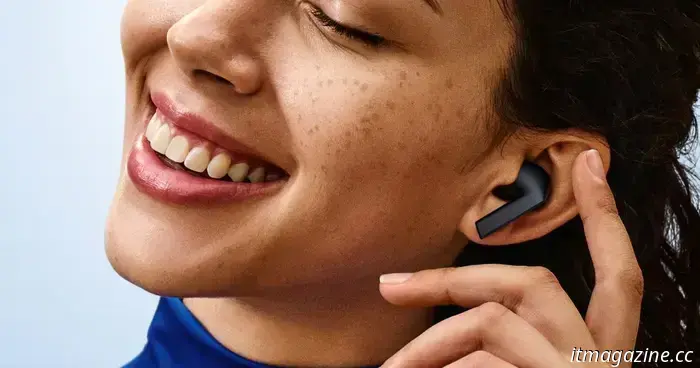 A leak suggests that the battery life of the Galaxy Buds 4 Pro will improve, which may make your wait worthwhile.
Samsung’s Galaxy Buds 4 Pro have recently passed through the FCC, indicating that a launch is imminent. A disclosed battery capacity of 57mAh per earbud, up from the previous 48mAh, suggests that improved battery life might be the key enhancement.
A leak suggests that the battery life of the Galaxy Buds 4 Pro will improve, which may make your wait worthwhile.
Samsung’s Galaxy Buds 4 Pro have recently passed through the FCC, indicating that a launch is imminent. A disclosed battery capacity of 57mAh per earbud, up from the previous 48mAh, suggests that improved battery life might be the key enhancement.
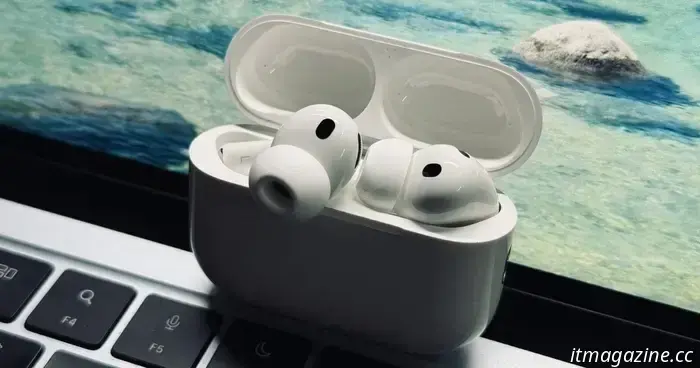 Leaked prototypes show that Apple had previously experimented with pink and yellow AirPods.
Uncommon prototype images show that Apple had previously tested colorful designs for AirPods before ultimately deciding to standardize the white finish that is currently used.
Leaked prototypes show that Apple had previously experimented with pink and yellow AirPods.
Uncommon prototype images show that Apple had previously tested colorful designs for AirPods before ultimately deciding to standardize the white finish that is currently used.
Samsung's Galaxy S28 series might be the first to include a proprietary GPU.
Samsung is said to be working on its own GPU, which may be introduced alongside the Exynos 2800 in the Galaxy S28 series.