
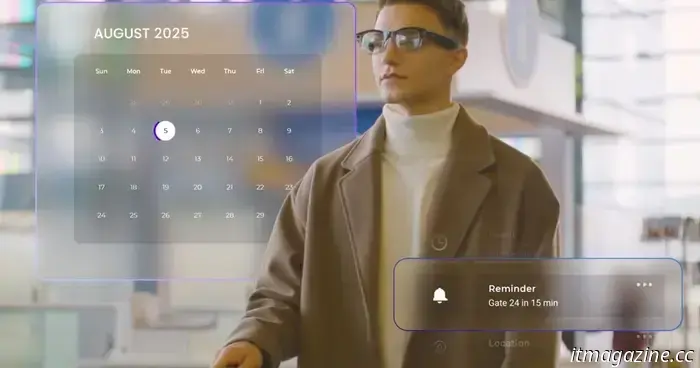
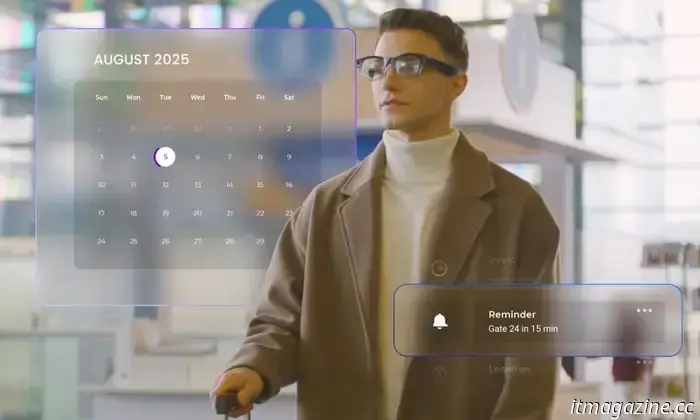
HTC's AI Glasses Aim to Allow You to Choose Your Intelligent Companion.
The open platform approach could disrupt a market that has long been dominated by closed systems and Meta’s eyewear dominance.
HTC is making a significant wager that your next pair of smart glasses should not confine you to a single AI assistant. With the launch of its VIVE Eagle eyewear, the Taiwanese technology firm is endorsing an open AI strategy. According to Reuters, this allows users to select from various generative AI models, including OpenAI’s ChatGPT and Google’s Gemini, rather than being restricted to one ecosystem. This contrasts sharply with the offerings of many competitors currently on the market.
To catch you up, the VIVE Eagle recently became available in Hong Kong for around HK$3,988 (approximately $512), with HTC planning a gradual global release. The next locations slated for launch are Japan and Southeast Asia in early 2026, followed by Europe and the United States later in that year. This Asia-first strategy highlights HTC’s commitment to tailoring design and functionality to regional preferences, which they claim is often neglected by their competitors.
This initiative comes as smart glasses evolve from a niche technology curiosity into a category with genuine growth potential. Shipments have significantly increased over the past year, and while Meta’s ecosystem continues to dominate in terms of units shipped, alternative options are beginning to emerge that differentiate themselves based on user experience and flexibility.
A distinct strategy in a crowded market
Traditionally, most smart glasses manufacturers have closely associated their devices with a single AI service. For instance, Meta’s Ray-Ban glasses rely on Meta AI for handling voice commands, translations, contextual information, and other functions. Charles Huang, HTC’s CEO of global sales, asserts that advocating for a single assistant is illogical given the rapid evolution of different AI models. By supporting multiple platforms, the company aims for users to benefit from whoever advances innovation the quickest. Additionally, HTC is emphasizing privacy, stating that it does not utilize personal data to train these models, which differentiates it from competitors with data policies under scrutiny.
While other companies might create detailed user profiles to customize services, HTC’s method focuses on anonymized requests and local processing for basic tasks, potentially appealing to privacy-conscious users hesitant to share their data with major tech companies. This emphasis on choice and data security comes at a time when the smart glasses category grapples with fundamental issues regarding their practical utility. Even with rising shipment figures, discussions continue about what everyday challenges these devices truly address compared to smartphones or smartwatches.
For potential buyers or observers, the interesting aspect is how this aligns with broader trends in AI. Rather than a single dominating assistant, we are witnessing hardware that accommodates a variety of models, recognizing the fluid nature of the AI landscape. Practically, this means that the glasses you wear in 2026 may function differently from those you purchase next year, giving you more influence over the AI that enhances your experience. The success of HTC’s open strategy will hinge on whether users prefer flexibility over a tightly integrated system. Nonetheless, it signals how companies are adapting to consumer demands and the increasingly competitive AI environment.
Varun is a seasoned technology journalist and editor with over eight years of experience in consumer tech media. His work spans...
Meta’s new mixed reality glasses will not be available until 2027, so for now, you’ll have to keep squinting at life.
For those anticipating Meta’s response to the Apple Vision Pro, there's disappointing news: the company has officially delayed its next-generation mixed reality glasses, code-named Phoenix, moving the launch from late 2026 to the first half of 2027. Internal communications suggest that Phoenix is viewed as Meta's most direct competitor to Apple’s headset yet. However, leadership at Reality Labs appears to have decided that additional time is needed to ensure the product’s quality rather than rushing a flawed version to market.
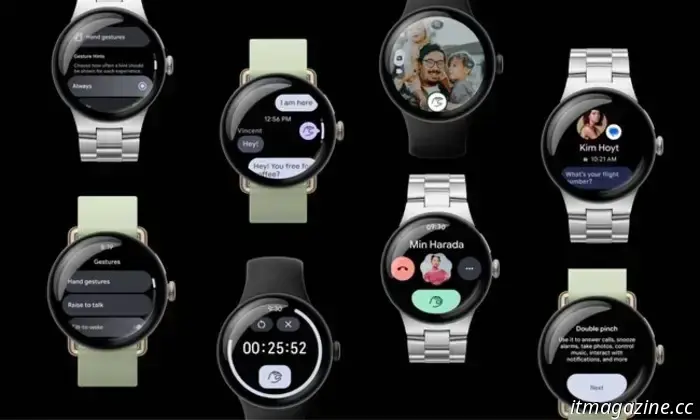
Google has introduced additional gestures for easier one-handed use on the Pixel Watch 4.
With the Pixel Watch 4, Google has introduced a new Raise to Talk gesture that allows users to summon Gemini by simply lifting their wrist. Now, the company is adding two more AI-driven gestures for one-handed usage. These new Double pinch and Wrist turn gestures will be available in the upcoming software update for the Pixel Watch 4, launching in December 2025 with Wear OS 6.1. These gestures will enable users to perform various actions such as scrolling through notifications, dismissing them, or snoozing alarms. Additionally, the update will enhance Smart Replies by utilizing on-device Gemma-based language models to generate responses for Google Messages and more, even without a phone connection.
CES 2026 is fast approaching, and as a seasoned attendee, here’s what you should know.
Are you prepared to start the new year with an influx of new technology? CES 2026 will open its doors on January 6, featuring major players from the consumer tech and automotive sectors showcasing their innovations across various convention halls in Las Vegas. CES (Consumer Electronics Show




Other articles
 Revisit the moment from a decade ago when SpaceX transformed space travel permanently.
Exactly ten years ago, on December 21, SpaceX made history by being the first organization to successfully recover an orbital-class rocket by landing it vertically back on Earth. This achievement came seven years after the concept was proposed by SpaceX founder Elon Musk, and followed four unsuccessful landing attempts, resulting in a Falcon 9 […]
Revisit the moment from a decade ago when SpaceX transformed space travel permanently.
Exactly ten years ago, on December 21, SpaceX made history by being the first organization to successfully recover an orbital-class rocket by landing it vertically back on Earth. This achievement came seven years after the concept was proposed by SpaceX founder Elon Musk, and followed four unsuccessful landing attempts, resulting in a Falcon 9 […]
-reasonable.jpg) This unlocked Pixel 10 Pro Fold offer finally makes the idea of switching to a foldable phone feel (somewhat) justifiable.
If you've been interested in foldable phones but not at the price of "almost two thousand," this price drop makes a difference. Currently, you can get the unlocked Google Pixel 10 Pro Fold with 256GB of storage for $1,399, which is $400 less than its usual price. While it's still a high-end investment, you're now receiving a […]
This unlocked Pixel 10 Pro Fold offer finally makes the idea of switching to a foldable phone feel (somewhat) justifiable.
If you've been interested in foldable phones but not at the price of "almost two thousand," this price drop makes a difference. Currently, you can get the unlocked Google Pixel 10 Pro Fold with 256GB of storage for $1,399, which is $400 less than its usual price. While it's still a high-end investment, you're now receiving a […]
 ChatGPT's recap for the end of the year provides an overview of your usage throughout 2025.
ChatGPT is introducing a year-end summary feature that displays how you interacted with the chatbot in 2025.
ChatGPT's recap for the end of the year provides an overview of your usage throughout 2025.
ChatGPT is introducing a year-end summary feature that displays how you interacted with the chatbot in 2025.
 A highlighted Chrome extension might be duplicating your AI conversations.
A “Featured” browser add-on promoted as a privacy safeguard may have been duplicating AI conversations. Koi Security reports that Urban VPN Proxy started capturing prompts and responses following an update on July 9, 2025.
A highlighted Chrome extension might be duplicating your AI conversations.
A “Featured” browser add-on promoted as a privacy safeguard may have been duplicating AI conversations. Koi Security reports that Urban VPN Proxy started capturing prompts and responses following an update on July 9, 2025.
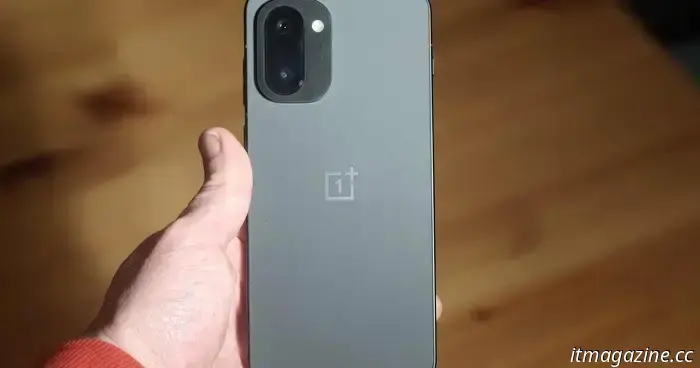 The upcoming OnePlus phone might surpass the total battery capacity of the top devices from Samsung and Apple.
A new OnePlus smartphone is said to come with an impressive 9,000 mAh battery, which is almost equivalent to the total capacity of Samsung and Apple's premium flagship models.
The upcoming OnePlus phone might surpass the total battery capacity of the top devices from Samsung and Apple.
A new OnePlus smartphone is said to come with an impressive 9,000 mAh battery, which is almost equivalent to the total capacity of Samsung and Apple's premium flagship models.
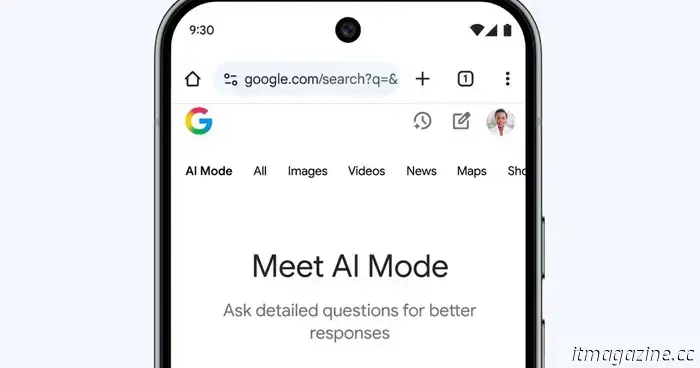 Chrome will soon inform you about what you were previously reading using tab-aware AI.
Chrome's AI Mode is advancing past basic chat features. It will soon have the capability to refer to your recent tabs and respond to inquiries about the content you accessed previously.
Chrome will soon inform you about what you were previously reading using tab-aware AI.
Chrome's AI Mode is advancing past basic chat features. It will soon have the capability to refer to your recent tabs and respond to inquiries about the content you accessed previously.
HTC's AI Glasses Aim to Allow You to Choose Your Intelligent Companion.
HTC is committing to the idea that your next pair of smart glasses shouldn't limit you to just one AI assistant. With the introduction of its VIVE Eagle eyewear, the Taiwanese technology firm is advocating for an open AI approach. According to Reuters, this allows users to select from various generative AI models, including OpenAI's ChatGPT and others.