
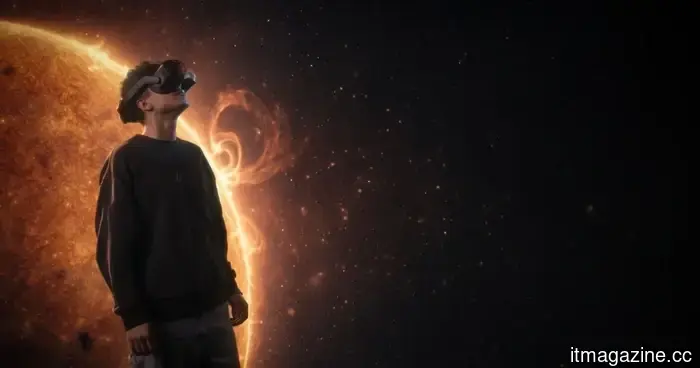
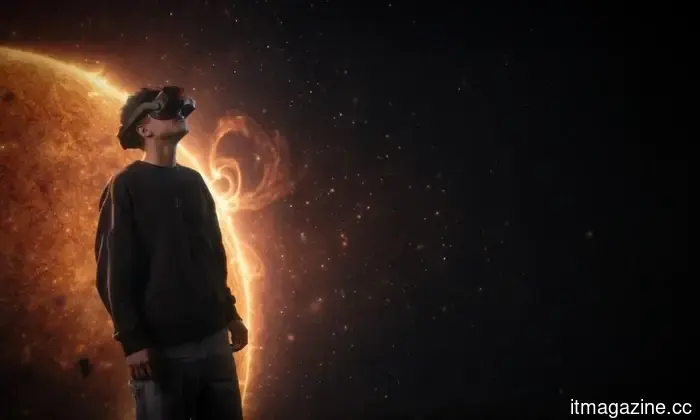
You can now explore space and look into a black hole at this virtual reality exhibit.
Smithsonian Starstruck allows you to float past dying stars and witness the universe's origin point starting at just $18 per person.
Most planetarium experiences require visitors to remain seated and gaze upward. In contrast, the Smithsonian’s new VR exhibit offers a unique opportunity, enabling guests to walk through the vast universe, drifting alongside stars, planets, and a black hole, providing a tangible understanding of its immense scale.
A ticket to the galaxy's edge costs $29.
The Smithsonian Starstruck: An Immersive Experience is a 40-minute virtual reality journey that launched in Washington, D.C. in May, as reported by Ars Technica. Tickets range from $29 to $35 for individual visitors, with group rates available as low as $18 per person, currently discounted by 15%. The exhibit is expected to expand to Denver, Orlando, and San Antonio later this year.
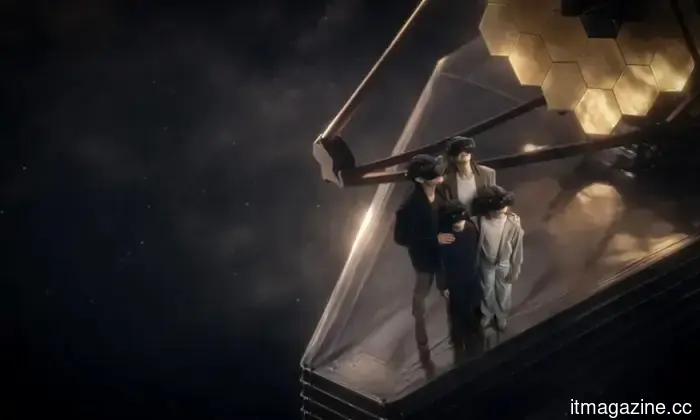
Visitors wear an HTC Vive Focus 3 VR headset and embark on a tour narrated by James Seawood. Notable experiences include a light beam demonstration near the Milky Way's black hole, a simulation of the dying star Betelgeuse going supernova, and a close encounter with the Sun alongside NASA’s Parker Solar Probe. The journey also includes stops at the exoplanet 55 Cancri Ae and the universe's origin point, concluding at the future site of the Giant Magellan Telescope in Chile, depicted as if construction had already been completed.
Manage your expectations for visuals.
VR experiences hinge on their hardware, and Starstruck’s D.C. location currently operates on the Vive Focus 3, released by HTC in 2021. Ars Technica notes that sharpness and clarity diminish, especially during quick head movements. HTC's newer Vive Focus Vision addresses many of these concerns and is expected to be used in Starstruck’s future locations later this year, though the Smithsonian has not confirmed when the D.C. exhibit will receive the upgrade.
Despite the older hardware, Starstruck emphasizes perspective rather than resolution. Observing a star's death or a light beam bending into a black hole is a profoundly different experience when you're immersed in it as opposed to watching it from a dome overhead. Whether you opt for a $29 solo ticket or share the cost with friends for $18 each, it’s a relatively small fee to comprehend our insignificance in the grand cosmic context.
Pranob is an experienced tech journalist with over eight years of experience in consumer technology reporting. His work has focused on...
Scientists caution that Elon Musk’s orbital data centers could interfere with the world’s largest telescopes.
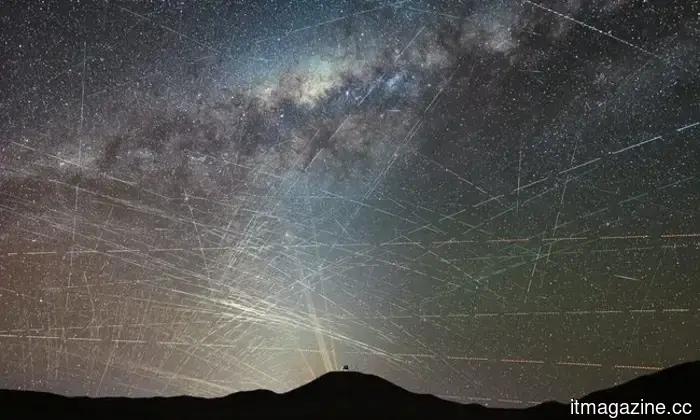
A new study from the European Southern Observatory (ESO) indicates that millions of satellites could render significant portions of the night sky nearly unusable for astronomical purposes. While the push to blanket Earth with satellite internet has improved connectivity for many, the ESO warns that the swift expansion of satellite mega-constellations could severely compromise observations made by some of the most powerful telescopes available.
Astronomers believe that the night sky is approaching its limits.
Amazon’s Starlink competitor has achieved a significant milestone, but don’t expect flawless internet service just yet.
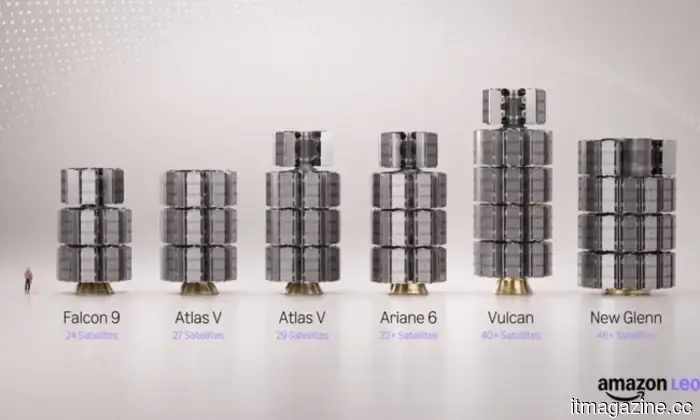
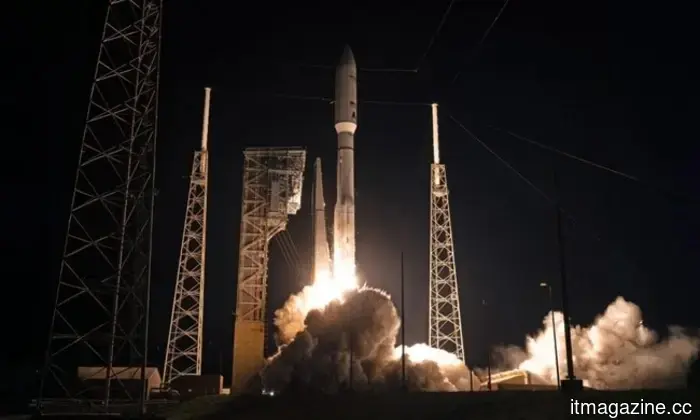
Amazon has taken an important step toward launching its highly anticipated satellite internet service. Following its latest rocket launch, the company now has 396 Project Kuiper satellites in low-Earth orbit, sufficient for initiating continuous service in specific areas. This achievement keeps Amazon on track for its previously stated goal of beginning commercial service by mid-2026.
Amazon's Starlink competitor is poised to launch satellite internet later this year.
After deploying nearly 400 satellites, Amazon has announced that its Leo broadband service will go live later this year. Following its most recent rocket launch, the company’s constellation now includes 394 satellites in orbit, bringing it closer to providing its long-awaited answer to SpaceX's Starlink.
The components of Project Kuiper are finally coming together.

Other articles
 Nintendo ceases the sale of the original Switch in Europe.
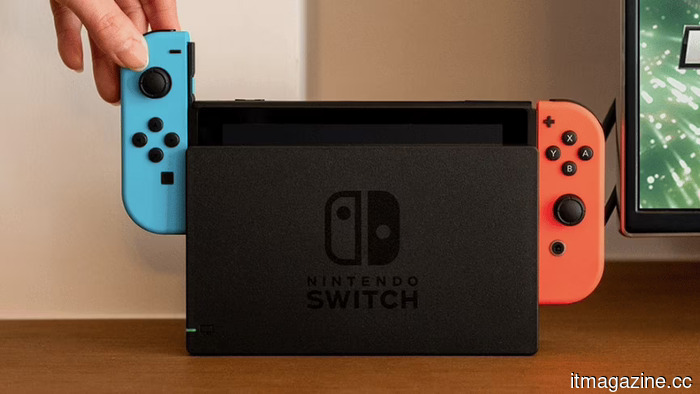
Nintendo will cease sales of the original Switch in Europe starting February 2027 to comply with new EU regulations on replaceable batteries, which will also influence the design of the Switch 2.
Reddit combats AI-generated marketing spam using its own artificial intelligence.
Brands are manipulating ChatGPT and Gemini by creating fraudulent Reddit posts. According to Reddit, its AI now identifies 25,000 spammy posts daily. Welcome to GEO.
Nintendo ceases the sale of the original Switch in Europe.
Nintendo will cease sales of the original Switch in Europe starting February 2027 to comply with new EU regulations on replaceable batteries, which will also influence the design of the Switch 2.
Reddit combats AI-generated marketing spam using its own artificial intelligence.
Brands are manipulating ChatGPT and Gemini by creating fraudulent Reddit posts. According to Reddit, its AI now identifies 25,000 spammy posts daily. Welcome to GEO.
 EU called to take action following the impact of Pegasus on its spyware investigation.
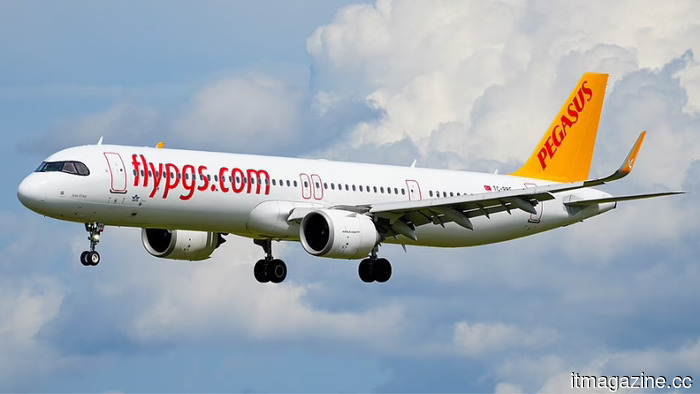
Activists are calling on the European Commission to address Europe's spyware issue following the hacking of a PEGA committee member with Pegasus during their investigation.
EU called to take action following the impact of Pegasus on its spyware investigation.
Activists are calling on the European Commission to address Europe's spyware issue following the hacking of a PEGA committee member with Pegasus during their investigation.
 EU called on to take action following impact of Pegasus on its spyware investigation.
Activists are urging the European Commission to address Europe's spyware issue after a PEGA committee member was targeted with Pegasus while looking into the matter.
EU called on to take action following impact of Pegasus on its spyware investigation.
Activists are urging the European Commission to address Europe's spyware issue after a PEGA committee member was targeted with Pegasus while looking into the matter.
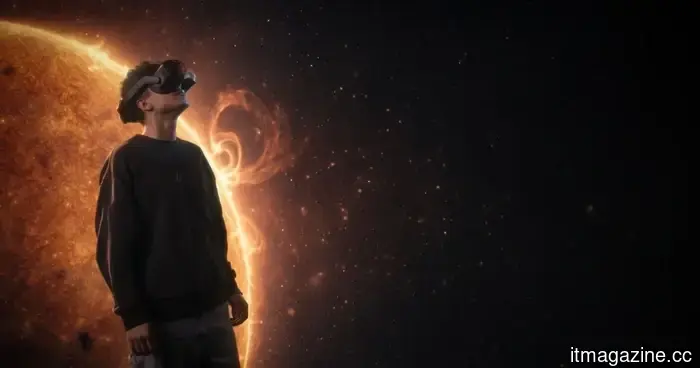 You can now stroll through space and look into a black hole at this virtual reality exhibit.
Smithsonian Starstruck allows visitors to journey through the Big Bang, approach the Sun, and stare into a black hole, all while staying in Washington, D.C.
You can now stroll through space and look into a black hole at this virtual reality exhibit.
Smithsonian Starstruck allows visitors to journey through the Big Bang, approach the Sun, and stare into a black hole, all while staying in Washington, D.C.
 Broadcom expands its partnership with Apple on chip development until 2031 with a new custom-silicon agreement.
Apple and Broadcom have extended their collaboration until 2031, entering into new agreements to create custom chips for various generations of Apple products.
Broadcom expands its partnership with Apple on chip development until 2031 with a new custom-silicon agreement.
Apple and Broadcom have extended their collaboration until 2031, entering into new agreements to create custom chips for various generations of Apple products.
You can now explore space and look into a black hole at this virtual reality exhibit.
Smithsonian Starstruck allows visitors to experience the Big Bang, pass near the Sun, and look into a black hole, all without ever leaving Washington, D.C.