

The UK is reassessing its £330 million agreement with Palantir regarding the NHS.
The British government has officially placed its most controversial health technology contract under scrutiny. It is currently reviewing the NHS's £330 million agreement with Palantir, considering whether to terminate it in 2027.
Technology minister Liz Kendall announced the review this week, stating on Times Radio that “the current health secretary is examining every detail of that contract to ensure we secure the best deal for Britain,” as reported by Reuters. The primary consideration is whether to activate a break clause at the end of the contract's initial term in 2027.
Palantir was awarded the contract in November 2023 by the previous Conservative government to develop the NHS Federated Data Platform, designed to link patient data across NHS England and aid clinical decisions. This deal has faced controversy since its inception, primarily regarding the awarding process, the management of patient data, and the extent to which the nation's health infrastructure is dependent on a single American company.
The review follows a report from the Science, Innovation and Technology Committee that characterized Palantir's increasing involvement in the UK public sector as “an unacceptable point of weakness” and encouraged ministers to consider the break clause. Concerns have been raised about data security and Palantir’s associations with US defence and immigration enforcement, prompting calls to lessen the NHS’s reliance on the firm.
Additionally, there have been reports suggesting that the NHS might allow Palantir personnel and other external staff extensive access to identifiable patient data on part of the platform, which led the National Data Guardian to seek clarification and spurred a patient advocacy campaign titled “Not With My NHS Data.”
The Financial Times also reported that a senior member of a UK health advisory body provided advice to one of Palantir’s partners during the bidding process.
Palantir has strongly defended itself, asserting that its software “can only be used to process data strictly according to the customer's instructions,” claiming that any other use would be “illegal” and “technically impossible due to the granular access controls managed by the NHS.” Its UK leadership has urged ministers not to succumb to ideologically driven campaigners.
At its core, this situation reflects a story of dependence. It is part of a broader European reassessment of reliance on US companies for critical infrastructure, covering areas from cloud computing to AI to health data, which has emerged as a significant political risk rather than merely a technical concern. With the NHS, the data in question is particularly sensitive, the supplier is American, and the political implications are substantial.
However, a review does not equate to a cancellation. The break clause does not come into effect until 2027, and the government has not resolved to utilize it. Additionally, dismantling a platform that is now integral to NHS England would be costly and disruptive, especially considering Palantir’s aspirations in the UK and the significance of contracts like this to its market position.
Kendall’s notion of a “right deal for Britain” carries considerable weight; it indicates a government seeking leverage and political justification as much as an exit strategy. Nonetheless, for the first time, the possibility of terminating the NHS’s most debated software contract is officially in discussion, which reshapes the issue of who controls the country’s health data.
Other articles
 The former Agentforce team has secured $5.1 million for their 'anti-vendor' AI.
Zaro, established by engineers involved in the creation of Salesforce's Agentforce, secured $5.1 million in funding led by Cherry Ventures for an AI platform that allows companies to retain ownership of their context.
The former Agentforce team has secured $5.1 million for their 'anti-vendor' AI.
Zaro, established by engineers involved in the creation of Salesforce's Agentforce, secured $5.1 million in funding led by Cherry Ventures for an AI platform that allows companies to retain ownership of their context.
 Klarna introduces US savings accounts with a 3.28% interest rate through WebBank.
Klarna introduces its high-yield savings account in the US with a 3.28% APY, offered through the FDIC-insured WebBank. This rate is lower than those of Marcus (3.4%) and SoFi (3.8%). Specifics regarding deposits have not been revealed.
Klarna introduces US savings accounts with a 3.28% interest rate through WebBank.
Klarna introduces its high-yield savings account in the US with a 3.28% APY, offered through the FDIC-insured WebBank. This rate is lower than those of Marcus (3.4%) and SoFi (3.8%). Specifics regarding deposits have not been revealed.
 The transition from generative AI to agentic AI in corporate finance.
The finance department at AT&T is utilizing LangGraph-driven agentic workflows to streamline the preparation of journal entries in accordance with SOX regulations. This includes finance-managed playbooks, audit trails at the node level, and clearly defined boundaries for human approval.
The transition from generative AI to agentic AI in corporate finance.
The finance department at AT&T is utilizing LangGraph-driven agentic workflows to streamline the preparation of journal entries in accordance with SOX regulations. This includes finance-managed playbooks, audit trails at the node level, and clearly defined boundaries for human approval.
 Thoma Bravo claims that the 'SaaSpocalypse' has come to an end.
Orlando Bravo of Thoma Bravo states that the 'SaaSpocalypse' has ended and that AI is providing a boost for software. However, the recovery is inconsistent, and the expenses associated with AI agents are increasing.
Thoma Bravo claims that the 'SaaSpocalypse' has come to an end.
Orlando Bravo of Thoma Bravo states that the 'SaaSpocalypse' has ended and that AI is providing a boost for software. However, the recovery is inconsistent, and the expenses associated with AI agents are increasing.
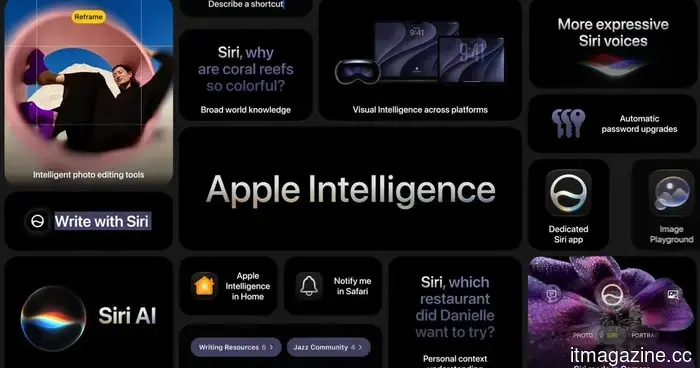 iOS 27 is full of features. Here's a rundown of the minor updates you might have overlooked.
iOS 27 includes numerous prominent features, but the smaller updates to Mail, iCloud Shared Albums, accessibility, Home, Maps, and network switching might be the ones that stand out to users the most.
iOS 27 is full of features. Here's a rundown of the minor updates you might have overlooked.
iOS 27 includes numerous prominent features, but the smaller updates to Mail, iCloud Shared Albums, accessibility, Home, Maps, and network switching might be the ones that stand out to users the most.
The UK is reassessing its £330 million agreement with Palantir regarding the NHS.
The UK government is reevaluating the NHS's £330 million contract with Palantir and might activate a break clause for 2027, following concerns from MPs who deemed dependence on the US company a vulnerability.