
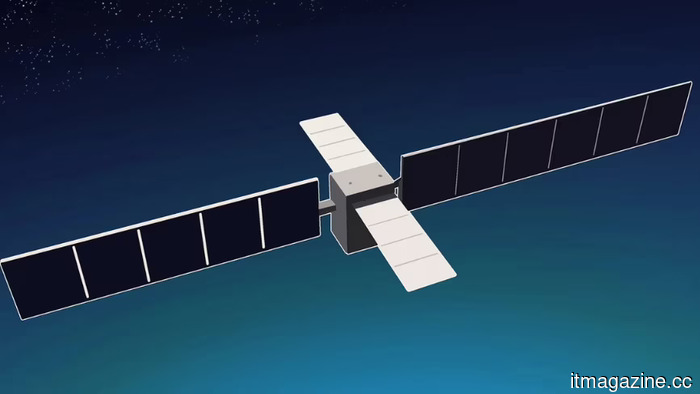
Orbital secures $5 million to develop AI data centers in space.
AI is facing a power shortage and limited space for its infrastructure on Earth. A startup in Los Angeles aims to address both issues by venturing into space. Orbital, a company focused on space infrastructure, is developing AI data centers in low Earth orbit and has successfully raised $5 million in an oversubscribed pre-seed round, led by a16z speedrun along with a number of venture capital investors.
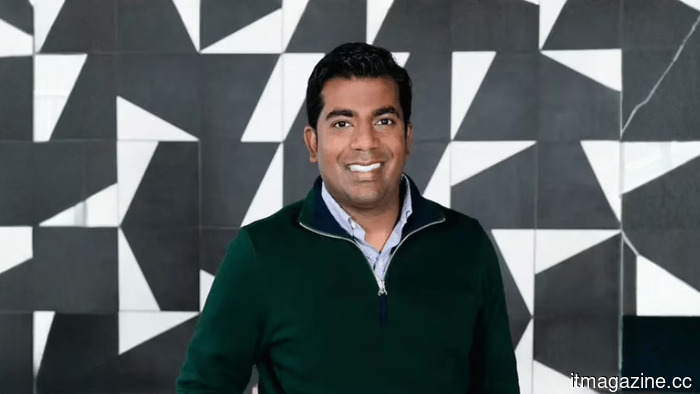
This funding will support its inaugural in-orbit technology demonstration, dubbed Pathfinder, which is set to carry a hosted GPU payload on a SpaceX Falcon 9 rideshare mission in 2027, and also to kickstart the early development of Orbital-1, the company’s first satellite designed specifically for computational tasks. Founder and CEO Euwyn Poon previously co-founded the e-scooter startup Spin.
The proposition begins with a genuine and escalating issue. The International Energy Agency projects that global electricity usage by data centers will more than double, reaching approximately 945 terawatt-hours by 2030—equivalent to the annual consumption of Japan—while on the ground, existing infrastructures face challenges related to strained grids, cooling, land use, and permitting delays, which hinder new constructions.
Orbital proposes to relocate computing to areas where these limitations are alleviated: in space, solar energy is consistently available in the right orbit, and heat can dissipate into the vacuum without requiring water or cooling systems. “The sun is the most plentiful and accessible energy source in the universe, yet we have only just begun to harness it,” Poon stated. “We’re developing AI data centers in orbit, where solar power is uninterrupted, and heat dissipates into space. Improvements in launch infrastructure are making this a near-future reality, not just a concept.”
Orbital's innovative approach is architectural. Instead of creating one gigantic structure in space, it plans to spread compute resources across numerous small, independently deployable satellites, allowing for scalability from one satellite to many. The hardware is designed around Nvidia’s announced Space-1 Vera Rubin-class GPUs, targeting AI inference, which is the fastest-growing segment of computational demand.
Each production satellite is engineered for 100 kilowatts of computing power, with an ambitious goal of deploying over 100,000 satellites providing more than 10 gigawatts, supported by a Los Angeles manufacturing facility referred to as Factory-1.
However, this vision confronts a competitive and skeptical environment. Starcloud has already secured $170 million at a valuation of $1.1 billion and successfully operated a language model in orbit, while SpaceX has filed plans to launch as many as one million data center satellites, and Google is compensating SpaceX for orbital computing services.
In comparison, $5 million appears minimal, and Orbital's initial hardware will not be operational until 2027. The more significant concerns are physical rather than financial. Even SpaceX, in its pre-IPO documentation, cautioned that orbital AI data centers depend on "unproven technologies" and might never achieve commercial viability. Moreover, scientists have highlighted the challenges of thermodynamics: effectively dissipating heat in a vacuum is extremely difficult, requiring roughly 1,200 square meters of radiator—equivalent to about four tennis courts—to manage just one megawatt of waste heat.
Orbital's distributed design seeks to circumvent these thermal and manufacturing challenges. For now, Orbital represents a small investment, a scheduled rideshare opportunity two years away, and an ambitious vision. The realization of orbital data centers as tangible infrastructure versus remaining a concept will ultimately hinge on scientific and economic factors that have yet to be resolved.
Nevertheless, as the demand for power from AI outpaces existing grid capabilities, investors are becoming increasingly interested in backing these ambitious projects, in this case, quite literally looking towards the stars.
Other articles
 Beacon secures $225 million for its 'anti-PE' AI consolidation.
Beacon secured $225 million in a Series C funding round led by General Catalyst to purchase 'Main Street' software companies and enhance them with AI, now acquiring approximately one each week.
Beacon secures $225 million for its 'anti-PE' AI consolidation.
Beacon secured $225 million in a Series C funding round led by General Catalyst to purchase 'Main Street' software companies and enhance them with AI, now acquiring approximately one each week.
 Safari is finally addressing its extensions issue. Unlike Chrome, Apple will allow you to develop your own extensions.
Safari is introducing an AI-driven extension builder that enables users to articulate the browser tool they desire. This could assist Apple in addressing one of Safari's long-standing shortcomings without competing against Chrome's extensive add-on collection.
Safari is finally addressing its extensions issue. Unlike Chrome, Apple will allow you to develop your own extensions.
Safari is introducing an AI-driven extension builder that enables users to articulate the browser tool they desire. This could assist Apple in addressing one of Safari's long-standing shortcomings without competing against Chrome's extensive add-on collection.
 The UK's film organization is preserving internet memes and viral videos. Indeed, "Charlie bit my finger" is included in the collection.
The British Film Institute is archiving 430 viral videos and memes, such as Charlie bit my finger, Badgers, and the livestream featuring Liz Truss and a lettuce.
The UK's film organization is preserving internet memes and viral videos. Indeed, "Charlie bit my finger" is included in the collection.
The British Film Institute is archiving 430 viral videos and memes, such as Charlie bit my finger, Badgers, and the livestream featuring Liz Truss and a lettuce.
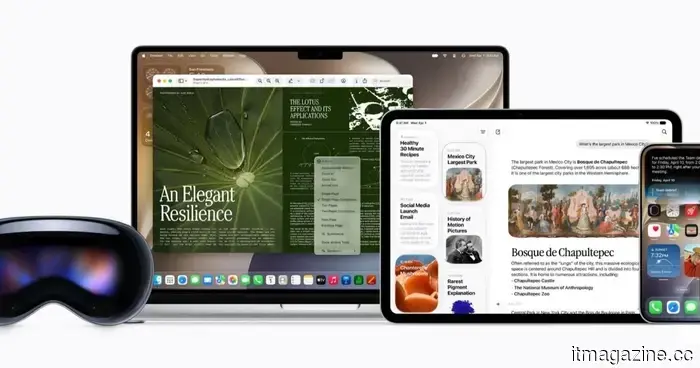 As Apple advances its software with AI, the RAM shortage has caught up, leaving your devices feeling outdated.
Apple's iOS 27 AI requirements indicate that RAM is increasingly becoming the new barrier for upgrades. While devices with 8GB of RAM are still supported, they are not as equipped to handle Apple's most advanced on-device AI functionalities.
As Apple advances its software with AI, the RAM shortage has caught up, leaving your devices feeling outdated.
Apple's iOS 27 AI requirements indicate that RAM is increasingly becoming the new barrier for upgrades. While devices with 8GB of RAM are still supported, they are not as equipped to handle Apple's most advanced on-device AI functionalities.
 The film organization in the UK is preserving internet memes and viral videos. Among them is "Charlie bit my finger."
The British Film Institute is conserving 430 viral videos and memes, such as Charlie bit my finger, Badgers, and the livestream featuring Liz Truss and a lettuce.
The film organization in the UK is preserving internet memes and viral videos. Among them is "Charlie bit my finger."
The British Film Institute is conserving 430 viral videos and memes, such as Charlie bit my finger, Badgers, and the livestream featuring Liz Truss and a lettuce.
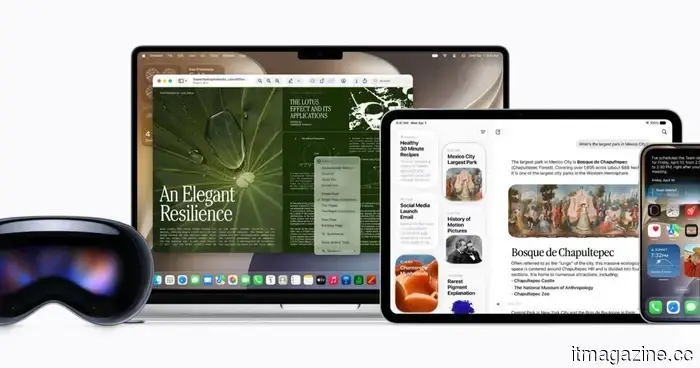 As Apple advances AI in its software, the RAM crisis has caught up, making your devices seem outdated.
According to Apple’s iOS 27 AI requirements, RAM appears to be the new barrier for upgrades. While devices with 8GB of RAM are still supported, they are not as equipped to handle Apple's most advanced on-device AI functionalities.
As Apple advances AI in its software, the RAM crisis has caught up, making your devices seem outdated.
According to Apple’s iOS 27 AI requirements, RAM appears to be the new barrier for upgrades. While devices with 8GB of RAM are still supported, they are not as equipped to handle Apple's most advanced on-device AI functionalities.
Orbital secures $5 million to develop AI data centers in space.
Orbital, backed by a16z speedrun, has secured $5 million in pre-seed funding to develop solar-powered AI data centers in low Earth orbit, with a demonstration flight by SpaceX scheduled for 2027.