
OneAdvanced develops an artificial intelligence triage system for the NHS in collaboration with Nvidia.
The NHS receives numerous AI proposals, but it has been missing one that ensures patient data remains in the UK. A British software company claims to have addressed this need.
OneAdvanced, a SaaS company based in Birmingham that serves over 40 million NHS patients annually, has unveiled what it describes as the UK’s first private, sovereign healthcare large language model trained on NHS primary care data.
The model, named Care Navigator, was developed in collaboration with Nvidia and trained using pseudonymised, real-world patient triage requests collected through OneAdvanced’s Patchs online consultation platform, which manages approximately 500,000 patient interactions each month. Its primary function is triage: identifying the clinical topic in patient requests to prompt relevant follow-up questions and direct individuals to the appropriate care more quickly, potentially reducing resource waste in general practice, according to OneAdvanced.
The model’s key advantage lies in its operational framework. Its weights, fine-tuning, hosting, and inference all occur within the UK, with data stored and regulated under UK law, providing a solution to NHS requirements regarding data residency and addressing broader concerns regarding the transfer of health records to US-based cloud services.
Additionally, it is relatively small. Constructed using Nvidia’s open Nemotron models, the 9-billion-parameter Care Navigator is significantly smaller than leading systems, and OneAdvanced asserts it operates at up to 150 times lower inference cost while outperforming top models, including Anthropic’s Claude, in systematic evaluations.
Its most notable claim is that in a benchmark categorisation task, the model achieved a significantly higher score than a GP control group, although this represents a limited assessment of clinical topic detection rather than a measure of medical judgement. Unlike a general chatbot, the model is designed to improve over time, as corrections made by GPs are incorporated as new training data.
“The future of AI in healthcare will not rely on generic models,” stated Simon Walsh, chief executive of OneAdvanced. “In healthcare, accuracy, governance, and context are of paramount importance.”
Nvidia, which provided the foundational models and infrastructure, views this initiative as a blueprint for regulated industries. “The UK has a significant opportunity to take the lead in the development of sovereign AI for highly regulated and critical sectors like healthcare,” remarked Anthony Hills, the chipmaker’s director for the UK and Ireland, noting that the pilot demonstrated “the impact that organizations with deep NHS expertise and context can have.”
This launch arrives amid the UK's growing emphasis on sovereign AI. It follows a London Tech Week filled with sovereignty pledges, the introduction of Cosine’s locally developed frontier model, and a surge of startups like Deliverance AI and Nebius, presenting governed, in-country AI solutions to regulated clients.
Healthcare represents the most critical test of this approach: the data is sensitive, regulations are stringent, and there is a strong push for cost-efficiency. OneAdvanced is seasoned in this arena, boasting 35 years of experience, software used in over 4,000 GP practices, more than 160 NHS trusts, and involvement in 85 percent of NHS 111 services.
However, there are important caveats. This announcement is based on a pilot, the claim of being “first” comes from OneAdvanced, and the reported accuracy and cost metrics, including results against GPs, are self-reported and not independently verified. The company’s materials also vary regarding which Claude models were tested, mentioning both Sonnet and Opus in one instance and Sonnet and Haiku in another.
Training AI using patient data, even when pseudonymised, has previously attracted scrutiny in NHS data projects, and a model that continually learns from clinicians must prove it maintains safety while doing so.
Nonetheless, the proposal is cleverly aligned with current needs: a smaller, more affordable UK-hosted model aimed at a health service eager to maximize efficiency without transmitting its data abroad. The true test will be whether Care Navigator evolves from pilot status to a national triage tool. If successful, it could serve as evidence that sovereign AI does not equate to inferior quality.
Other articles
 NinjaOne's valuation increases to $12.3 billion in a secondary funding round.
Austin-based IT operations company NinjaOne more than doubled its valuation to $12.3 billion in a secondary round exceeding $400 million, enhancing its cap table in anticipation of a potential IPO.
NinjaOne's valuation increases to $12.3 billion in a secondary funding round.
Austin-based IT operations company NinjaOne more than doubled its valuation to $12.3 billion in a secondary round exceeding $400 million, enhancing its cap table in anticipation of a potential IPO.
 NinjaOne's valuation reaches $12.3 billion, doubling in a secondary funding round.
Austin-based IT operations company NinjaOne has more than doubled its valuation to $12.3 billion in a secondary funding round exceeding $400 million, strengthening its capitalization table in anticipation of a potential IPO.
NinjaOne's valuation reaches $12.3 billion, doubling in a secondary funding round.
Austin-based IT operations company NinjaOne has more than doubled its valuation to $12.3 billion in a secondary funding round exceeding $400 million, strengthening its capitalization table in anticipation of a potential IPO.
 France's official messaging service Tchap suffers from an account breach.
France's government messaging platform Tchap was compromised through a stolen account. Authorities state that only public channels were affected, while a hacker alleges that 73,000 accounts were involved.
France's official messaging service Tchap suffers from an account breach.
France's government messaging platform Tchap was compromised through a stolen account. Authorities state that only public channels were affected, while a hacker alleges that 73,000 accounts were involved.
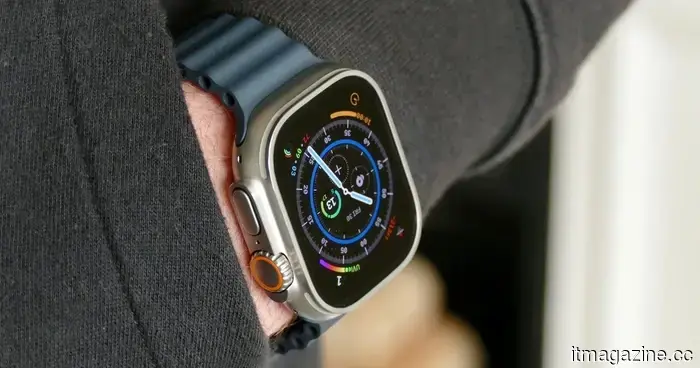 watchOS 27 eliminates support for many Apple Watch models, which is quite frustrating.
Apple announced at WWDC 2026 that watchOS 27 will not be compatible with the Apple Watch Series 8, the first-generation Apple Watch Ultra, or the Apple Watch SE 2. This update, scheduled for release this fall, represents the biggest single-cycle reduction in software support for Apple Watch.
watchOS 27 eliminates support for many Apple Watch models, which is quite frustrating.
Apple announced at WWDC 2026 that watchOS 27 will not be compatible with the Apple Watch Series 8, the first-generation Apple Watch Ultra, or the Apple Watch SE 2. This update, scheduled for release this fall, represents the biggest single-cycle reduction in software support for Apple Watch.
 Vertical Aerospace has completed a second flight with its VX4 prototype.
The last VX4 prototype from Vertical Aerospace completed its first piloted flight on June 5, increasing testing capabilities ahead of the Critical Design Review for its Valo air taxi.
Vertical Aerospace has completed a second flight with its VX4 prototype.
The last VX4 prototype from Vertical Aerospace completed its first piloted flight on June 5, increasing testing capabilities ahead of the Critical Design Review for its Valo air taxi.
.jpg) 9 top HRIS solutions for large enterprises (2026)
Enterprise HRIS platforms assessed based on total cost of ownership, deployment schedules, global preparedness, and their alignment with the dynamics of a distributed workforce in 2026. Slug: best-hris-systems-large-organizations-2026
9 top HRIS solutions for large enterprises (2026)
Enterprise HRIS platforms assessed based on total cost of ownership, deployment schedules, global preparedness, and their alignment with the dynamics of a distributed workforce in 2026. Slug: best-hris-systems-large-organizations-2026
OneAdvanced develops an artificial intelligence triage system for the NHS in collaboration with Nvidia.
OneAdvanced has introduced Care Navigator, a triage LLM for the NHS hosted in the UK, developed in collaboration with Nvidia. They claim it competes with Claude while providing inference costs that are up to 150 times lower.